
When was Kennedy Center established? History explored as White House renames it after Donald Trump
-
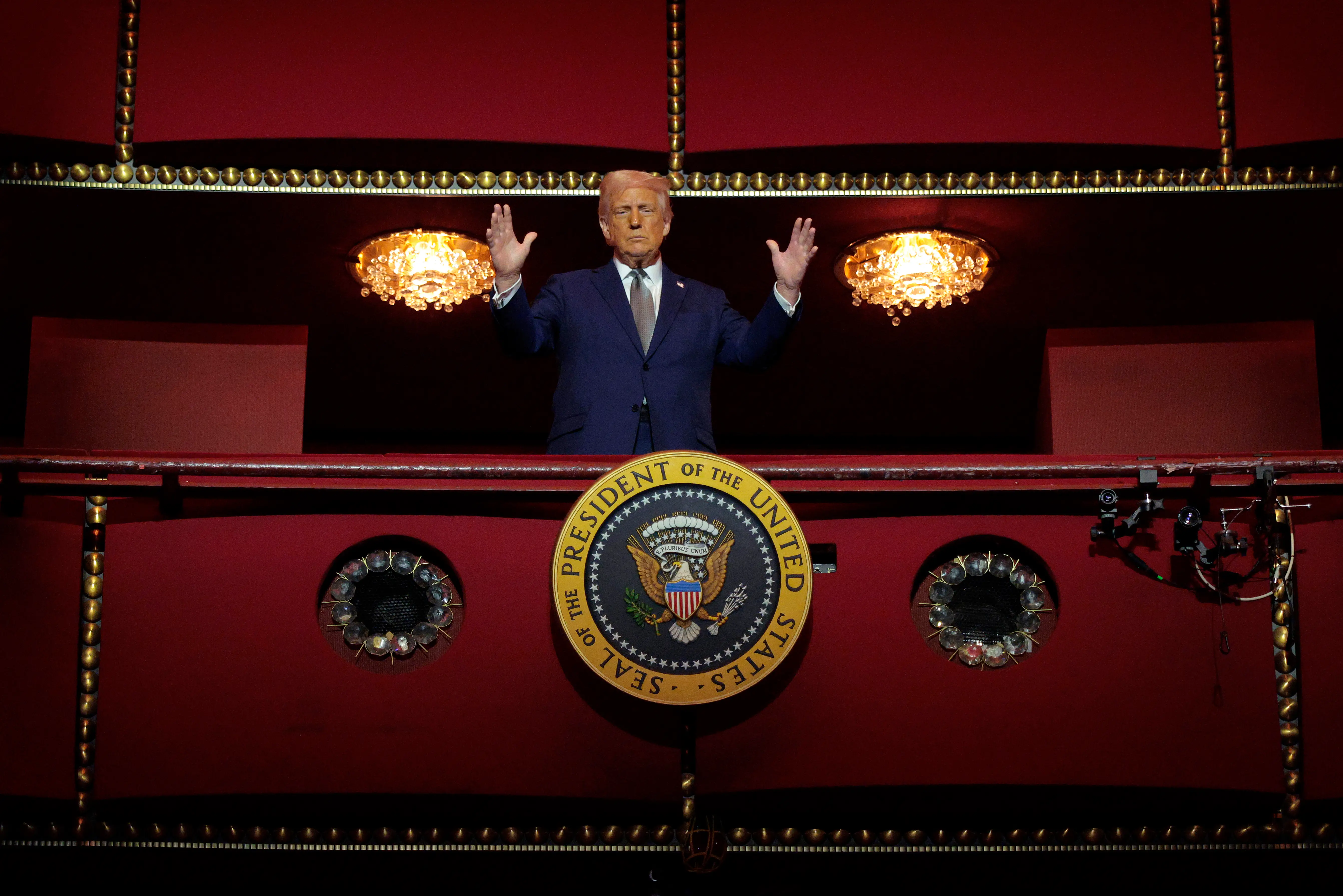 President Donald Trump looks down from the Presidential Box in the Opera House at the John F. Kennedy Center for the Performing Arts as he participates in a guided tour and leads a board meeting on March 17, 2025 in Washington, DC. (Photo by Chip Somodevilla/Getty Images)
The John F. Kennedy Center for the Performing Arts, now one of the nation’s premier cultural institutions, was created in the mid-20th century as a bipartisan national project to promote arts in America.
It dates back far earlier than the more recent flap over the White House’s role in supporting a decision to rename it as “Trump-Kennedy Center,” a development that has raised legal issues, political ire and fierce debate within the arts community.
The concept of a national cultural center was approved by the Eisenhower administration in 1958. In 1958, Eisenhower signed the National Cultural Center Act, which was the first time that federal funds were pledged towards a permanent facility serving as a dedicated home for the performing arts.
BREAKING: the most petty, envious man alive, trump is destroying another national institution by having the Kennedy Center renamed "trump-Kennedy" Center.
— BrooklynDad_Defiant!☮️ (@mmpadellan) December 18, 2025
Groceries and utilities are STILL HIGH.
We are a deeply unserious country. pic.twitter.com/h4y1wWmlqTThe vision was to build an American analogue of Europe’s great cultural centers, a place where music, theater and dance would flourish alongside international artistic exchange.
That vision gained traction under President John F. Kennedy, who believed that the arts were integral to a democratic society.
Kennedy and First Lady Jacqueline Kennedy were very active in fundraising while serving as the Mission's honorary chairpersons during the 1960s.
After Kennedy’s assassination in November 1963, Congress re-christened the National Cultural Center in his honor and turned it into a “living” memorial.
Construction officially began in December 1964 under President Lyndon B. Johnson.
A look into the legacy and imapct of the John F. Kennedy Center
The Kennedy Center Honors were founded in 1978, further solidifying the venue’s national importance. The annual event honors artists for lifetime achievement in American culture and has been attended by presidents from both political parties.
For decades the center has been known for its bipartisan support, and no sitting president had ever served as chairman of its board, until now.
That changed after President Donald Trump took office in January and put new board members in place who had been selected by Democratic presidents, and then was also elected as the chairman.
His administration has pushed major renovations, disparaged previous programming and attempted to alter the center’s leadership and cultural trajectory.
Scrutiny has heightened after news of the Trump-appointed board’s vote to change the name of the institution.
Legal experts point out that the Kennedy Center’s name is enshrined in federal law, so only Congress has the power to formally change it.
Critics, including members of the Kennedy family and Democratic lawmakers, contend the board’s vote oversteps its legal authority.
The Kennedy Center was named after my uncle, President John F Kennedy. It was named in his honor. He was a man who was interested in the arts, interested in culture, interested in education, language, history. He brought the arts into the White House, and he and my Aunt Jackie… pic.twitter.com/wcGjTp2uqa
— Maria Shriver (@mariashriver) December 18, 2025More than a dozen artists and producers have entered or withdrawn from performances, resigned from board positions and dismissed advisory roles, in part because they were worried about maintaining artistic independence there.
Even as arguments about legality and legacy play out, the Kennedy Center’s long journey highlights its founding mission: to create a national, all-embracing institution for artistic expression.
It is unclear whether the proposed renaming will withstand legal or political challenges, but the institution has deep bipartisan roots, stretching across more than six decades, and a long history of commitment to the arts.
TOPICS: John F. Kennedy Center, Donald Trump, Jacqueline Kennedy, John F. Kennedy, Human Interest, National Cultural Center, Trump Kennedy Center
- “He was virulently anti-Trump”: Gene Simmons at Oval Office accepting Kennedy Center honor triggers divided reactions online
- Was Leo Frank found guilty? All we know amid the 110th anniversary of the Jewish businessman’s death
- Who is Michael Crawford? Wife, net worth, and all about original star of The Phantom of the Opera tapped for Kennedy Center honor