
The black hole discoveries that defined 2025
-
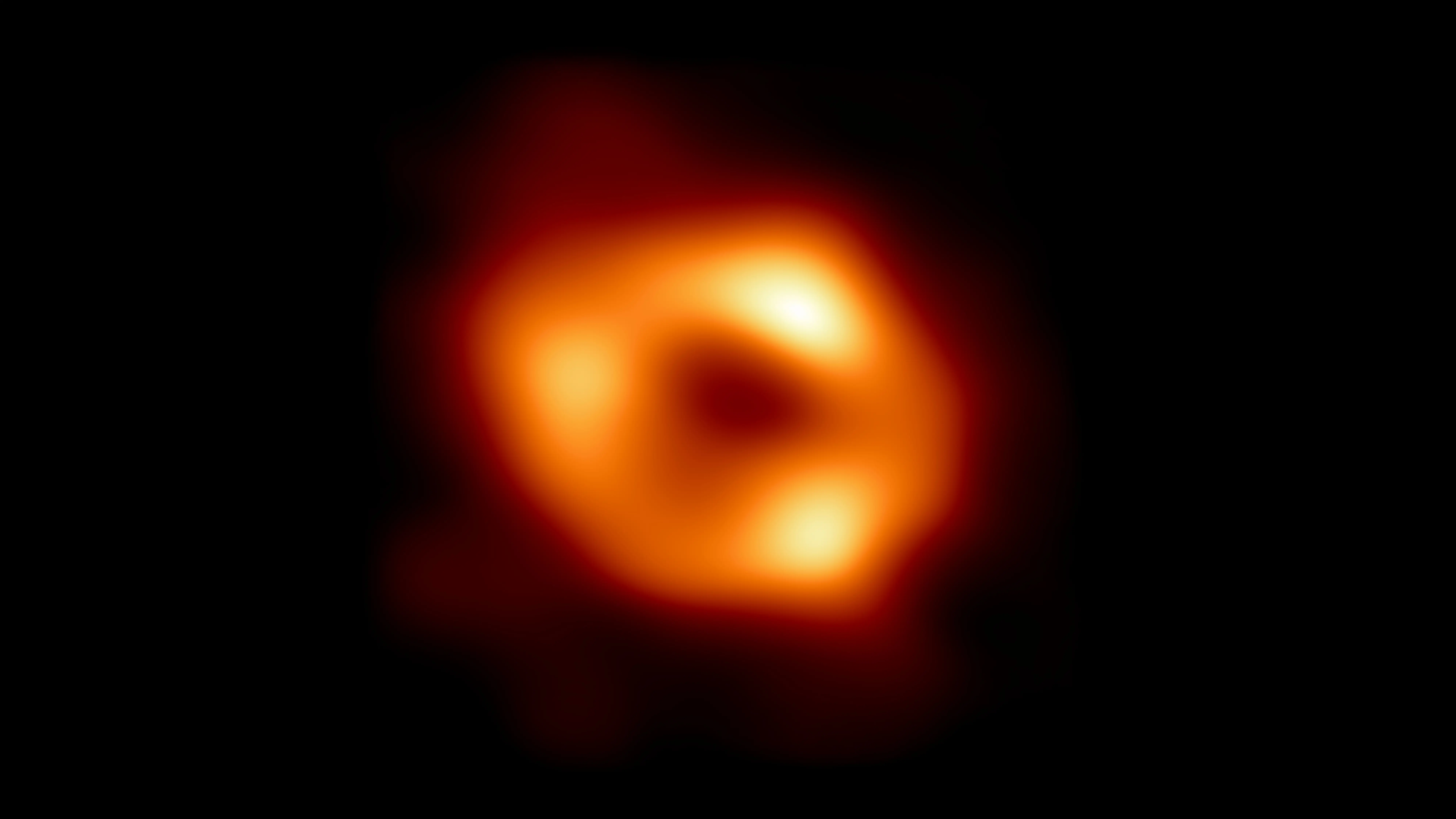 Black Hole (Image via Getty)
Black holes are significant within the scientific exploration of space. They are places in space where gravity is incredibly strong, so much so that not even light can evade it.
The center of a black hole is a tiny point congested with an enormous amount of mass, which affects the time and space around it.
According to NASA, a black hole is not really a hole but a “concentration of matter packed into very tiny spaces.”
Additionally, black holes do not emit or reflect light, which is why they are invisible to telescopes. As a result, not much is known about black holes.
Looking back on 2025, there were quite a few breakthrough moments surrounding black holes, which left a lasting mark on science. Read on to find out the significant black hole incidents.
Notable black hole discoveries of 2025
“Feeding” black hole observed by the James Webb Space Telescope
In November, the James Webb Space Telescope discovered a quickly expanding and “feeding” black hole, which is present in a galaxy known as the “little red dot” galaxy.
“This discovery is truly remarkable," Roberta Tripodi from the University of Ljubljana FMF in Slovenia said.
The black hole is hosted by a galaxy that formed 600 million years after the Big Bang. Consequently, it is extraordinary to detect such a rapidly evolving black hole in such an early galaxy.
Runaway supermassive black hole
This runaway black hole weighs 10 million times the mass of the sun. Moreover, it is traveling at a speed of 2.2 million miles per hour, as observed by the James Webb Space Telescope in December.
As the black hole thrust forward, it pushed matter and also carried a 200,000 light-year-long tail with it.
The tail was not only gathering gas but also creating stars as it moved forward.
Black hole tornadoes
Researchers using the Atacama Large Millimeter/submillimeter Array found out this year that, right at the center of the Milky Way, around Sagittarius A*, there was a “space tornado,” which defied the scientists’ understanding of quieter black holes.
Xing Lu of the Shanghai Astronomical Observatory said:
“We can envision these as space tornados: they are violent streams of gas, they dissipate shortly and they distribute materials into the environment efficiently.”
The oldest black hole
Researchers, in August, discovered the oldest and most distant black hole, which is sitting in a galaxy designated CAPERS-LRD-z9. Moreover, the black hole’s mass is the same as 300 million suns.
According to Anthony Taylor from the Cosmic Frontier Center at the University of Texas at Austin, this black hole was observed at a time that represents the limit of our ability to look back in time.
The detection of such black holes tests the limits of what current technology can observe.
A supermassive black hole
In August, scientists made another big discovery. They found what can be one of the biggest black holes ever observed.
It is situated in one of the biggest galaxies in the universe and is 5 billion light-years away from Earth. The mass of this black hole is similar to the mass of 36 billion suns.
Its competitor is Phoenix A, which is said to be equivalent to the mass of 100 billion suns.
Thomas Collett from the University of Portsmouth in England noted that the one discovered in August was “amongst the top 10 most massive black holes ever discovered.”
Stay tuned for more updates.
TOPICS: Black Holes, Milky Way black hole, supermassive black hole studies
- Astronomers trace powerful blue cosmic flashes to stars being torn apart by black holes
- James Webb Space Telescope confirms first runaway supermassive black hole in distant galaxy
- Astronomers find supermassive black holes are rare in dwarf galaxies
- Scientists observe a black hole dragging space and time as it consumes a star