
Space News shared a report on NASA’s ESCAPADE mission, a small science project now traveling to Mars after years of delays. ESCAPADE stands for Escape and Plasma Acceleration and Dynamics Explorers.
Features
Can lower-cost missions deliver big science? NASA's ESCAPADE aims to find out
NASA’s ESCAPADE mission launches two small spacecraft to Mars to study magnetic fields, solar wind and the risks and limits of lower-cost space science.
-
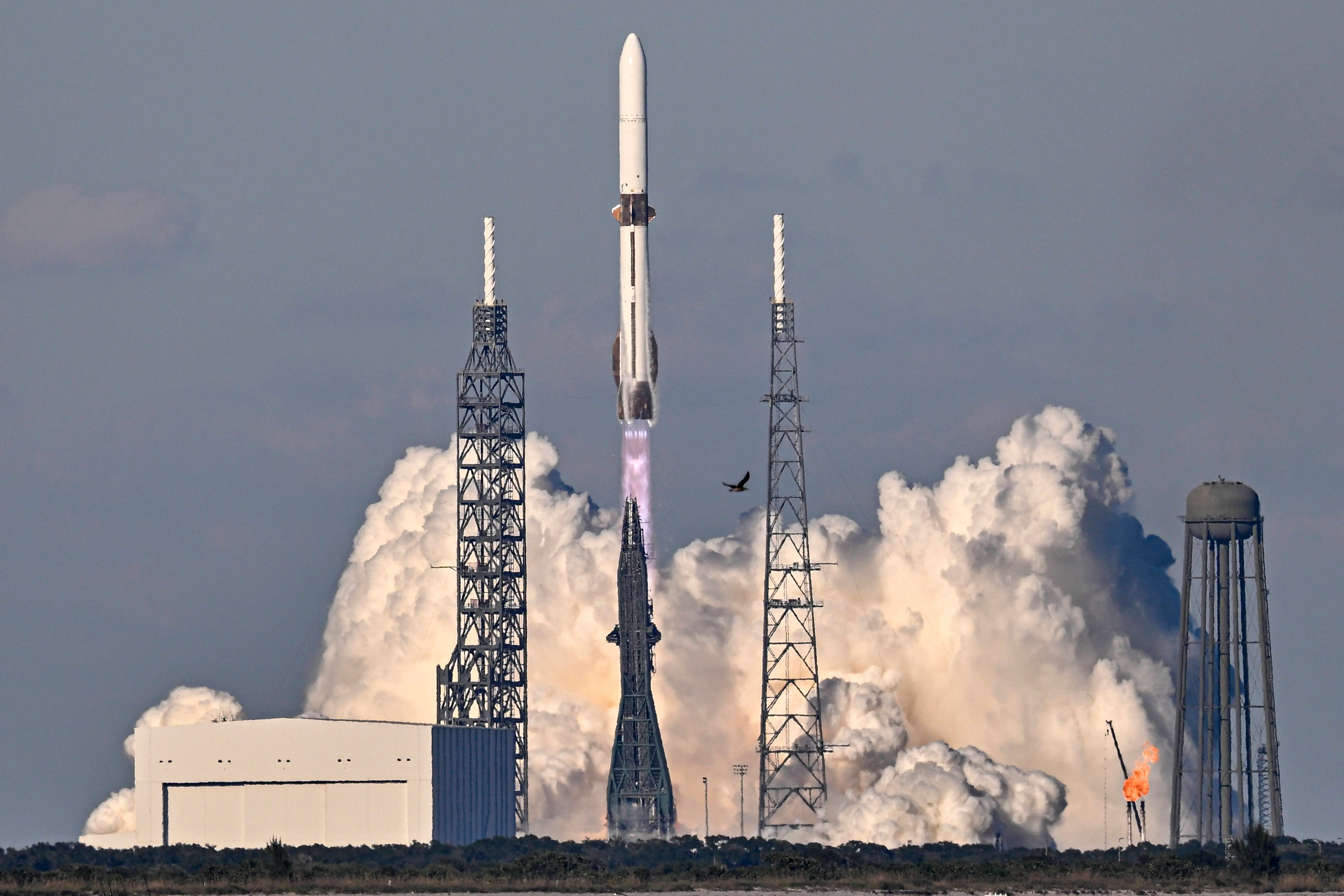 The Blue Origin New Glenn rocket lifts off at Launch Complex 36 (Image via Getty)
The mission launched on Nov. 13, 2025, aboard Blue Origin’s New Glenn rocket. It includes two small spacecraft that will study Mars’ magnetic field and how the solar wind interacts with the planet’s atmosphere.
The mission is part of NASA’s SIMPLEx program, which supports lower-cost planetary missions that accept higher risk. ESCAPADE is designed to answer focused questions rather than broad ones. It will take about 30 months before the spacecraft begins sending science data back to Earth.
The project reflects a wider shift in space science. NASA faces budget limits while private launch companies play a larger role. ESCAPADE uses commercial parts, private contractors and shared launch opportunities to reduce costs.
The mission also carries risk. Several past SIMPLEx missions failed or were canceled. ESCAPADE itself faced numerous near cancellations and launch delays. Its progress will help NASA judge whether a mix of small missions and large flagship projects can support future space science.
Lower-cost missions and accepted risk
ESCAPADE is classified as a NASA class D mission. Class D missions are defined as having “high risk tolerance” and lower complexity. These missions cost less than flagship projects and use more existing hardware. ESCAPADE’s total cost is estimated at $94.2 million through the end of operations in 2029.
To stay within budget, the mission uses a small number of instruments and lightweight spacecraft. Commercial companies, including Rocket Lab and Advanced Space LLC, built key systems. The VISIONS camera system was funded by universities. The mission also received a discounted launch on New Glenn.
NASA data indicate that Class D missions frequently encounter issues. None have launched on schedule since the category began in 2009. Several were canceled before launch. Despite this record, NASA continues the program to allow more missions to fly.
Jared Isaacman, who has been nominated to lead NASA, has said that multiple $100 million missions could be preferable to one $1 billion mission. ESCAPADE will serve as one test of that idea as NASA balances cost, risk and scientific return.
Delays, launch and what comes next
ESCAPADE faced repeated delays before launch. Principal investigator Rob Lillis has said it was “the mission with 11 lives,” referring to how often it came close to cancellation. Problems included readiness reviews, funding issues, and the loss of its original ride with the Psyche mission.
The mission later secured a spot on New Glenn’s first flight. The launch was delayed due to technical issues, weather, a solar storm, and government shutdown-related restrictions. After these setbacks, ESCAPADE launched successfully on Nov. 13, 2025. Controllers established contact after resolving early communication issues.
The spacecraft are now on a long route to Mars. Once in position, they will study how the solar wind affects Mars’ magnetic field and atmosphere. The mission builds on earlier work by MAVEN, which identified when Mars lost much of its atmosphere.
ESCAPADE will not replace large missions, such as the James Webb Space Telescope. Instead, it utilizes focused data by leveraging existing technology. Its results will help NASA determine how smaller missions and flagship projects can collaborate effectively under limited budgets.
The SIMPLEx program enables NASA to launch more missions within limited budgets by accepting a higher risk of failure. ESCAPADE’s performance will contribute data on whether this model can reliably support long-term planetary research.
___________________________________________________________
Stay tuned for more updates.
TOPICS: Astronomy, Blue Origin, MAVEN Mars, NASA, NASA ESCAPADE mission, NASA’s SIMPLEx program
More Astronomy
on Primetimer: