
“That’s really Chalamet’s a*s”: Kevin O'Leary confirms he really spanked Timothée Chalamet’s behind in Marty Supreme
-
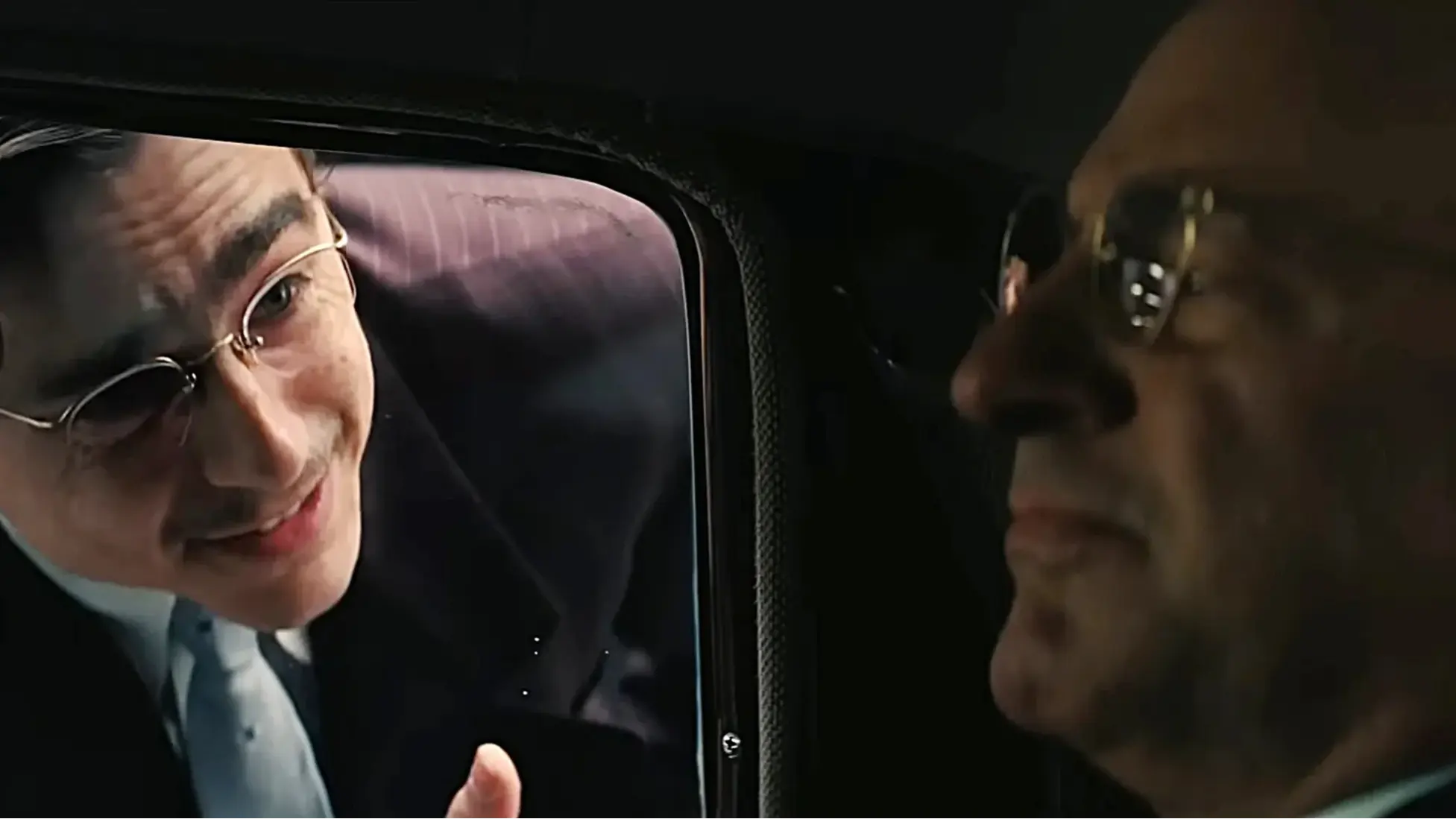 Timothée Chalamet as Marty Mauser and Kevin O'Leary as Milton Rockwell in Marty Supreme. (Image via A24)
Kevin O’Leary says a standout Marty Supreme moment is as real as it looks, because Timothée Chalamet refused a stand-in for the paddling scene. The Josh Safdie film follows Chalamet as Marty Mauser, a 1950s New York table-tennis hustler chasing legitimacy and a path to Japan.
Kevin O’Leary plays Milton Rockwell, an icy tycoon who can bankroll Marty’s next step and also set the terms. Gwyneth Paltrow co-stars as Kay Stone, and a black-tie party in her orbit becomes the stage for Rockwell’s dominance test.
In the scene, Rockwell uses a ping-pong paddle to force Marty into a deal he does not want, turning ambition into public obedience. O’Leary has said the shoot began with safer planning, then escalated once Chalamet insisted on taking the hits himself. Kevin O’Leary said the crew kept rolling as the setup changed. As per the EW report dated December 25, 2025, Kevin O’Leary said,
“He didn't want a stunt double....He wanted his own ass in it.”
Kevin O’Leary confirms he really spanked Timothée Chalamet in Marty Supreme and explains how the scene was shot
Kevin O’Leary unpacked the paddling scene in post-release interviews published in mid-to-late December 2025, describing it as a deliberately uncomfortable beat rather than a quick shock gag. He said the production started with a safer plan that used a stand-in and a prop paddle, so the scene could read as humiliation without turning into a real injury risk. In the EW report dated December 25, 2025, Kevin O’Leary said,
He didn't want a stunt double....He wanted his own ass in it
Then the approach changed once Chalamet pushed to do the moment himself, which is the detail O’Leary kept highlighting because it explains why the scene does not feel like a camera trick. Leary also quoted Timothee, stating he
"came out and said, 'No, there's no fake ass here. It's gonna be my ass. And I said, 'Listen, man, you don't want me to hit you the way Josh wants me to hit you.' And he said, 'I don't give a s*it. Let's do it.'"
The key decision is the one he framed as non-negotiable from Chalamet’s side. As per Vanity Fair report dated December 18, 2025, Kevin O’Leary said,
“Timmy, you don’t want me to hit you—‘cause Josh really wanted it to be intense....his ass went red”
O’Leary also described the shoot escalating after a fake paddle broke, which led the crew to swap in a real ping-pong paddle. He said the change mattered because the sound and impact were different, and the take could not lean on “movie safe” props the same way.
He also said he warned Chalamet first, and he described Safdie as pushing for takes that felt more intense, because Rockwell is meant to stay calm while Marty pays for access in full view of other people. The Shark Tank star also said about the repurcurssions of the scene,
"his ass had the imprint of that paddle, 'cause we didn't have a fake paddle. We had a real paddle by this point because we've broken all the fakes."
That staging is why the beat lands like a contract being enforced instead of a random humiliation gag. Rockwell does not act emotionally or chaotically. He stays procedural, almost polite, and delivers the paddle hits like he is finalizing terms. The party setting makes the power imbalance visible to everyone, and Marty cannot negotiate once the “price of admission” is set. Kevin echoed the sentiment, and he thought it was worth it, stating,
"Josh was right...It was a pivotal scene. It showed the humiliation that I wanted to instill in him for trying to f--- me over. And it was important to do that before we left for Tokyo, because we had a plan. He agreed to my plan. He's gonna throw the game. I'm gonna get what I want...That's what I would've done."
Kevin O’Leary’s recounting frames the pain and embarrassment as part of the character logic because Marty is not being punished for shock value. He is being converted into obedience so the deal can proceed.
Why Milton Rockwell spanks Marty Mauser in the movie, and what the humiliation is “buying” in the story
The scene happens at a black-tie party in the Rockwells’ Fifth Avenue world, with Marty showing up contrite and desperate. Marty needs money and access to keep his Tokyo and Japan path alive, and Rockwell turns that need into a dominance test. The paddle is not used to settle a personal argument. It is used to set a hierarchy in public, with Marty accepting the condition because he has run out of clean options.
Rockwell’s offer is tied to optics and control. He wants Marty to play along with crowd-pleasing expectations and the version of the story that benefits Rockwell, not Marty. Marty refuses, then returns when his path forward is blocked, and that return triggers the “price of admission.” Treat the spanking as a contract written on skin. Rockwell is converting Marty’s hunger into obedience, and Marty accepts it because he believes the deal is the only route left.
Kevin O’Leary’s performance keeps the motive readable. Rockwell stays controlled, and the ping-pong paddle makes the message worse because it turns Marty’s own sport into a tool of control. The beat matters thematically because Marty’s ambition is not just athletic. It is transactional, and this is the ugliest transaction in the film.
Marty Supreme plot explained: where the spanking scene fits in Marty’s full arc, and what we know about the inspiration
The paddling lands when Marty’s hustle runs into the walls built by money and reputation. The plot spine is Marty chasing legitimacy, winning attention, and then discovering that the path to Japan and Tokyo is being managed by people who are not playing the sport for love. After setbacks and a major block on his route forward, Marty goes back to Rockwell for help, and Rockwell agrees, but only if Marty accepts the public paddling.
The film is also framed as drawing from the gritty, all-night New York table-tennis culture that produced hustlers and cash games in the 1940s and 1950s, rather than presenting itself as a strict biopic. In that backdrop, the paddling becomes the clearest image of the theme: access has a cost, and the cost is not always money.
Stay tuned for more updates.
TOPICS: Kevin O'Leary, Timothée Chalamet , Marty Supreme
- Shark Tank’s Kevin O’Leary shares the one trait every great leader needs
- How rich is Kevin O'Leary? Shark Tank investor's net worth explored
- Where is Peep Show now after appearing on Shark Tank season 15? Details explored
- From Shark Tank to homes: Gerty doll helps dogs feel calm when owners are away