
How the Army supports unified command in space operations
-
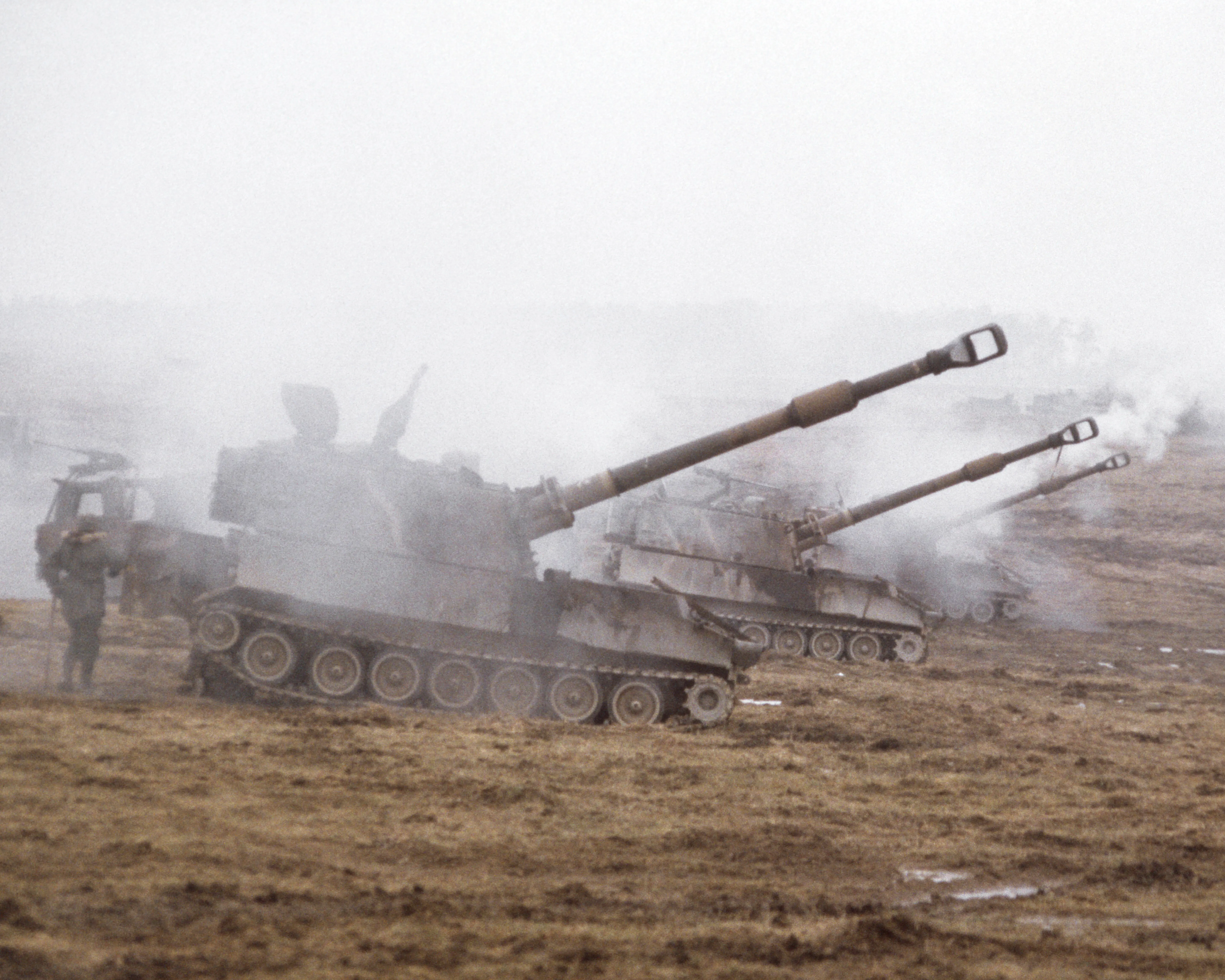 U.S. Military (Image via Getty)
SpaceNews reports on an opinion piece by Col. Pete Atkinson that responds to recent analysis on U.S. military space command and control. The article addresses arguments made in the Mitchell Institute paper,
“Charting a Path to Space Superiority: The Cross-Domain Imperative.”
That paper calls for centralized command and control of counterspace capabilities under U.S. Space Command to support unity of effort. Atkinson agrees with the need for centralized command but states that the paper presents an inaccurate view of the Army’s role in space operations.
The article explains how the Army develops and provides space-related capabilities within the joint force. It outlines how authority and command flow through established structures under the Unified Command Plan.
Atkinson argues that the Army does not independently command counterspace systems and does not operate outside joint frameworks. Instead, Army units present forces to combatant commands that operate under presidential authority.
The context for this discussion includes recent joint experiments, such as Project Convergence Capstone 4, where Army space units worked alongside allied forces. The article aims to clarify how Army space organizations fit into joint operations and how their activities align with existing command and control arrangements.
Army counterspace capabilities and joint command
The article focuses on how Army counterspace capabilities are developed and employed within joint command structures. It references Reeves’s call for centralized command and control to ensure “unity of effort.” Atkinson states that this structure already exists and includes Army space forces.
According to the article, Army units do not exercise independent command over counterspace systems. Instead, they operate under combatant commanders who receive authority through the President and the Unified Command Plan.
Atkinson addresses claims that the Army is creating a “mini-space force.” He explains that Army space units are designed to support joint operations, not replace or duplicate the roles of other services.
The article notes that Army forces are organized, trained, and equipped to provide capabilities when tasked, similar to how other service components contribute to joint missions.
The piece also explains that centralized command and control does not require all capabilities to be owned by one service. Instead, it requires clear authority and coordination across services. Atkinson emphasizes that Army space units are already integrated into this structure and operate according to joint doctrine and assigned missions.
Experiments, authorities, and force presentation
The article uses recent field experimentation to provide context for the Army’s role in space operations. It references Project Convergence Capstone 4 at White Sands Missile Range, where Army space units worked with allied forces and tested tactical space systems.
These activities are described as part of broader joint and combined efforts rather than standalone Army programs.
Atkinson explains that Army space organizations present forces to combatant commands, which then employ those forces based on mission needs. He notes that these commands “derive their authorities directly from the President through the Unified Command Plan.” This process is presented as consistent across the joint force, not unique to space operations.
The article also highlights the importance of coordination between services. By operating within established command relationships, Army space units support joint objectives without controlling overall space operations.
Atkinson argues that this approach aligns with the goals outlined in “Charting a Path to Space Superiority: The Cross-Domain Imperative.” The article concludes by reinforcing that the Army’s role is to provide capabilities within the joint system, following assigned authorities and missions.
The article further notes that Army space forces follow tasking orders from joint commanders and operate under established rules, ensuring coordination with other services and avoiding separate command structures.
__________________________________________
Stay tuned for more updates.TOPICS: Astronomy, Project Convergence experiments, Space operations, U.S. Army, U.S. military launch
- How did Elon Musk’s Starlink come to dominate the world’s skies? Details explored
- Swift telescope uncovers unexpected water activity in interstellar comet 3I/ATLAS
- James Webb Space telescope confirms first known runaway supermassive black hole
- Vast invites scientists to pitch microgravity experiments for its upcoming Haven-1 commercial space station