
What’s the true story behind Netflix’s The Stringer: The Man Who Took the Photo? Explained
-
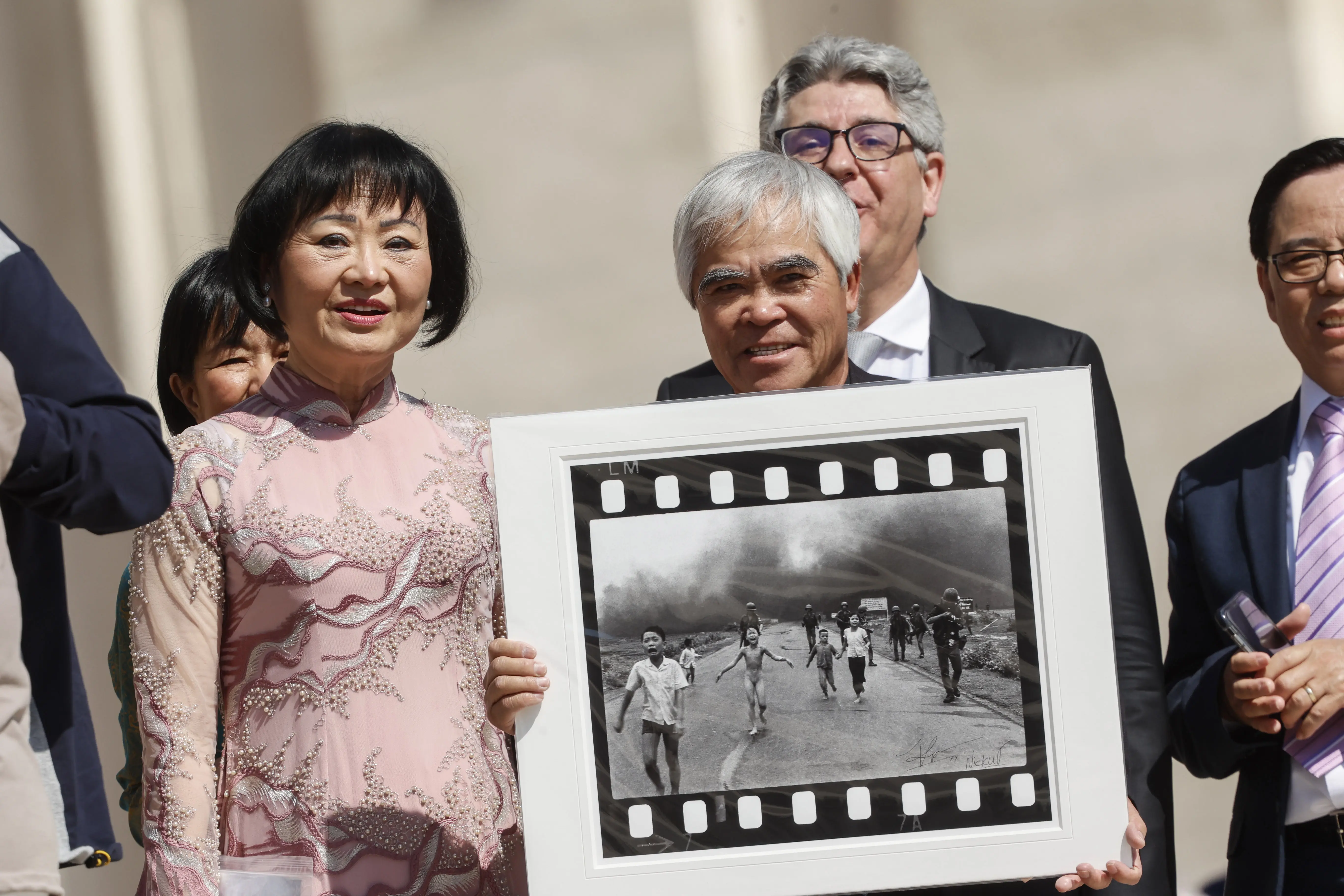 VATICAN, VATICAN CITY, MAY 11: Pulitzer Prize-winning photographer Nick Ut (R), flanked by Kim Phuc, known as the "Napalm Girl", shows his Vietnam war iconic photo as they wait to meet Pope Francis at the end of his weekly general audience in St. Peter's Square, Vatican City, Vatican on May 11, 2022. (Photo by Riccardo De Luca/Anadolu Agency via Getty Images)
Netflix’s new documentary, The Stringer: The Man Who Took the Photo, brings to light a powerful and surprising true story that many people have never heard before.
The documentary explores the world of war photography, but instead of focusing on the events themselves, it concentrates on the person behind the camera.
It tells the story of a freelance photographer, also known as a “stringer,” and the emotional and personal cost of capturing pictures that change the world.
The documentary centers on one of the most famous photographs in history: the 1972 Vietnam War picture known as The Terror of War or the Napalm Girl photo.
This image shows nine-year-old Phan Thi Kim Phuc running after a napalm attack.
For decades, the world believed the well-known Associated Press photographer Nick Ut captured this moment.
Nick Ut won the Pulitzer Prize for it, and his name became associated with the image worldwide.
But the Netflix documentary suggests the story might not be as simple as people thought.
After a long investigation, the documentary raises the possibility that a local Vietnamese photographer, Nguyen Thanh Nghe, may have been the real person behind the camera.
Nghe appears in the film and states clearly that he took the photo.
Director Bao Nguyen spent two years gathering proof, old accounts and voices from people who were there that day.
The idea challenges the public version of the story and raises questions about whether the history of this important image is incomplete.
The documentary also highlights how stringers often risk their lives without getting the credit or protection that bigger news agencies provide.
It shifts the focus to the hidden side of journalism and the people who capture dangers the world chooses to look away from.
Inside the documentary: What it reveals and why it matters
The documentary goes deeper than the question of who clicked the shutter.
It examines how war coverage is constructed, who is recognized, and how many local photographers are overlooked.
Director Bao Nguyen presents the story with care, showing both sides of the debate.
Nguyen Thanh Nghe says he took the photo.
Nick Ut and the Associated Press strongly deny this and have shared detailed reports defending the original credit.
AP even carried out a six-month internal review, which, according to them, fully confirmed Nick Ut as the photographer.
Nick Ut also says he not only took the picture but also helped save Kim Phuc’s life by rushing her to the hospital.
Kim Phuc herself has always publicly supported Ut’s account.
The documentary does not attack Ut but questions why Nghe’s claims were never taken seriously for so many years.
The documentary also looks at the structure of international journalism. Stringers typically work alone, often without steady pay or adequate safety measures.
They enter dangerous areas because it is often their only means of earning a living.
Yet their names rarely appear next to their photos, and their stories fade into the background.
The documentary uses Nghe’s story to highlight this broader issue of recognition.
Along with the main investigation, the documentary features rare footage, testimonies from historians and the voices of people who witnessed the event.
It also examines how one photo altered the way Americans perceived the Vietnam War and influenced public opinion toward ending the conflict.
Netflix released The Stringer: The Man Who Took the Photo on November 28.
Stay tuned for more updates.
TOPICS: The Stringer: The Man Who Took the Photo, Netflix, Napalm Girl, Pulitzer Prize