
SpaceX beats bad weather to deploy 29 Starlink satellites in predawn Florida launch
-
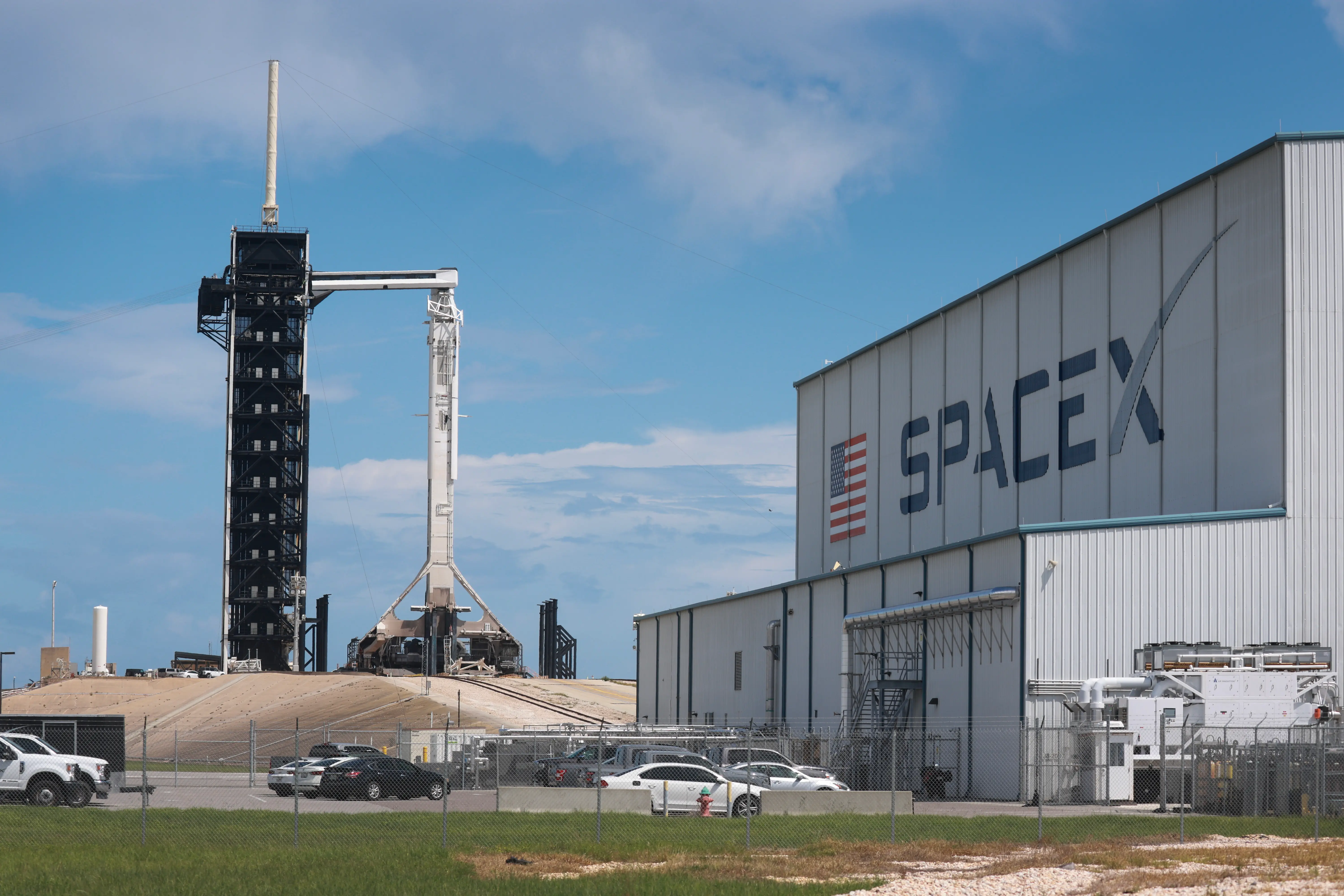 SpaceX's Polaris Dawn Falcon 9 rocket (Image via Getty)
SpaceX Falcon 9 launched 29 Starlink satellites into low Earth orbit from Florida during an early-morning mission from the Space Coast.
The launch took place shortly after midnight on Monday, Dec. 15, at Cape Canaveral Space Force Station. SpaceX went ahead with the launch even though weather forecasts earlier in the day had raised concerns about wind and cloud conditions.
The Falcon 9 rocket took off at 12:25 a.m. EST from Space Launch Complex 40. The rocket was able to reach space in less than nine minutes. After the stages were detached, the upper stage continued flying for around an hour and then released the satellites in low Earth orbit.
These 29 satellites are a part of the Starlink system, which is a project of SpaceX to provide internet service to users in different parts of the world.
After the upper stage was still on its mission, the rocket’s first stage was coming back to Earth. It landed on SpaceX’s drone ship, A Shortfall of Gravitas, which was located in the Atlantic Ocean. This launch was after a Starlink mission from California that happened one day earlier. Moreover, it has been added to SpaceX’s busy launch schedule in 2025. There are still more Falcon 9 flights scheduled in the next few days.
____________________________________________________________________How did the launch and landing take place?
The Falcon 9 rocket lifted off on time at 12:25 a.m. EST, carrying 29 Starlink satellites assigned to Group 6-82. After clearing the launch pad, the rocket climbed through the night sky and reached space about eight minutes and 40 seconds later. Soon after, the first stage separated from the upper stage.
The upper stage continued along its planned path. It entered a coast phase before restarting its single Merlin engine for a second burn. This step was needed to place the satellites into the correct orbit. It was around one hour after takeoff when the upper stage scattered all 29 satellites.
Once they are deployed, the satellites will perform a checkout procedure, and gradually they will go to their final locations.
The first stage booster, called B1092, did not follow the same route. After it separated, it fired the engines to slow down and direct itself back to Earth. The booster targeted the drone ship
A Shortfall of Gravitas was stationed in the Atlantic Ocean. With the help of four landing legs, it came down vertically on the ship. This was the ninth time that booster B1092, which has been to the likes of “CRS-32” and “GPS III-7”, has gone back successfully.
________________________________________________________________Starlink growth and SpaceX’s launch pace in 2025
The Florida takeoff of the Starlink constellation was only one day delayed after a similar California-based mission. Those two consecutive launches really together tell of SpaceX how frequently it flies to support the Starlink network.
With this particular flight, SpaceX has gone 2025 with 163 Falcon 9 launches. There's already a plan for another Falcon 9 launch on Tuesday, Dec. 16, at NASA’s Kennedy Space Center.
Starlink satellites are in low Earth orbit, and they are interdependent units making internet coverage possible. So, each new launch is just one more batch of satellites on top of the last, and thus, the network is being maintained as old satellite units are getting retired.
The 6-82 Group mission is just one part of the regular continuation of the rollout plan that goes on throughout the year.
On the other hand, the question of rocket reuse is still close to the heart of SpaceX’s launch strategy. The company can do more launches with the same rocket if it recovers the boosters instead of having to build a new one each time.
The fortunate landing of the B1092 booster on A Shortfall of Gravitas was an example of the technique working as it was supposed to.
As SpaceX keeps on launching from two locations, namely Florida and California, Manned Spaceflight, the Starlink missions will most likely be a regular part of the rest of 2025's schedule.
__________________________________________________
Stay tuned for more updates.TOPICS: Astronomy, Cape Canaveral Space Force Station, space x, SpaceX Falcon 9, Starlink Satellites
- NASA tests show ultra-thin material can shield spacecraft components from extreme vibration
- Why interstellar comet 3I/ATLAS could reshape what we know about planet formation
- Can lower-cost missions deliver big science? NASA's ESCAPADE aims to find out
- Atlas V to launch 27 Amazon Leo satellites in early morning liftoff