
Features
Researchers warn of imminent collisions among low Earth orbit satellites
Researchers warn of rising collision risks in low Earth orbit due to satellite mega-constellations and solar storms, highlighting the need for precise management and autonomous satellite systems.
-
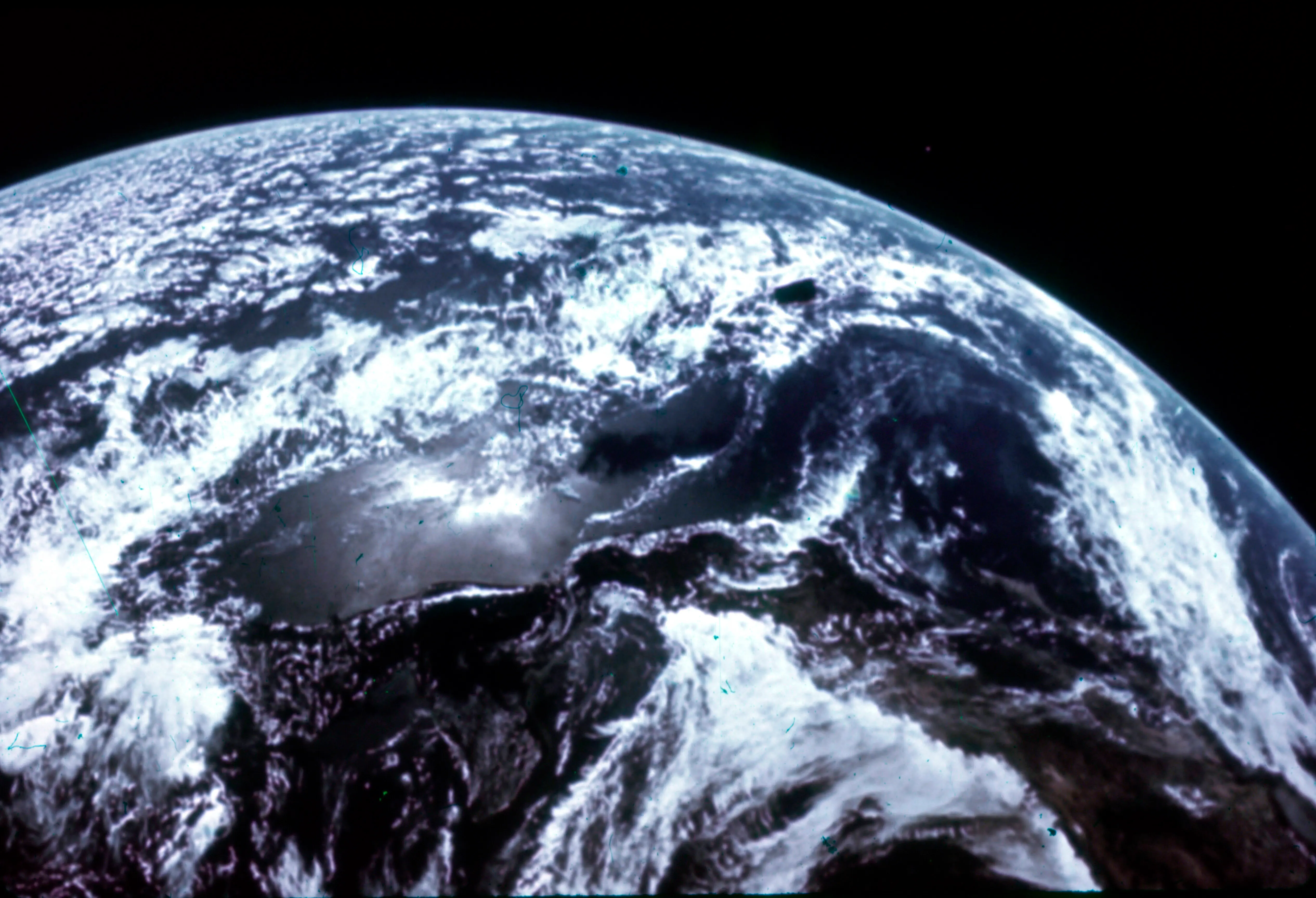 View of the Earth as seen from the Command Module during NASA's Apollo 12 mission, between November 14 and 24, 1969 (Image via Getty)
Satellite operators and researchers have raised concerns about the increasing risk of collisions in low Earth orbit.
According to a pre-print paper by Sarah Thiele and colleagues, available on arXiv and reported by Universe Today on December 15, 2025, close approaches between satellites, defined as less than one kilometer apart, occur every 22 seconds across all mega-constellations.
Starlink satellites alone experience such events every 11 minutes, with each satellite performing 41 avoidance maneuvers per year.
The study highlights that solar storms could disrupt satellite navigation and communications, creating conditions that might trigger catastrophic collisions if control is lost.
Close approaches and collision frequency
The research by Sarah Thiele and co-authors outlines that the dense population of satellites in low Earth orbit increases the frequency of close approaches.
Across all mega-constellations, satellites pass within one kilometer of each other every 22 seconds, while Starlink satellites alone face these events every 11 minutes.
Each satellite conducts avoidance maneuvers, averaging 41 per year, to prevent collisions.
Universe Today reported that these maneuvers consume fuel and require precise timing, making the system sensitive to unexpected events.
The study identifies solar storms as a factor that can disrupt satellite positions and increase the probability of collisions.
Effects of solar storms
Solar storms impact satellites by heating the upper atmosphere, which increases drag and creates positional uncertainty.
According to the paper by Sarah Thiele and colleagues, this increased drag forces satellites to use more fuel to maintain orbit and may require additional avoidance maneuvers.
Solar storms can also temporarily disable satellite navigational and communication systems. During the Gannon Storm of May 2024, over half of the satellites in low Earth orbit had to perform repositioning maneuvers.
The research introduces the Collision Realization and Significant Harm Clock, or CRASH Clock, to measure the time before a catastrophic collision could occur if satellite control is lost.
CRASH clock and collision estimates
Calculations in the paper indicate that as of June 2025, a total loss of control over satellites could result in a catastrophic collision within approximately 2.8 days.
This represents a reduction from 121 days estimated in 2018, before the era of mega-constellations. Even a 24-hour loss of control carries a 30 percent probability of a collision that could trigger long-term debris accumulation.
Universe Today highlighted that rapid response and real-time satellite management are necessary to prevent immediate collisions in such a dynamic environment.
Autonomous satellite network management
Research by Yuhe Mao and colleagues at Nanjing University of Aeronautics and Astronautics proposes autonomous satellite management to reduce operational risks.
The system designates certain satellites as Center Nodes responsible for communication with ground stations and other satellites, while Member Nodes select the optimal Center Node based on calculations such as Detachment Time.
The study uses predictive algorithms to calculate geocentric angles and relative speeds, minimizing unnecessary switching between management nodes.
Simulations of 1,248 satellites showed that only six satellites per hour required manager changes, and network latency was reduced from 18.4 milliseconds to between 4.7 and 7.8 milliseconds.
Implications for low Earth orbit operations
The studies indicate that low Earth orbit is increasingly congested and sensitive to environmental factors.
Close approaches and potential disruptions from solar storms underscore the need for continuous monitoring and precise control.
Autonomous management systems can improve operational efficiency and reduce latency, but immediate risks from unpredictable solar activity remain.
Research by Sarah Thiele and Yuhe Mao emphasizes that without careful coordination, the probability of collisions and debris accumulation continues to rise, affecting satellite operations and space access for future launches.
Stay tuned for more updates.
TOPICS: low Earth orbit collisions, CRASH Clock satellite, satellite mega-constellations, satellite mega-constellation update 2025, solar storm satellite impact, Starlink satellite risks