
Shark Tank update: What happened to Rolodoc after appearing on the show?
-
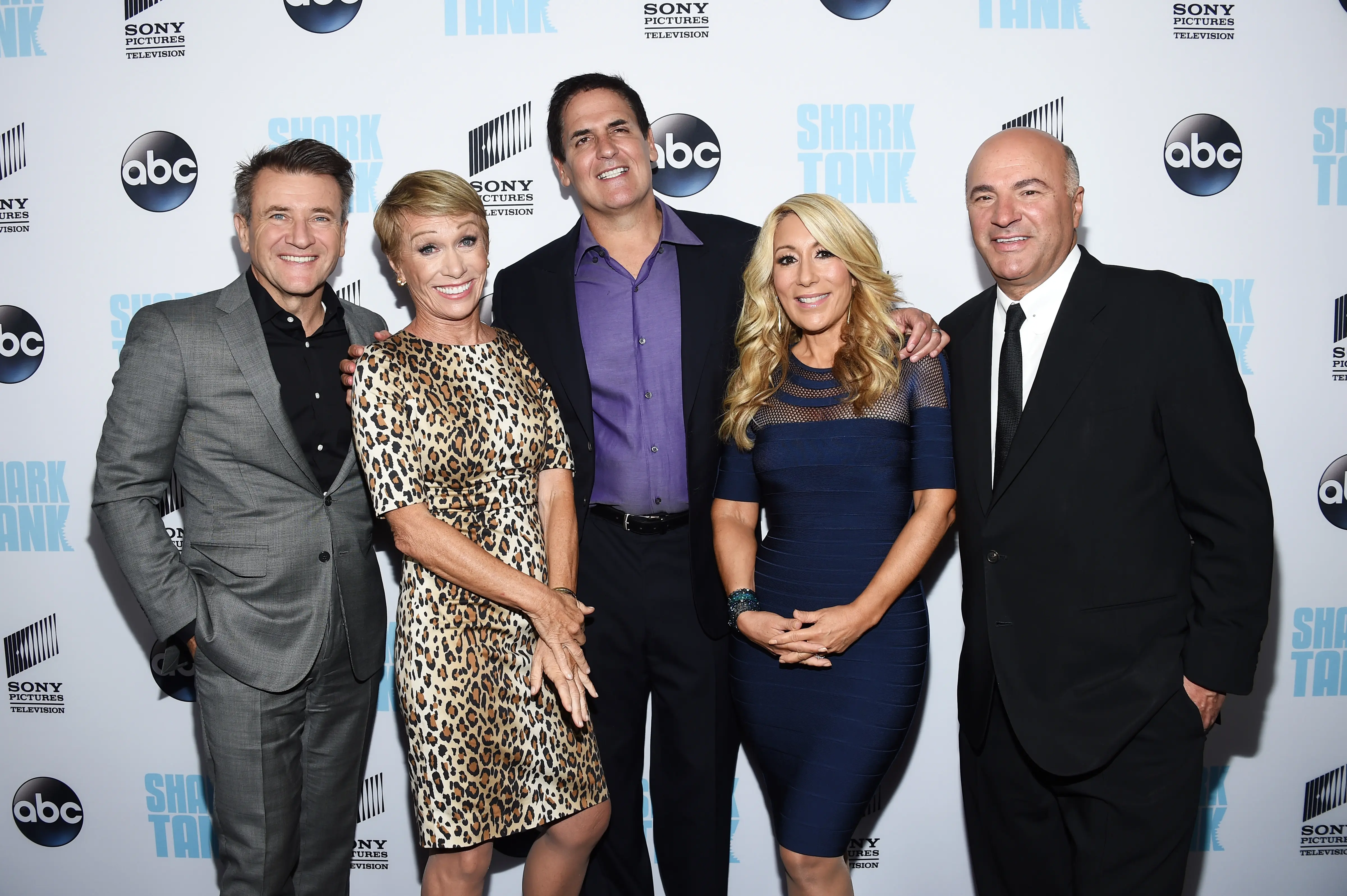 Robert Herjavec, Barbara Corcoran, Mark Cuban, Lori Greiner and Kevin O'Leary (Image via Getty)
When Shark Tank aired Season 5 in 2013, two physician-brothers from Arizona—Richard Amini and Albert Amini—walked into the Tank with their startup RoloDoc.
They sought US$50,000 in exchange for 20 percent equity, promising to create a secure social-network and messaging platform connecting doctors and patients, with encrypted communication and physician search tools.
The pitch, however, failed to convince the investors. No deal was made, and the Sharks harshly criticized the presentation — now, more than a decade later, RoloDoc has effectively vanished.
The Shark Tank pitch and immediate rejection
On its Shark Tank appearance, RoloDoc was presented as a “social media network” for the medical profession. Albert Amini described the platform:
“What we’re trying to do is bring social media and the social network to the medical profession.”
The concept aimed to replace outdated communication tools — pagers, faxes, scattered directories — with a unified, secure messaging and directory system.
The Sharks rapidly zeroed in on the project’s flaws: there was no viable revenue model, no clear plan for user acquisition, and no convincing data on how doctors or patients would be verified or protected.
One Shark, the billionaire investor Mark Cuban, rose from his seat, shook the founders’ hands and declared the session over:
“Worst presentation ever. I’m out.”
Another investor, Kevin O’Leary, accepted their exit more coldly, quipping that “Protein is never wasted when a death occurs,” underscoring the perceived risk of their social-medical-network idea.
All Sharks declined to invest.
With that, RoloDoc exited the Tank without a single offer — a clear signal of the investors’ lack of confidence in the startup’s viability.
What RoloDoc tried to offer — and why it failed
RoloDoc’s core proposal was twofold:
- A directory of physicians allowing patients to search by specialty, location, or insurance provider.
- A HIPAA-compliant communication system enabling secure messaging, document sharing, and coordination between doctors and patients.
Despite the promise, the founders struggled to explain how they planned to recruit and verify physicians, how they would ensure encryption and privacy compliance, or how they would sustain operations financially.
Their appeal relied heavily on buzzwords: “social media,” “encryption,” “secure messaging,” but lacked concrete technical or business infrastructure. In such a regulated sector as health care, that uncertainty weighed heavily.
From the Sharks’ viewpoint, the pitch lacked the clarity and credibility necessary to survive even the early stages of development.
Without a path to monetization or trust-building mechanisms, the venture was widely dismissed as unworkable.
The aftermath: What happened to RoloDoc
After Shark Tank, RoloDoc lingered briefly — but did not thrive. The company’s website remained live for a few years following the episode, but slowly faded.
By late 2024, the RoloDoc domain was up for sale. Social-media pages once linked to the startup grew inactive. Its Twitter account, for example, has not been updated since 2013.
In short: RoloDoc “just disappeared,” as one retrospective described. The platform never gained traction, failed to attract users or funding, and quietly folded.
Both founders returned to their original work in medicine. Richard Amini resumed his role as Associate Dean for Student Affairs and continued teaching Emergency Medicine at the University of Arizona College of Medicine.
Albert Amini went back to practicing surgery and leading his practice at Arizona Premier Surgery.
The ambitious startup — once featured on national television — ceased functioning, and its infrastructure faded into memory.
Legacy — and what lessons survive
RoloDoc stands today as a cautionary tale within the Shark Tank canon — a reminder that good intentions and ambitious ideas alone are not enough, particularly when dealing with regulated sectors like medicine.
It remains a footnote in the history of startup pitches: a concept that, while forward-thinking in ambition, lacked the infrastructure, execution plan, and business fundamentals needed to thrive.
RoloDoc suffered the same fate as countless other products from Shark Tank: shuttered websites, expired domains, dead social feeds.
For the Amini brothers, the show was more of a “flesh wound” than a fatal mistake; they returned to their medical careers quietly.
Their hope of transforming medical communication yielded no return on investment — in money, in platform success, or in lasting public presence.
Stay tuned for more updates.
TOPICS: Shark Tank, Shark Tank Season 5
- Shark Tank update: What happened to Rekkie after appearing on the show?
- Shark Tank update: What happened to Flipstik after appearing on the show?
- Shark Tank Update: What happened to Lynnae’s Gourmet Pickles after appearing on the show
- Celebrity Wheel of Fortune is ABC's quiet Friday success as The Golden Bachelor loses its shine