
Mars rover Perseverance advances exploration despite uncertainty over bringing samples home
-
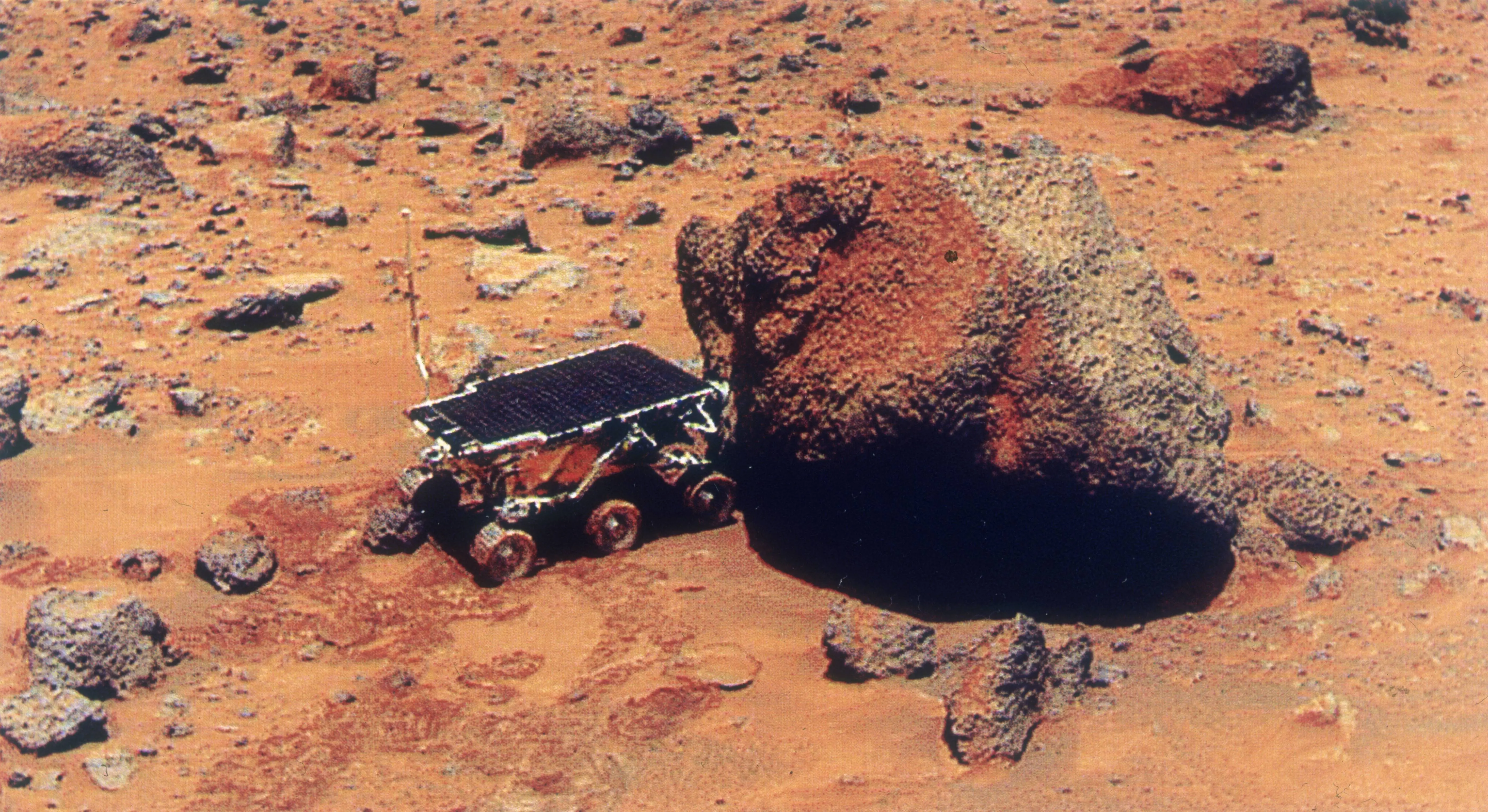 The Sojourner Rover on Mars (Photo for reference, Image via Getty)
SpaceNews reported that NASA’s Perseverance rover is continuing its science mission on Mars even as uncertainty surrounds the future of the Mars Sample Return program.
The rover, which landed in Jezero Crater in February 2021, continues to collect and analyze rock samples intended for eventual return to Earth. Mission officials say current science operations are not affected by policy or budget decisions being debated on Earth.
At a press briefing held during the American Geophysical Union Annual Meeting in New Orleans on December 17, project leaders said the rover remains in good working condition as it climbs out of Jezero Crater and approaches the crater rim.
Perseverance was built to study ancient Martian environments and search for signs that the planet may have once supported microbial life.
While the rover continues to move forward, the Mars Sample Return effort faces an uncertain path. NASA announced earlier in 2025 that it is reviewing alternative approaches to returning samples after cost and schedule concerns.
A later budget proposal called for canceling the program, raising questions about when, or if, the samples already collected would reach Earth. Despite that uncertainty, the mission team continues to plan years of science activity.
___________________________________________________________Rover status and ongoing science work
NASA officials emphasized that Perseverance remains healthy and capable of extended operations. Steve Lee, deputy project manager at NASA’s Jet Propulsion Laboratory, said,
“Perseverance is really in excellent shape. The rover is capable of supporting this mission for many, many years to come.”
The rover has already exceeded its original design requirements. Perseverance was built to travel at least 20 kilometers, but it has now driven more than 40 kilometers across the Martian surface.
Engineers are testing the mobility system, including wheels and brakes, to certify operations up to 100 kilometers. According to Lee, this distance was based on earlier planning that assumed Perseverance could deliver samples directly to a lander in a revised sample return architecture.
Perseverance currently has six empty sample tubes available. Two tubes already filled with samples remain unsealed, allowing scientists to replace them if better targets are found.
Lee said, “We are continuing the mission,” and noted that planning is underway for the next two years as the rover reaches higher ground along the crater rim.
______________________________________________________________Mars Sample Return uncertainty and future plans
One of the main goals of Perseverance was to gather samples that would later be sent back to Earth as part of the Mars Sample Return campaign.
It would be possible to run more thorough tests if the samples were brought to Earth, in labs, rather than what can be done on Mars.
In September 2025, NASA made a public statement that a single sample collected had the most convincing evidence of life on Mars to date.
However, the fate of Mars Sample Return is still uncertain. NASA revealed at the beginning of the year that it would evaluate two different concepts for the mission until the middle of 2026, after finding high costs and schedule overruns.
The agency’s fiscal year 2026 budget proposal later called for canceling the program. Since then, public updates have been limited.
At a September briefing, then–acting NASA Administrator Sean Duffy said the agency had found a faster and lower-cost approach, but did not provide details. The topic was not addressed during a NASA planetary science town hall at the AGU meeting.
Scientists working on Perseverance say the rover’s current location still offers major research value. Purdue University scientist Briony Horgan said,
“The rim itself is such a great place to explore these ancient terrains.”
She explained that the impact that formed Jezero Crater exposed older rocks, giving scientists access to material from deep below Mars’ surface.
_______________________________________________________
Stay tuned for more updates.TOPICS: Astronomy, Mars sample collection mission, Mars Sample Return program, NASA Mars mission, NASA Perseverance Mars rover