
Is Earth at risk from 3i/Atlas? Strange chemical linked to WWI found in interstellar comet, says Avi Loeb
-
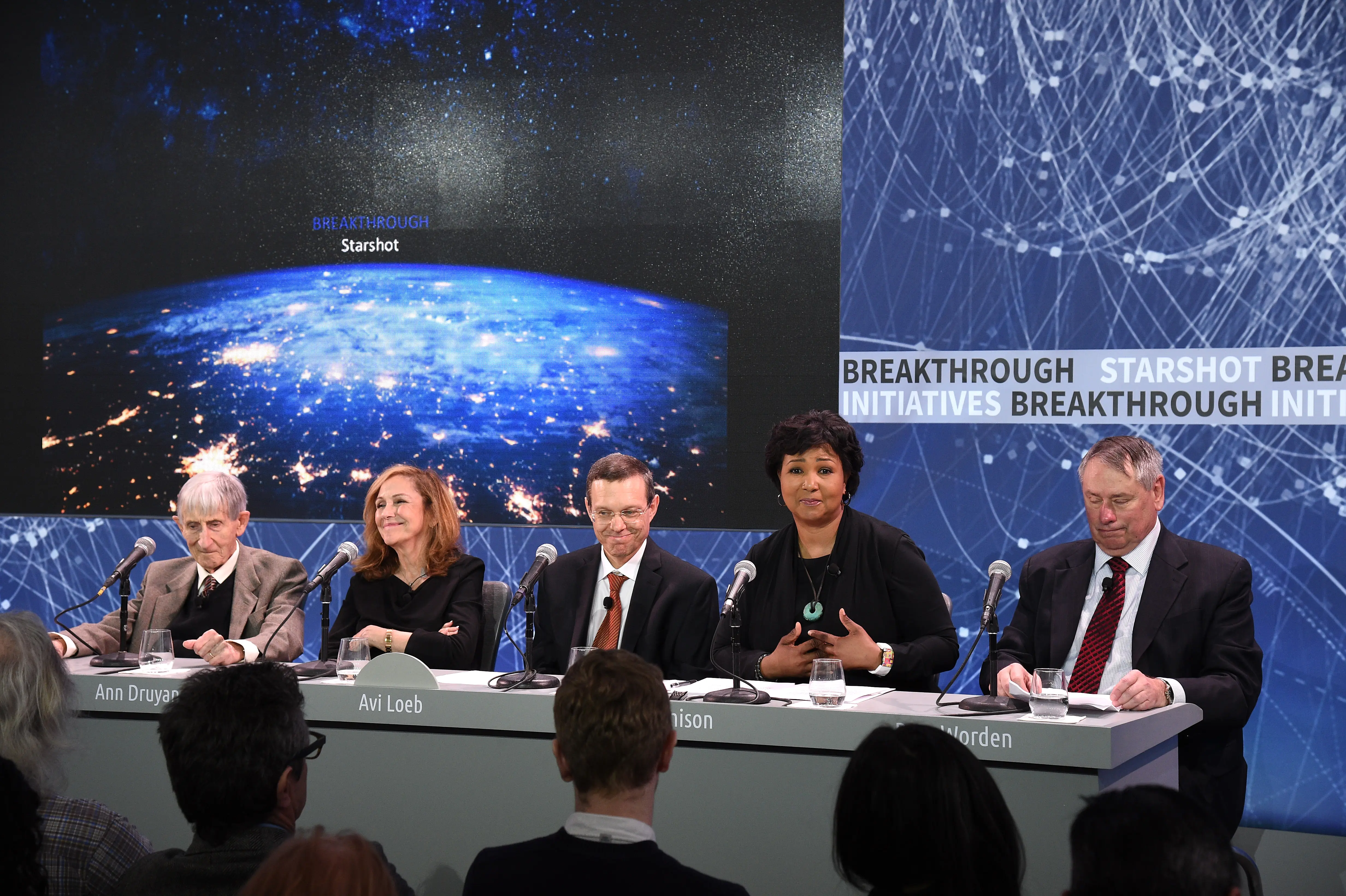 NEW YORK, NEW YORK - APRIL 12: (L-R) Freeman Dyson, Emeritus Professor, Princeton Institute for Advanced Study; Ann Druyan, Producer, Co-Founder and CEO of Cosmos Studios; Avi Loeb, Frank B. Baird, Jr. Professor of Science at Harvard University; Mae Jamison, Nasa Astronaut, Principal 100 Year Starship Foundation; and Peter Worden, Chairman, Breaktrough Prize Foundation, Former NASA Director attend the panel as Yuri Milner And Stephen Hawking host press conference to announce Breakthrough Starshot, a new space exploration initiative, at One World Observatory on April 12, 2016 in New York City. (Photo by Bryan Bedder/Getty Images for Breakthrough Prize Foundation)
In the last few days, attention has been placed on the interstellar comet 3I/ ATLAS. From a new study originating from the ALMA observatory, two chemicals were found in the comet: methanol and hydrogen cyanide.
Hydrogen cyanide does sound rather intimidating since it was once used as a poison in World War I. Many, upon hearing about the possible danger that the comet could represent for Earth, immediately started speculating. Scientists, however, say there is no reason to panic.
What the Alma study found about methanol and hydrogen cyanide in 3i/Atlas
🔥 3I/ATLAS Just Sent Us a Chemical Message… And It’s Not What Anyone Expected
— Astronomy Vibes (@AstronomyVibes) December 7, 2025
New readings from ALMA Observatory have made 3I/ATLAS even more mysterious.
Scientists found that it’s releasing a lot of methanol — a molecule connected to the early building blocks of life — and… pic.twitter.com/qJNZdoNeMPOne of the important things ALMA's study found out was that 3I/ATLAS contains a very large amount of methanol compared with hydrogen cyanide, whereas only one other comet that has ever been studied has shown a similar mix.
This unusual result made people wonder if 3I/ATLAS is a normal comet or not. Harvard astrophysicist Avi Loeb provided a simplistic explanation of the finding in his blog.
He explained that methanol strengthens significantly on the comet side facing the Sun, while hydrogen cyanide turns weak in that direction. Even some methanol forms in the gas cloud far away from the comet's surface.
Methanol: A common and friendly space chemical
Astronomers have discovered that 3I/ATLAS is carrying methanol and other chemicals that were probably important in the origin of life. pic.twitter.com/9YueO7t5pp
— DeepState Illuminate (@TheDeep_State6) December 7, 2025Methanol sounds like a pretty harsh chemical, but it's very common in space, showing up wherever new stars are forming. On Earth, it helps the building blocks of life come together in the form of amino acids and some sugars.
Loeb further explained that on Earth, even small organisms like bacteria and yeast can survive with methanol as their source of energy. Plants also naturally produce methanol when their cells break down. It acts as a gas in self-defense when a plant gets hurt.
And so, though it does sound chemical, methanol is really very normal in both space and nature.
Hydrogen Cyanide: Scary Name, Natural Purpose
Hydrogen cyanide has a fearsome reputation due to its use in war, but Loeb mentioned that it also plays an important part in the formation of basic life molecules such as amino acids and DNA building blocks. It exists on other planets and moons, including Saturn's moon Titan.
The same hydrogen cyanide is also produced in small quantities by some plants and bacteria on Earth for their protection. In trace quantities, it even helps in strengthening the seeds. So, while it is dangerous in large amounts, its presence in a comet is not unusual.
So, Is 3I/ATLAS dangerous?
According to Avi Loeb, no. The comet’s high methanol-to-hydrogen-cyanide ratio actually suggests that 3I/ATLAS is not harmful. There is no risk to Earth, and scientists have found nothing that points to danger.
For now, 3I/ATLAS is simply an interesting traveler from another star system—mysterious, unusual, but not a threat.
TOPICS: 3I/ATLAS, 3i/ATLAS recent updates
- Is the interstellar visitor 3I/ATLAS back again? Hubble’s new image and viewing times explained in one place
- 3I/ATLAS shows sunward anti-tail in latest Hubble images
- 3I/ATLAS shows methanol production increasing with proximity to Sun
- New 3I/ATLAS picture from ESA’s Juice probe reveals the comet looking extremely active on November 4