
Is the interstellar visitor 3I/ATLAS back again? Hubble’s new image and viewing times explained in one place
-
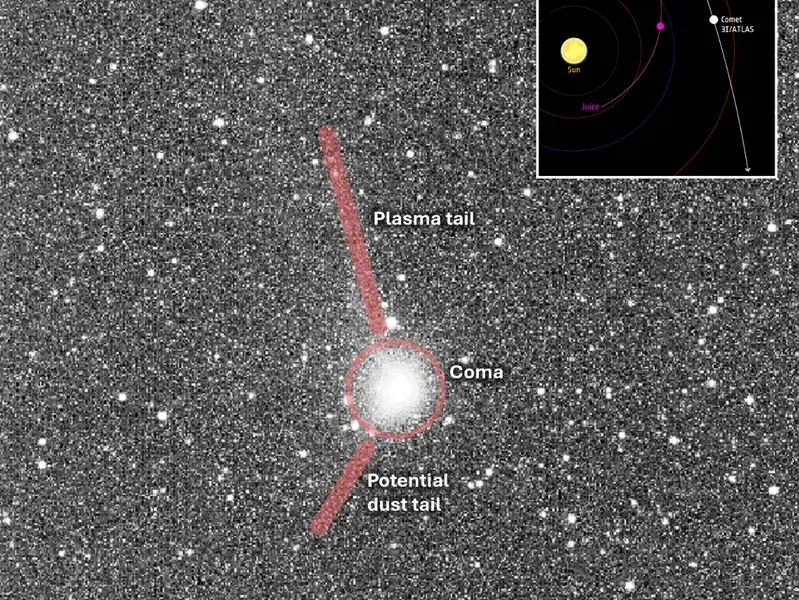 Image via science.nasa.gov
Interstellar comet 3I/ATLAS is in the news again after NASA shared a new picture taken by the Hubble Space Telescope on Nov. 30. This fresh image confirms something exciting — the comet is still active even after passing close to the Sun.
It also helps scientists update and improve their understanding of the comet’s path as it moves through our part of the solar system.
3I/ATLAS is only the third interstellar object ever seen visiting our solar system.
Because it comes from another star, each new photo and measurement teaches scientists more about what comets from faraway places look like and how they behave when they get close to the Sun.
Where Is 3I/ATLAS Now
Here are the key things to know about the comet’s movement:
- Perihelion (closest point to the Sun): About 1.4 AU, which is just inside Mars’ orbit.
- Current position: The comet is now moving away from the Sun and is hundreds of millions of kilometers from Earth.
- Closest to Earth: Around Dec. 19.
Even though the comet is now heading outward again, it still shows clear signs of activity.
What the New Hubble Image Shows
The new picture from Hubble captures a bright central core with a soft, slightly uneven cloud of gas and dust around it, called the coma. The stars behind it appear stretched out because Hubble was tracking the comet's fast motion while taking the photo — another sign that 3I/ATLAS is still releasing gas and dust.
Hubble wasn’t the only spacecraft watching. NASA’s Psyche mission took color and light measurements in September, which helped refine the comet’s path. In Europe, ESA’s JUICE spacecraft also picked up activity with its navigation camera when the comet brightened earlier in the season.
All these observations — from deep space and from Earth orbit — give scientists the clearest picture yet of what 3I/ATLAS is doing.
Can You See 3I/ATLAS?
3I/ATLAS is not visible to the naked eye, but people with telescopes still have a chance to try spotting it. The best time to look is mid to late December, especially before sunrise.
Best Viewing Times
According to reports, these are the recommended times:
- North America: 4:00–6:00 a.m. EST
- UK / Europe: 05:00–07:00 GMT
Find a dark place, point your telescope toward the pre-dawn sky, and you may catch a glimpse of this rare visitor from another star system.
TOPICS: 3I/ATLAS, 3I/ATLAS observations, 3i/ATLAS recent updates
- 3I/ATLAS shows sunward anti-tail in latest Hubble images
- 3I/ATLAS shows methanol production increasing with proximity to Sun
- New 3I/ATLAS picture from ESA’s Juice probe reveals the comet looking extremely active on November 4
- Harvard scientist claims 3i/Atlas’ tail may be a swarm of unknown objects, adding to growing mystery