
This week, the International Space Station reported on the first full working week of the Expedition 74 crew, covering activities from December 8 to December 12, 2025.
Features
Expedition 74 completes first full week aboard the International Space Station
Astronauts aboard the ISS conduct science experiments, maintain station systems and share Earth views during Expedition 74’s first full week
-
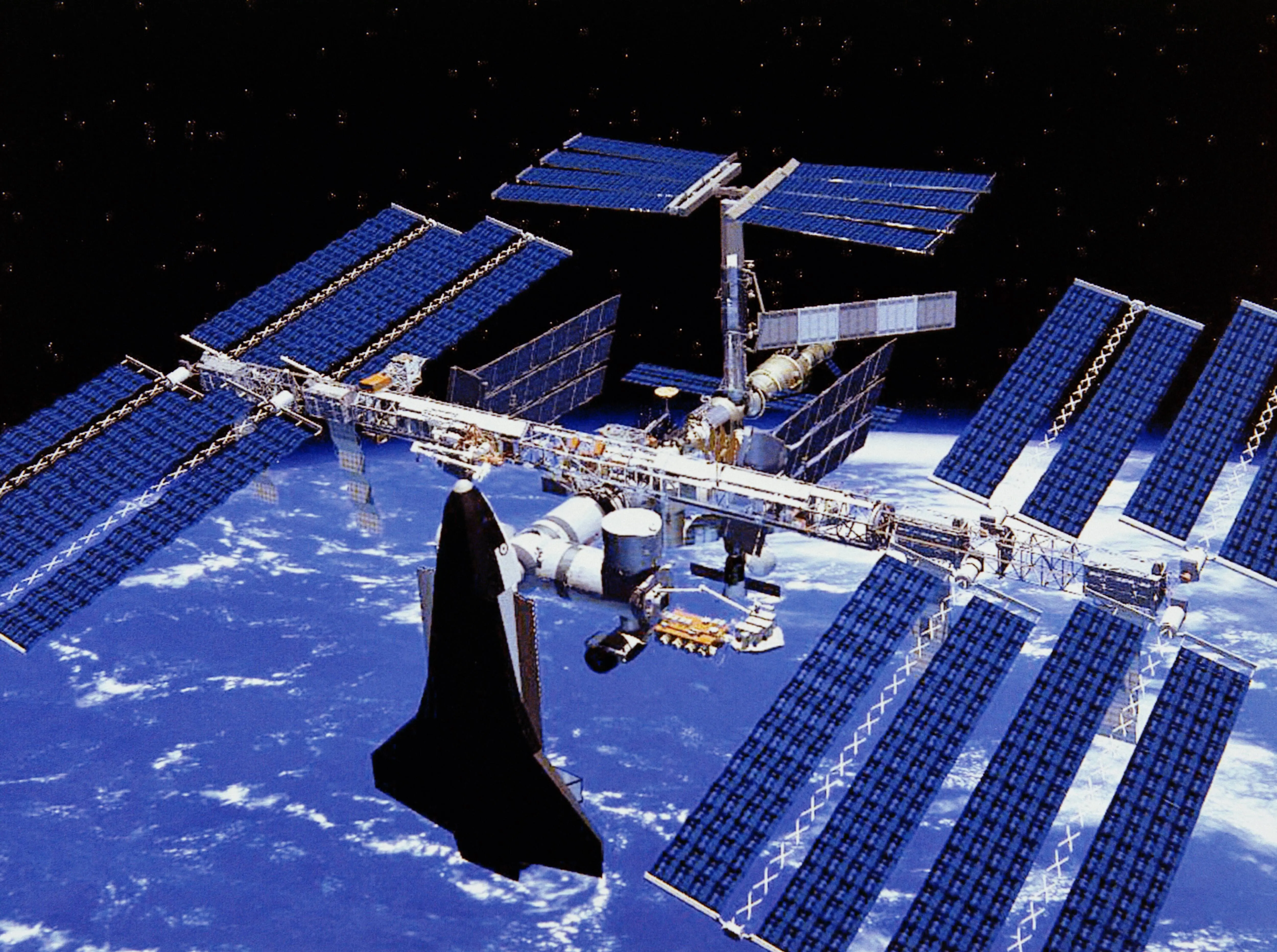 International Space Station (Image via Getty)
Seven crew members from NASA, the Japan Aerospace Exploration Agency (JAXA), and Roscosmos continued daily operations aboard the orbiting laboratory, which has now been continuously crewed for more than 25 years.
The week included scientific research, routine maintenance, cargo preparation, and public outreach.
Crew members focused on experiments related to human health in microgravity, while also supporting station systems that allow long-duration missions to continue safely.
Alongside scheduled work, astronauts and cosmonauts observed Earth from orbit and shared images taken during off-duty time.
One image shared during the week showed Earth’s surface, cloud cover, and curved horizon as seen from the station. The photo was taken by JAXA astronaut Kimiya Yui.
The crew also prepared cargo spacecraft for future departures and transfers, loading waste and equipment while ensuring station hardware remained functional.
Interviews conducted from orbit provided background on the crew’s professional paths and their roles aboard the ISS.
Overall, the week reflected standard station operations as Expedition 74 settled into its mission and continued routine work in low Earth orbit.
_____________________________________________________Earth observation and science work
Earth observation remained part of the crew’s daily life aboard the station.
JAXA astronaut Kimiya Yui shared photographs of Earth taken from the ISS, explaining his reason for doing so in a post shared online.
“I’m sure everyone would want to see a photo of Earth,” Yui wrote.
He noted that views of the planet are visible from the station without the need for special planning. The images showed large cloud systems, blue oceans, and the planet’s curved edge against space.
Scientific research continued throughout the week. NASA astronaut Zena Cardman worked on the StemCellEx-IP1 investigation, which examines how stem cells behave in microgravity.
Using a microscope, Cardman observed how the cells grew in orbit and compared the results with similar samples on Earth.
The study is designed to support future research into tissue repair and regenerative medicine.
Another experiment, called Virtual, focused on how the human balance system adapts in space. Roscosmos cosmonauts Sergey Kud-Sverchkov and Sergey Mikaev took turns wearing virtual reality goggles while researchers collected data on their responses.
One crew member involved in the work explained that the study examines “how the body adjusts when gravity is removed.”
The results may help improve methods used by astronauts when returning to Earth or landing on other planetary surfaces.
These investigations highlight the station’s role as a research platform for studying long-term human spaceflight.
_____________________________________________________________Station operations and crew activities
In addition to research, Expedition 74 spent significant time on station maintenance and logistics. Kimiya Yui installed the JEM Demonstration of CO₂ Removal System inside the Kibo laboratory module.
The system is designed to capture carbon dioxide from the station’s air and vent it into space. The demonstration is part of technology testing that could support future missions beyond low Earth orbit.
Cargo work was another focus of the week. NASA astronauts Chris Williams and Mike Fincke continued preparing JAXA’s HTV-X1 cargo spacecraft for its planned departure in January.
The crew loaded trash and unneeded equipment into the vehicle and prepared hardware for transfer.
Fincke also worked on moving a science rack into the cargo ship. In addition, he serviced the station’s Waste and Hygiene Compartment, replacing plumbing components to ensure continued operation.
Williams took part in an in-flight interview during the week, speaking about his long-standing interest in spaceflight.
“I was always fascinated by exploration and space,” he said. “Being an astronaut felt like the right way to explore.”
As of Dec. 12, two crew spacecraft and four cargo vehicles remained docked to the ISS. The Expedition 74 crew continued routine work to support station operations and prepare for upcoming mission activities.
__________________________________________________
Stay tuned for more updates.
TOPICS: Astronomy, Expedition 74, International Space Station, International Space Station research, Japan Aerospace Exploration Agency, NASA
More Astronomy
on Primetimer:
- Scientists observe a black hole dragging space and time as it consumes a star
- Interstellar comet 3I/ATLAS shows a growing green glow as its chemistry evolves
- Blue Origin to launch first-ever wheelchair user into space on December 18
- Comet Lemmon lights up Hawaii’s night sky in rare Milky Way portrait