
Interstellar comet 3I/ATLAS shows a growing green glow as its chemistry evolves
-
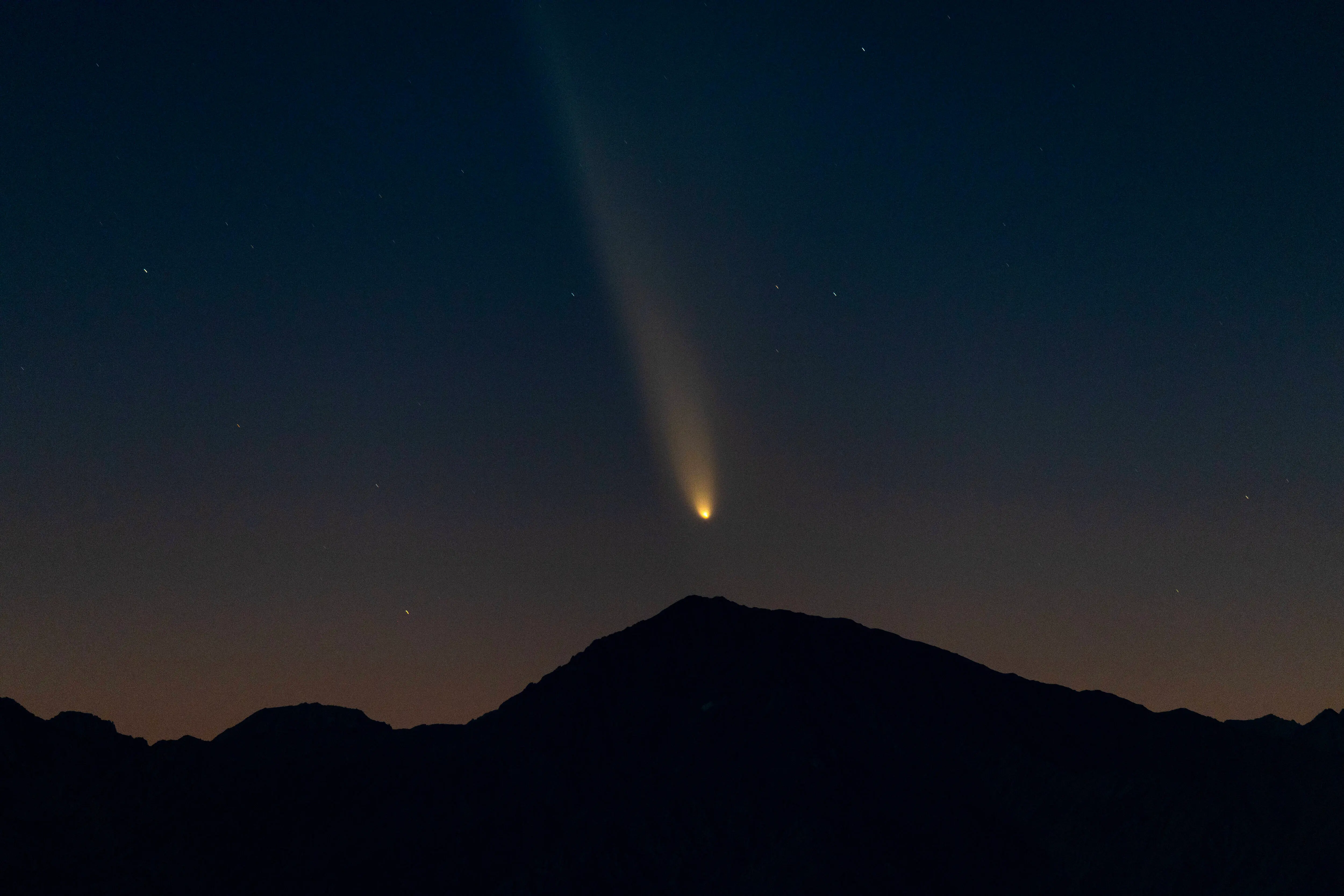 Comet Tsuchinshan-ATLAS (Photo for reference, Image via Getty)
Recent reports on new findings about interstellar comet 3I/ATLAS as scientists continue to observe changes in its appearance and chemical activity.
The comet, which entered the Solar System from interstellar space, is now exhibiting a faint green glow and has been observed in X-rays for the first time.
These updates were given by the teams cooperating with ESA, NASA, and the Gemini North Observatory around the middle of December 2025.
Comet 3I/ATLAS is basically the third confirmed interstellar object ever recorded that passes through our Solar System after 1I/‘Oumuamua and 2I/Borisov.
It is different from a regular comet in that it was not made around the Sun and is not held by the Sun's gravity.
After it goes away, it is not coming back. That is why scientists are using as many telescopes as they can to study it while they still have the opportunity.
The comet is shedding gas and dust as it moves away from the Sun, and the heat continues to reach its surface. This matter makes a cloud around it called a coma.
The latest observations indicate that the gases in this coma are changing, which results in new colors and emissions.
By using optical, infrared, and X-ray data together, scientists are getting a better understanding of the composition of this interstellar visitor.
________________________________________________________Green glow shows changes in released gases
Recent pictures of the comet 3I/ATLAS from the Gemini North telescope in Hawai‘i exhibit the celestial object with a diffused green light around its coma.
The pictures were taken on November 26, 2025, shortly after the comet was visible again following a passage behind the Sun.
The researchers say that the green color is from the gas that the comet releases as it continues to heat up.
Phys.org and NOIRLab reports say that the green light is probably from diatomic carbon, or C₂. This gas gives off green light when it is energized by the sun.
A Gemini researcher stated that “this type of green emission is commonly seen in many comets,” including those that formed in the Solar System.
Beforehand, the comet was described as having a redder tint. The scientists say the color change indicates that the dust-to-gas ratio, or the gas-to-gas ratio, has changed with time.
NASA informs that comets are not always very hasty in their reactions to heating by the Sun. One update had the note that "thermal effects can take weeks to reach deeper layers of ice."
As new layers warm up, different frozen materials can begin turning into gas. This process can continue even after the comet has passed its closest point to the Sun.
The green glow seen now suggests that 3I/ATLAS is still active and releasing new material as it moves outward.
_________________________________________________X-ray detection adds more chemical clues
In addition to visible-light images, ESA announced that comet 3I/ATLAS has been detected in X-rays for the first time. The observation was made by ESA’s XMM-Newton space telescope on December 3, 2025.
The telescope observed the comet for nearly 20 hours while it was about 280 million kilometers away.
ESA explains that comets can emit X-rays when gas flowing from their nuclei interacts with charged particles in the solar wind.
“This process is well understood and has been observed in other comets,” ESA said. The interaction produces low-energy X-rays that can only be detected from space.
X-ray observations are useful because they allow scientists to study gases that are difficult to measure using optical or infrared telescopes.
According to ESA, this includes light molecules such as hydrogen and nitrogen. These gases are important for understanding how comets form and what materials they carry.
NASA has also emphasized that each observing method adds new information. One NASA statement explained that “no single telescope can tell the whole story.”
By combining X-ray data with infrared observations from missions like the James Webb Space Telescope, scientists can better compare interstellar comets with those formed around the Sun.
Because 3I/ATLAS will soon leave the Solar System, researchers say the current observing window is limited.
As one ESA scientist noted, “this is a rare chance to study material from another star system before it is gone.”
____________________________________________________
Stay tuned for more updates.TOPICS: Astronomy, 3I/ATLAS, 3I/ATLAS comet, 3I/ATLAS interstellar object, NASA, Solar System
- Scientists observe a black hole dragging space and time as it consumes a star
- Expedition 74 completes first full week aboard the International Space Station
- Blue Origin to launch first-ever wheelchair user into space on December 18
- Comet Lemmon lights up Hawaii’s night sky in rare Milky Way portrait