
3i/Atlas mystery deepens as Avi Loeb calls out experts rejecting his idea that the visitor could be technological
-
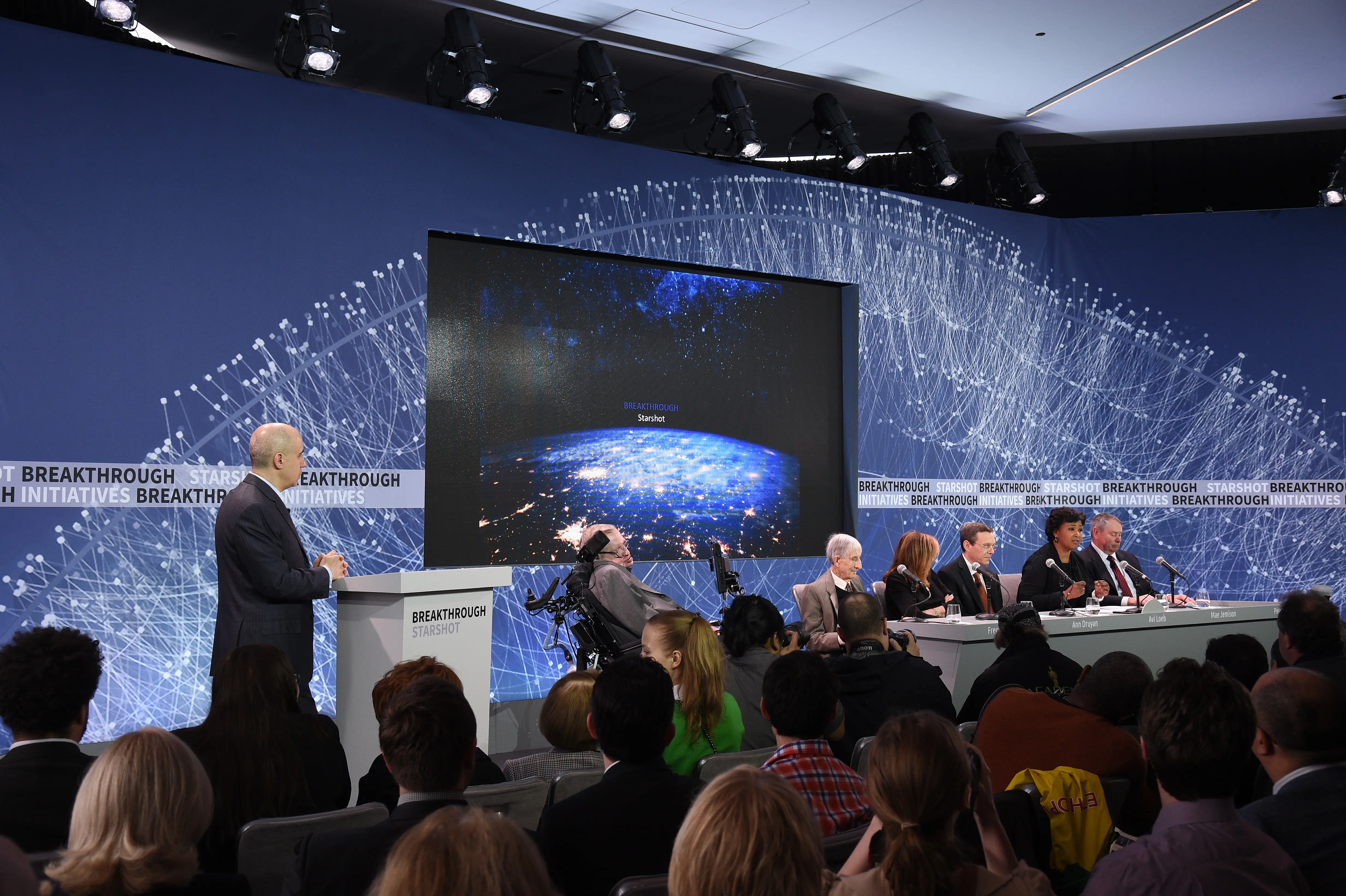 NEW YORK, NEW YORK - APRIL 12: (L-R) Yuri Milner, Breakthrough Prize and DST Global Founder; Stephen Hawking, CH, CBE, FRS, Dennis Stanton Avery and Sally Tsui Wong-Avery Director of Research, University of Cambridge; Freeman Dyson, Emeritus Professor, Princeton Institute for Advanced Study; Ann Druyan, Producer, Co-Founder and CEO of Cosmos Studios; Avi Loeb, Frank B. Baird, Jr. Professor of Science at Harvard University; Mae Jamison, Nasa Astronaut, Principal 100 Year Starship Foundation; and Peter Worden, Chairman, Breaktrough Prize Foundation, Former NASA Director speak on stage as Yuri Milner And Stephen Hawking host press conference to announce Breakthrough Starshot, a new space exploration initiative, at One World Observatory on April 12, 2016 in New York City. (Photo by Bryan Bedder/Getty Images for Breakthrough Prize Foundation)
3I/ATLAS is an interstellar object and has been one of the biggest enigmas in space this year, 2025. It was first detected on July 1, 2025, from Hawaii through the ATLAS system.
The object is unique because it is only the third known visitor from outside our solar system, after 'Oumuamua in 2017 and Borisov in 2019. Since the discovery, 3I/ATLAS has behaved unlike what one would normally expect from a comet, thus leaving the scientists highly puzzled and intrigued.
Why Avi Loeb’s Ideas Are Causing Debate
Many scientists quickly decided that 3I/ATLAS is “just a comet.” They do not want to consider the chance that it could be something different or even a technological object from another star system.
Harvard professor Avi Loeb, however, does not agree with this closed approach. He has pointed out at least 13 unusual things about 3I/ATLAS and has written 11 research papers on it. But Loeb says that instead of discussing these strange details, many experts simply dismiss his ideas and refuse to even consider other possibilities.
In his newest blog, Loeb strongly criticizes comet experts and NASA officials. He asks why they are not showing curiosity about the object’s strange features — especially something called the anti-tail.
What is the Anti-Tail, and Why is it strange?
The tail of a comet always points away from the Sun because the sunlight and solar wind push dust and gas outward. But 3I/ATLAS does have an anti-tail that doesn't behave like this.
Avi Loeb says that the anti-tail of 3I/ATLAS flipped around when the object was passing closest to the Sun. He says this is not a simple camera trick or viewpoint issue, which can happen with some comets. He also says that tiny dust particles would have been blown away by sunlight.
Therefore, the anti-tail cannot be made of normal comet dust; rather, it has to contain something heavier, something which sunlight is unable to push easily.
Could it be a swarm of solid objects?
In one of his scientific papers, Loeb offers another explanation. He suggests that the anti-tail might come from a swarm of larger solid objects moving with the comet. These objects would not melt or evaporate like normal comet material and would not be pushed by the Sun. This idea matches new data collected after the Sun flyby.
Avi Loeb ends his blog by saying that we can learn a lot from 3I/ATLAS, whether it is a normal comet or something more unusual. The real problem, he says, is that some experts refuse to look at new ideas because they believe they already know the answer.
TOPICS: 3I/ATLAS, 3I/ATLAS alien contact, 3i/ATLAS recent updates, Avi Loeb 3I/ATLAS, Avi Loeb 3I/ATLAS theory
- Interstellar visitor 3I/Atlas makes surprise appearance in NASA’s Punch observations
- Is humanity ready for alien technology? Avi Loeb discusses the risks as 3I/ATLAS approaches
- Avi Loeb reiterates need for space platform amid ongoing 3I/ATLAS discussion
- Was 3I/Atlas a planned visit? Avi Loeb lists evidence suggesting the object entered our solar system on purpose