
The Choral ending explained: How does the choir manage the final performance?
-
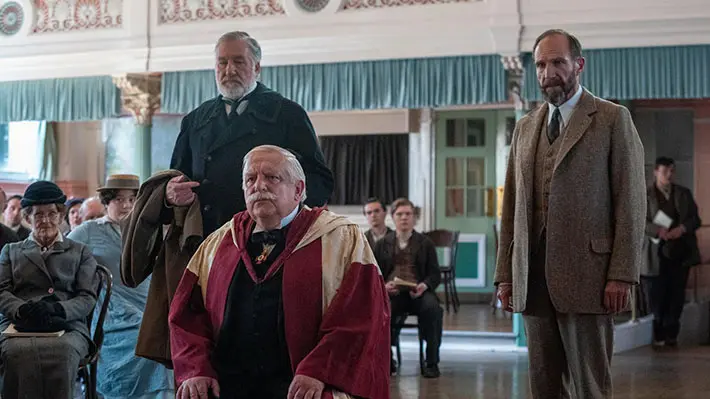
Set during the uncertainty of World War I, The Choral examines how art survives when a community is slowly hollowed out by conflict. Directed by Nicholas Hytner and written by Alan Bennett, the film marks the pair’s first original screenplay together after a string of acclaimed stage adaptations.
The film takes place in the fictional Yorkshire town of Ramsden in 1916, where conscription has begun draining the town of its young men and leaving those behind suspended between routine and fear.
At the center of the story is a local choral society struggling to prepare for its annual performance while members are called away to war.
The Choral focuses less on the battlefield and more on the emotional cost of waiting, asking whether art still has meaning when the future feels increasingly fragile.
The decision that saved the performance
The final performance in The Choral only happens because the choir is willing to adapt when tradition and authority threaten to shut them down. After their original choirmaster joins the army, Ramsden’s choral society appoints Dr. Henry Guthrie as his replacement.
Guthrie’s reputation immediately makes him a controversial figure. He has spent years working in Germany, shows little interest in overt patriotism, and is quietly understood to be gay in a deeply conservative town.
Initially, the choir plans to perform Bach’s St. Matthew Passion, but hostility toward German culture leads Guthrie to propose Edward Elgar’s The Dream of Gerontius instead.
While Elgar is English, his Catholic faith and the piece’s themes of purgatory unsettle some choir members.
Still, Guthrie believes the work reflects the moment they are living through more honestly. As conscription continues, Guthrie expands the choir by recruiting men from a nearby military hospital.
These wounded soldiers give the ensemble the voices it needs, but they also change the emotional texture of the group. The choir carries the war into the music itself.
The turning point comes when Elgar initially grants permission for the performance, only to withdraw it after learning that the choir has revised the piece. Limited resources have forced them to semi-stage the work, reimagining Gerontius as a wounded soldier and the Angel as a nurse.
Duxbury’s careless mention of these changes causes Elgar to revoke his approval entirely. Guthrie’s response is quiet but decisive. Rather than abandoning the performance, the choir makes it free.
By removing ticket sales, they avoid the need for official permission and transform the concert into a communal act rather than a sanctioned one. The performance goes ahead and is a powerful success.
What follows is sobering. Shortly after the concert, three of the choir’s young men are conscripted, while another is rejected due to epilepsy. Robert, Guthrie’s pianist, attempts to register as a conscientious objector but is taken away by the military police.
The film closes with the newly enlisted men boarding a train, their expressions shifting from pride to uncertainty once farewells are complete. The choir survives the performance, but not the war’s reach.
Recap of The Choral
The Choral begins as Ramsden’s choral society faces collapse after its choirmaster enlists. Alderman Duxbury and photographer Joe Flytton hire Dr. Henry Guthrie, a gifted but divisive conductor whose background quickly sparks suspicion.
A brick is thrown through the rehearsal window, signaling the hostility Guthrie faces from the town. Under Guthrie’s leadership, the choir changes its planned repertoire and begins rehearsing The Dream of Gerontius.
As men continue to disappear due to conscription, Guthrie recruits soldiers recovering at a nearby hospital, keeping the choir alive while blurring the line between art and war.
Personal stories unfold alongside rehearsals. Bella begins a relationship with a younger singer after her sweetheart Clyde is presumed dead.
When Clyde unexpectedly returns home, having lost an arm, tensions ripple through the group. Guthrie himself is grieving the loss of his German lover, who died when the battleship Pommern sank, a tragedy that coincides with news of Elgar’s approval.
As the choir adapts, Elgar withdraws permission after learning of the changes. Refusing to abandon the work, the group performs the piece for free, turning the concert into an act of shared defiance and unity.
The film ends with conscription closing in on the choir members. Romantic goodbyes, quiet acts of desperation, and unspoken fear lead to the final image of young men departing for war, while the music they created lingers behind.
The Choral is now available in theatres.
TOPICS: The Choral