
Betty Lou Beets case on Killer Grannies - A detailed case overview
-
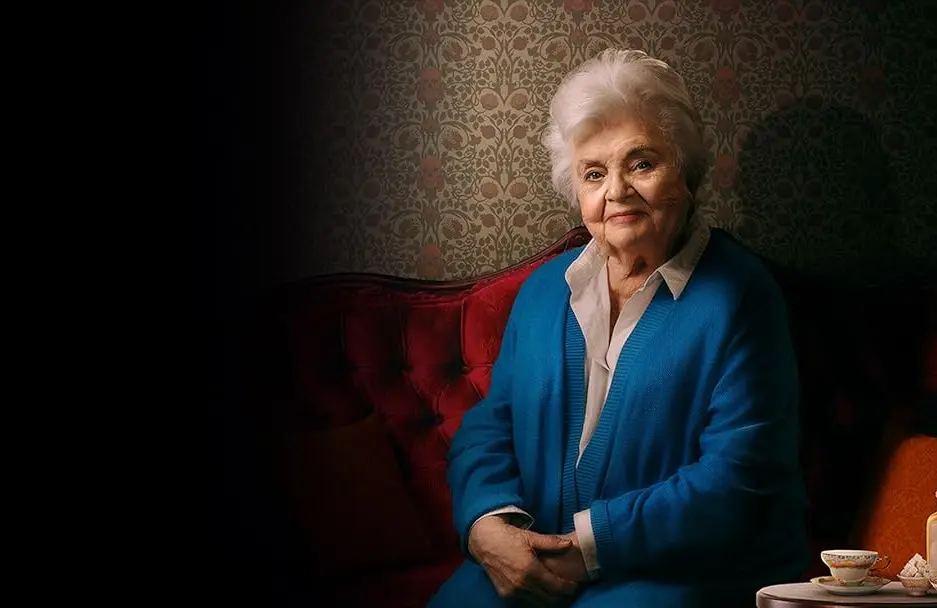 Killer Grannies season 1, episode 8 (Image via Prime Video)
In the town of Gun Barrel City, Texas, Betty Lou Beets, a grandmother known for her baking and church involvement, became the center of a shocking criminal case in the 1980s. Beets, then in her 40s, faced accusations of murdering two of her five husbands and burying their bodies on her property.
The case gained national attention when police discovered the remains of Jimmy Don Beets, her fifth husband, in a shallow grave in her front yard in 1983, followed by the recovery of her fourth husband's body nearby.
She was convicted of capital murder and sentenced to death, later executed in 2000 at age 62, marking her as the second woman put to death in Texas under Governor George W. Bush. Beets maintained she acted in self-defense due to years of abuse, though these claims emerged after her trial.
The Oxygen series Killer Grannies explores this case in episode 8 titled Granny’s Wishing Well, aired on December 28, 2025 on Oxygen, with full seasons available for streaming on Peacock.
Killer Grannies: Early life and marriages of Betty Lou Beets
Betty Lou Beets was born on March 12, 1937, in Morgantown, West Virginia, as Betty Lou Bradley. She grew up in a working-class family and moved to Texas as a young adult, where she worked various jobs, including as a bartender and caregiver. By her early 20s, she had married her first husband, with whom she had several children; the marriage ended in divorce.
Beets remarried multiple times, facing financial struggles and raising seven children across her relationships. Her second marriage to Bill Bragg in the late 1960s ended violently in 1970 when she shot him in the leg during an argument.
She was sentenced for attempted murder, albeit put on probation based on claims of self-defense. Betty Lou Beets's third marriage ended in divorce, making her financially responsible for her family. Such marriages in the early stages of her life created a precedent for tumultuous relationships and alleged fighting incidents, although no charges were filed.
In the 1980s, in her mid-40s, Beets resided in a mobile home in Gun Barrel City. She was an active member in her local Baptist church and was recognized in the area for her kindness as a loving grandmother who frequently delivered pies to acquaintances.
Her marriages to Billie Lane Robertson in 1981 and to Jimmy Don Beets in 1983 provided her with financial security because of the husbands' pensions, although they brought about further animosity. Robertson, a former rodeo worker, and Jimmy Don, a retired Dallas firefighter, provided income that helped with bills and family needs, as per CNN.
The murders and investigation
The investigations into Betty Lou Beets began in October 1983 after an anonymous tip led police to her property. Officers found the body of Jimmy Don Beets, 47, buried in a wooden shed in her front yard, shot twice in the head with a .38-caliber pistol.
Jimmy Don had been reported missing in July 1983, with Beets claiming he went fishing and fell from his boat into Lake Palestine. Her son, Robert "Robbie" Branson, 19, confessed to helping bury the body after Betty Lou Beets shot Jimmy Don during an argument over his drinking and jealousy.
Robbie received probation for his role as a juvenile accomplice. Further digging revealed the remains of her fourth husband, Billie Lane Robertson, 46, under a storage shed, also shot in the head. Robertson had vanished in August 1981, shortly after their marriage, with Betty Lou Beets collecting his Social Security benefits afterward.
She was indicted for the murder of Robertson but did not go to trial, as charges were pursued for her part in the case of Jimmy Don, which involved Texas’s capital murder law regarding murder for remuneration, in excess of $100,000 for insurance and pension benefits.
Autopsy reports showed that both men had been shot at close range, and the guns were traced to Beets. There were no witnesses to the crime, but information came from Robbie’s testimony and the location where the bodies were buried. At first, she denied committing the crime, claiming self-defense.
Police noted the bodies were hidden among planters and boat parts, blending into her yard's casual setup. The discoveries shocked the close-knit community, leading to Betty Lou Beets' arrest on October 21, 1983.
Henderson County authorities built the case methodically, interviewing family and reviewing financial records that showed Beets' attempts to declare Jimmy Don dead for benefits just before the tip, according to the New York Times.
Trial and conviction
Beets' trial began in April 1985 in Henderson County District Court, with prosecutors led by District Attorney Billy McLester arguing premeditated murder for financial gain. The state presented Robbie's testimony, forensic evidence from the burials, and records of Betty Lou Beets' benefit claims as proof of intent.
Defense attorney E. Ray Andrews, a local lawyer, focused on challenging the credibility of witnesses but called few experts or character references. Beets testified briefly, describing Jimmy Don's controlling behavior but not fully developing an abuse defense, as Andrews did not investigate prior incidents thoroughly.
The jury deliberated less than two hours before convicting her of capital murder on May 9, 1985. In the penalty phase, prosecutors highlighted the brutality of the shootings and burials, portraying Betty Lou Beets as a threat. The defense submitted minimal mitigation evidence, such as her family responsibilities.
On May 10, 1985, the jury sentenced her to death by lethal injection, a decision upheld by Judge R. C. "Buck" Files Jr. Beets was transferred to the Mountain View Unit in Gatesville, where she joined Texas' women's death row.
Post-trial reviews noted Andrews' fee included media rights to her story, creating a potential conflict, though courts later deemed it insufficient for reversal. The trial lasted about a month, drawing local media coverage for its graphic details. Betty Lou Beets expressed remorse in court statements but maintained the acts were not planned, as reported by CNN.
Appeals and execution
Betty Lou Beets filed a series of appeals beginning in 1986 on the basis of the ineffectiveness of counsel and newly available evidence of spousal abuse. A claim for habeas corpus relief was denied by the Texas Court of Criminal Appeals in 1989 because there was inadequate evidence of prejudice as a result of counsel's ineffectiveness.
A series of habeas corpus claims was denied by the Fifth Circuit Court in 1996 because spouse abuse claims were raised too late. Disbarred in 1999 due to other misconduct, Andrews' disbarment made credibility regarding poor representation harder, but it did not change the assessments.
Beets' lawyers asked clemency from Governor George Bush in February 2000, with affidavits filed by family about Beets' brutal habit of beating and her lawyer's errors, such as failing to subpoena witnesses of the abuses.
The Texas Board of Pardons and Paroles voted 15-0 against commutation on February 21, 2000. Bush denied the stay of execution after pressure from stars and women's rights activists. On February 24, 2000, Betty Lou Beets was executed by lethal injection at the Huntsville Unit.
Strapped to the gurney, she made a final statement forgiving her family and expressing love, before being pronounced dead at 6:08 p.m. Over 100 witnesses attended, including Huntsville execution observer Michelle Lyons, who later recalled the event's solemnity.
Beets became the 131st person executed in Texas since 1982 and the first woman since 1984. Her case sparked discussions on battered woman syndrome and capital punishment equity, though no posthumous changes occurred. Robbie Branson, her son, publicly supported the execution, citing family healing.
The appeals process spanned 15 years, reflecting the era's rigorous death penalty scrutiny, as per CNN.
Watch Killer Grannies episode 8 streaming on Oxygen.
TOPICS: Killer Grannies