
Features
NASA’s Armstrong Flight Research Center continues multi-mission flight research and innovation throughout 2025
NASA Armstrong Flight Research Center advanced multi-mission flight research in 2025, including supersonic testing, high-speed aircraft, air mobility, Earth observation, exploration technologies, and workforce development programs.
-
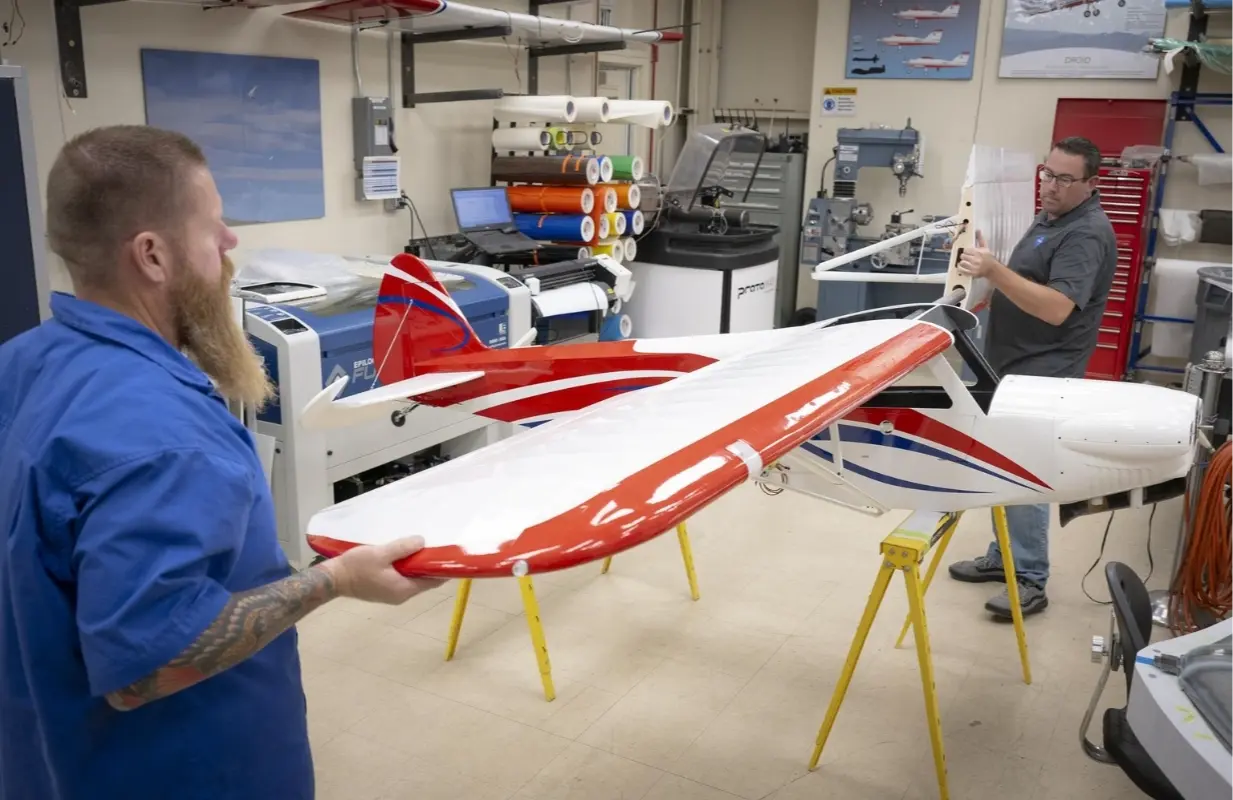 Justin Hall, left, and Justin Link attach the wings onto a subscale aircraft on Wednesday, Sept. 3, 2025, at NASA’s Armstong Flight Research Center in Edwards, California (Image via Getty)
In 2025, NASA’s Armstrong Flight Research Center in Edwards, California, maintained multi-mission flight research and innovation across aeronautics, Earth science, exploration technologies, and emerging aviation systems.
The center conducted early concept evaluations, full flight test campaigns, and system validations that provided data supporting NASA’s broader mission.
Teams focused on measurement tools, safety systems, and technical readiness for aircraft performance studies.
Operations in the Mojave Desert included testing, evaluation, and integration activities. The center collaborated with contractors, industry partners, universities, and student programs.
These activities reinforced Armstrong’s role as a primary test site for applied aeronautics research, according to NASA on December 22, 2025.
Quiet supersonic flight and the Quesst mission
NASA Armstrong advanced the quiet supersonic research program in support of the Quesst mission, including activities with the X-59 quiet supersonic research aircraft.
Electromagnetic interference testing, engine checks, and taxi tests prepared the aircraft for its first flight on October 28, 2025.
The Schlieren, Airborne Measurements, and Range Operations for Quesst team completed aircraft integration and calibrated shock-sensing probes to measure shock waves during flight.
The Commercial Supersonic Technology team conducted airborne validation using NASA F-15 aircraft to confirm measurement systems for the next mission phase.
Engine testing included maximum afterburner and speed-hold evaluations to verify performance under sustained throttle conditions.
NASA Armstrong and Lockheed Martin conducted the X-59’s first flight to transition the aircraft for ongoing research.
Ultra-efficient and high-speed aircraft research
Armstrong supported aerodynamic and performance studies for advanced aircraft concepts. Wind tunnel tests for the Sustainable Flight Demonstrator measured airflow over wing surfaces.
Technicians installed structural floors inside the X-66 demonstrator to improve access for instrumentation. Optical measurement systems tracked heat and structural strain during hypersonic testing.
Fiber Optic Sensing Systems underwent vibration tests in the Environmental Laboratory to verify durability under hypersonic conditions.
These activities provided data for high-speed aircraft performance and future hypersonic research missions.
Transforming air mobility and new aviation systems
The center conducted evaluations to support the integration of electric, autonomous, and hybrid aircraft into the national airspace.
Air mobility testing included airflow studies, air traffic surveillance, and passenger ride-quality assessments. Joby Aviation aircraft were studied using ground sensor arrays to evaluate wind effects on performance.
Drone-based inspection techniques demonstrated a reduction in maintenance time and improvement of operational safety. NASA Armstrong’s Pilatus PC-12 supported low-altitude air taxi studies.
Ride Quality Laboratory measurements informed electric air taxi and drone performance evaluations, contributing to the Advanced Air Mobility program.
Earth observation, exploration technology, and infrastructure
Armstrong conducted Earth science campaigns using ER-2 and B200 King Air aircraft to measure atmospheric, wildfire, and snowpack conditions.
High-altitude flights improved satellite calibration and atmospheric data collection. Alta X drones measured temperature, pressure, humidity, and airflow during controlled burns.
Exploration technology tests included high-altitude drops of supersonic parachutes to evaluate sensor performance for Artemis and planetary missions.
The center also completed infrastructure improvements, including re-roofing, removal of telemetry pedestals, and development of subscale research aircraft to support experimental testing.
Workforce and community engagement
NASA Armstrong hosted internships, student visits, and classroom workshops to provide hands-on experience in flight research.
Outreach programs included robotics competitions, youth aviation initiatives, and recognition of workforce contributions.
Staff and volunteers engaged students to explore careers in aerospace, aeronautics, and STEM disciplines.
NASA Armstrong’s 2025 activities continued a multi-mission research portfolio that included supersonic flight, high-speed aircraft testing, air mobility evaluations, Earth observation, exploration technologies, and workforce development.
These efforts produced data and validated systems supporting ongoing NASA missions and future aeronautics programs.
Stay tuned for more updates.
TOPICS: NASA Armstrong Flight Research Center, 2025 flight research, NASA, NASA internships and STEM outreach, NASA Mojave Desert testing, X-59 quiet supersonic aircraft