
"But there’s no other choice”: Martin Scorsese recalls longtime friend Rob Reiner
-
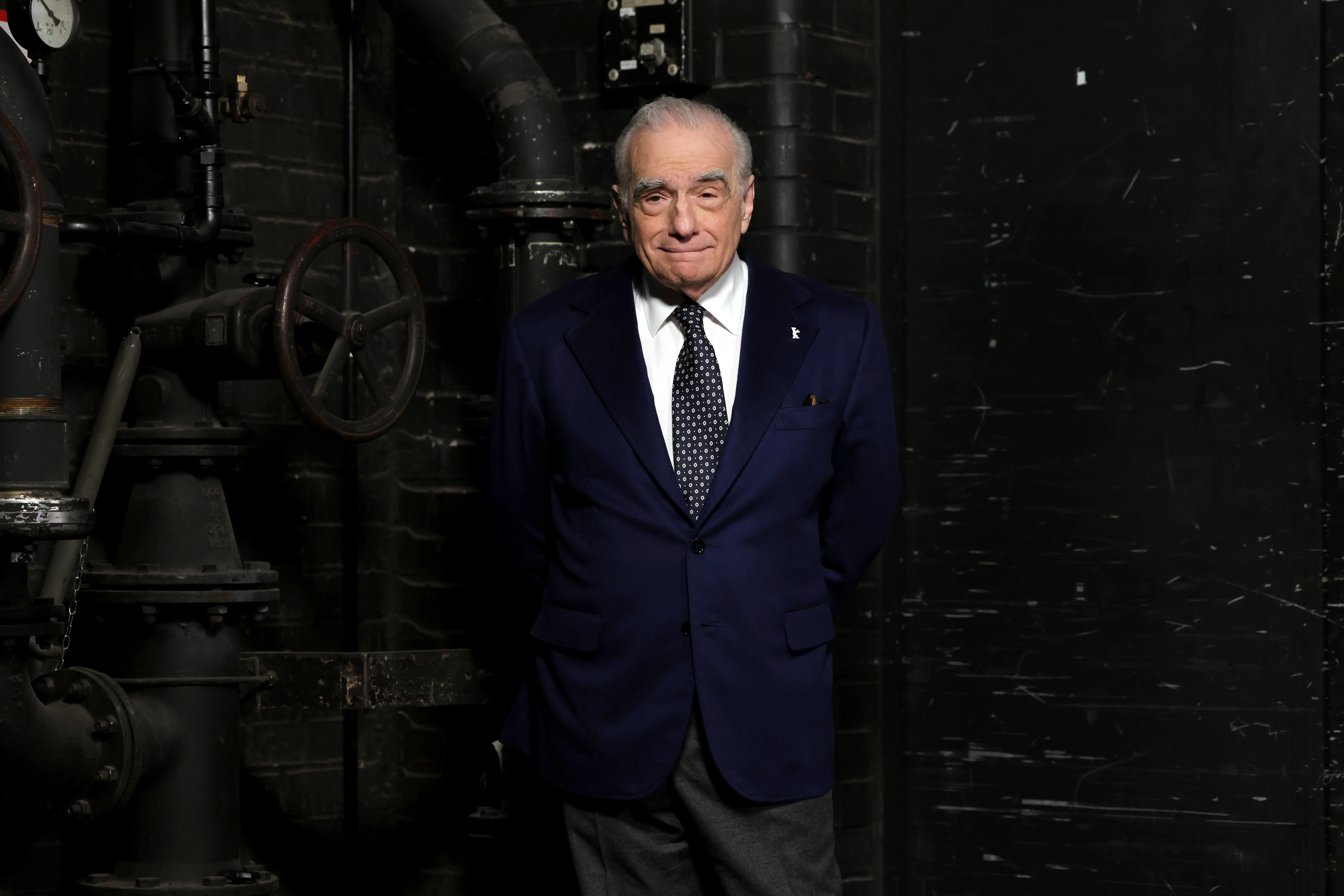 BERLIN, GERMANY - FEBRUARY 21: Martin Scorsese poses backstage at the Honorary Golden Bear: In Conversation With Martin Scorsese during the 74th Berlinale International Film Festival Berlin at HAU Hebbel am Ufer on February 21, 2024 in Berlin, Germany. (Photo by Sean Gallup/Getty Images)
Martin Scorsese has spent a lifetime preserving memory through cinema, but nothing in his work prepares him for the quiet finality of personal loss. The filmmaker is mourning Rob Reiner and Michele Singer Reiner not as icons of Hollywood, but as friends whose absence has altered his own sense of time.
In a guest essay for The New York Times, Scorsese reflects on what it means to acknowledge death at all, to accept that language itself must change. The phrase “there’s no other choice” becomes less a statement of fact and more an emotional surrender. It captures the moment when grief stops resisting reality and begins learning how to live alongside it.
Scorsese’s tribute to Rob and Michele Reiner
Martin Scorsese opens his New York Times essay with a line that immediately establishes the depth of his loss:
“Rob Reiner was my friend, and so was Michele. From now on, I’ll have to use the past tense, and that fills me with such profound sadness. But there’s no other choice.”
The sentence is striking not for its drama, but for its restraint. Scorsese does not dramatize the moment or search for meaning in it. Instead, he focuses on the quiet violence of grammar, the realization that friendship has been pushed into memory whether he wants it there or not. The phrase “no other choice” does not suggest acceptance so much as inevitability. Loss, he implies, is something that happens regardless of readiness.
Scorsese’s tribute traces his relationship with Rob Reiner back to the early 1970s, when both men were East Coast transplants navigating Los Angeles. Reiner’s background in New York comedy shaped their bond, and Scorsese emphasizes how naturally their sensibilities aligned. He writes:
“Right away, I loved hanging out with Rob. We had a natural affinity for each other. He was hilarious and sometimes bitingly funny, but he was never the kind of guy who would take over the room.”
Rather than foregrounding Reiner’s fame, Scorsese returns repeatedly to his generosity — his ability to make space for others, to enjoy humor without dominating it. That balance, Scorsese suggests, defined both Reiner’s friendships and his work as a director.
Their professional collaboration on The Wolf of Wall Street deepened that respect. Reflecting on the finished film, Scorsese writes:
“I was moved by the delicacy and openness of his performance when we shot it, moved once again as we brought the scene together in the edit and moved as I watched the finished picture.”
Scorsese admits that revisiting those moments now is painful. The qualities that made Reiner such a humane presence onscreen only deepen the sense of what has been lost. He closes the tribute by refusing closure altogether. Instead, he allows himself the imagination of continuity:
“I have to be allowed to imagine them alive and well … and that one day, I’ll be at a dinner or a party and find myself seated next to Rob, and I’ll hear his laugh and see his beatific face and laugh at his stories and relish his natural comic timing, and feel lucky all over again to have him as a friend.”
It is not denial, but a coping mechanism, a way of preserving presence when reality has already taken it away.
The tragedy behind the remembrance
Rob Reiner, 78, and Michele Singer Reiner, 70, were found dead in their Brentwood, Los Angeles home on December 14, 2025. Authorities later confirmed that both had suffered multiple sharp-force injuries, and the Los Angeles County Medical Examiner ruled the deaths homicides.
Their son, Nick Reiner, 32, was arrested later that day and has since been charged with two counts of first-degree murder, with special circumstances alleging multiple victims and the use of a deadly weapon. He is currently being held without bail, and prosecutors have not yet decided whether to seek the death penalty. His arraignment is scheduled for January 7, 2026.
Rob and Michele had worked closely with their son on the 2015 film Being Charlie, which chronicled a young man’s battle with substance abuse. At the time, they described the project as a difficult but hopeful attempt at understanding and connection.
Since the arrests, law enforcement officials have declined to speculate on motive, and Reiner’s defense attorney has urged the public to allow the legal process to unfold without assumptions.
Martin Scorsese’s tribute does not attempt to reconcile the horror of what happened with the beauty of what came before. Instead, it holds both truths at once.
TOPICS: Martin Scorsese