
Astronomers find evidence that evolving stars erase nearby worlds
-
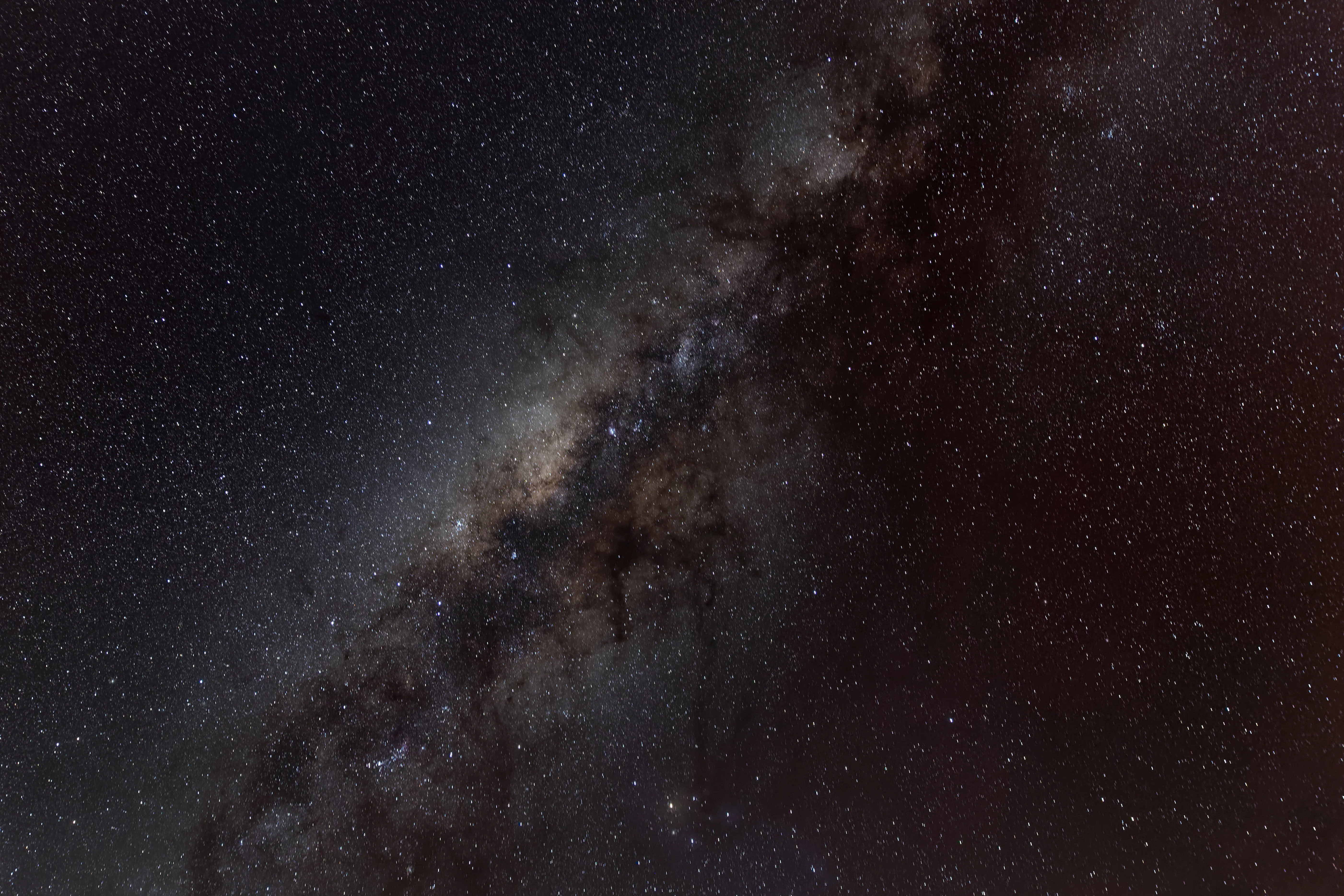 The Milky Way appears over the Valle de la Luna in the Atacama Desert (Image via Getty)
Space.com reports on new research suggesting that aging Sun-like stars often lose their closest planets as they evolve. The findings are based on an analysis of data collected by NASA’s Transiting Exoplanet Survey Satellite (TESS), which observes distant stars for signs of orbiting planets.
The study compares planetary systems around stars at different stages of their lifetimes, focusing on stars with masses similar to that of the Sun.
Researchers examined both main sequence stars, which are actively fusing hydrogen, and post–main–sequence stars, which have begun to expand as they exhaust their fuel.
The results indicate that planets in short, close orbits are less common around older stars.
Scientists interpret this difference as evidence that planets are being destroyed as their host stars age. As stars expand, they can pull nearby planets inward through tidal forces or engulf them entirely.
Although Earth’s fate lies billions of years in the future, these systems offer insight into how planetary systems change over time.
The research helps improve understanding of how stars and planets interact as stars evolve and provides a framework for studying the long-term future of solar systems similar to our own.
_________________________________________________________Fewer close planets found around older stars
Researchers Edward Bryant of the University of Warwick and Vincent Van Eylen of University College London analyzed nearly 457,000 post–main–sequence stars observed by TESS.
From this sample, they identified 130 planets and planet candidates in close orbits. When compared with younger, main-sequence stars, these older systems showed a lower number of nearby planets.
“We saw that these planets are getting rarer [as stars age],” Bryant said.
The researchers concluded that the difference is not explained by how the stars originally formed. “We’re fairly confident that it’s not due to a formation effect,” Bryant said, noting that the stars showed similar mass and chemical makeup.
As stars grow larger, their gravity creates stronger tidal effects on nearby planets. These forces can cause planetary orbits to shrink over time.
According to the study, this orbital decay becomes more pronounced as stars leave the main sequence.
“The fraction [of stars with planets] gets significantly lower for all stars and shorter-period planets,” Bryant said, adding that the trend matches predictions from tidal decay models.
The results suggest that planetary loss is a common outcome of stellar aging.
________________________________________________________________Challenges, limits, and future observations
Detecting planets around older stars presents technical challenges. TESS identifies exoplanets through transits, which occur when a planet passes in front of its star and slightly reduces its brightness. Larger stars produce weaker transit signals, making planets harder to detect.
“If you have the same size planet but a larger star, you have a smaller transit,” Bryant said. Despite this, the researchers emphasized that stellar mass remains the key factor in predicting how stars evolve.
Stars with masses similar to the Sun are expected to follow comparable life cycles.
Astronomer Sabine Reffert of Universität Heidelberg, who was not involved in the study, highlighted the importance of the findings.
“We had never seen this kind of difference in planet occurrence rates between [main sequence] and giants before,” she said, citing limited data in earlier studies.
The study also brings up the influence of metallicity, that is, the number of elements heavier than helium, which can significantly change how fast planets are formed. New research on stellar spectra might clarify these figures.
Besides, the European Space Agency's Plato mission, which is planned to be launched in 2026, has some more data that is going to be very helpful in figuring out how many planets disappear around stars that are getting old.
________________________________________________________
Stay tuned for more updates.
TOPICS: Astronomy, NASA, NASA’s Transiting Exoplanet Survey Satellite (TESS), Planets, Sun like stars
- Hubble data reveal dust plumes from rare high-energy impacts in a nearby star system
- Ursid meteor shower peaks tonight, closing out 2025’s final skywatching show
- Rocket Lab stock hits record high after major Space Force satellite award
- How Mount Wilson Observatory began its legacy in modern astronomy on this day in 1904