
WXXV News 25 begins with new findings from space science based on observations by the Hubble Space Telescope. Scientists report evidence of two separate collisions between large space rocks near the star Fomalhaut.
Features
Hubble data reveal dust plumes from rare high-energy impacts in a nearby star system
Hubble Space Telescope data reveal that two large collisions near the star Fomalhaut created dust clouds once mistaken for a planet, helping scientists better understand how planetary systems form
-
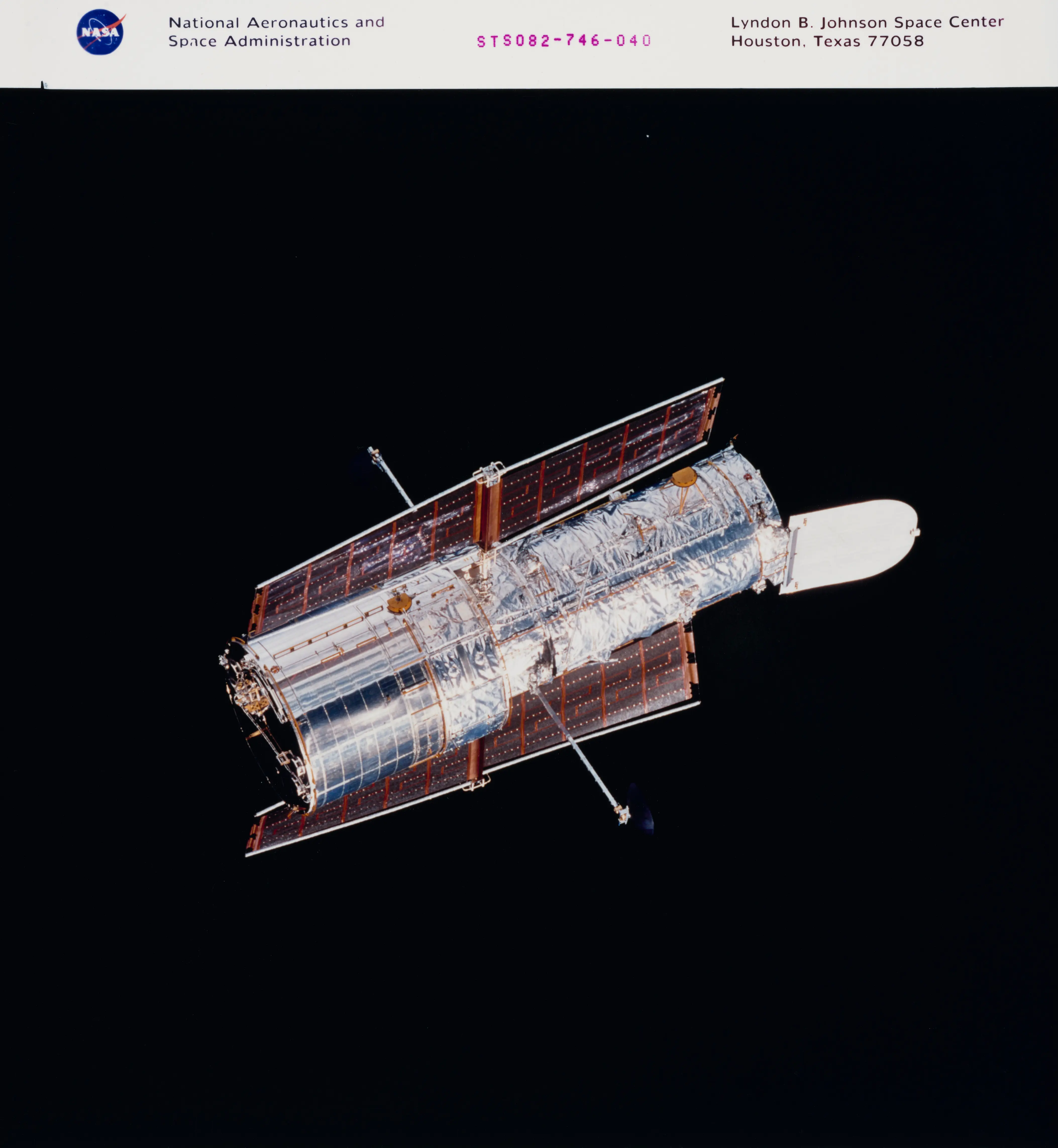 Suspended in the dark vastness of space, the Hubble Space Telescope (HST) continues its separation from the Space Shuttle Discovery following its release from the cargo bay (Image via Getty)
The findings explain a long-standing question about a bright point seen near the star for years. Earlier data suggested the object could be a planet. Later images showed the point faded, and a new one appeared nearby. This change led researchers to review the data again.
New analysis shows the bright points were clouds of dust created by impacts between large bodies orbiting the star. The dust spread over time and then became too thin to see. The results were published in the journal Science and are based on images collected over several years.
The star Fomalhaut is about 25 light-years from Earth. It is surrounded by a disk of debris that includes rock and dust. Scientists study these disks to learn how planets form.
The recent findings provide direct evidence of large impacts outside our solar system. Researchers plan to continue observing the area to track changes in the dust clouds and gather more data.
Collision evidence replaces planet theory
Scientists first noticed a bright spot near Fomalhaut years ago and tracked it over time. The object was labeled as a possible planet because it appeared solid and distinct. In 2023, new images from Hubble showed that the bright spot was gone.
Another bright area appeared in a different location. This pattern did not match how a planet would behave.
Researchers concluded the light came from dust created when two large objects collided. Each object was estimated to be at least 37 miles wide. The dust clouds reflected light from the star, making them visible. As the dust spread, the light faded.
Joshua Lovell of the Harvard-Smithsonian Center for Astrophysics said the result was “highly unexpected” because the same area showed “two, unique, massive collisions inside 20 years.” He was not part of the study.
The study explains why the object appeared and disappeared over time. It also shows how long dust from impacts can remain visible.
The findings change how scientists interpret past observations near debris disks.
What the findings mean for planet formation studies
Large collisions play a role in how planets form and change. When space rocks collide, they break into smaller pieces that can later combine. Observing these events helps scientists understand the early stages of solar systems.
Astrophysicist Meredith MacGregor of Johns Hopkins University said studying these events is “like taking a toddler picture of our solar system.”
She was not involved in the research. Her comment refers to observing systems at an early stage of development.
The research team plans to keep watching the dust cloud to see how it spreads and fades. Tracking these changes will help confirm models of debris movement.
Study author Paul Kalas of the University of California, Berkeley, said scientists are “catching these violent explosions in real time.” The ongoing observations will add to the data already collected by Hubble.
The findings may suggest that large collisions happen more often than once thought, or that this system is an exception. More observations will be needed to determine which explanation fits. The results add new information to the study of nearby star systems and planetary development.
--------------------------------------------------------------------------------------------
Stay tuned for more updates.
TOPICS: Astronomy, Hubble observations 2025, Hubble Telescope, NASA Hubble Space Telescope, University of California
More Astronomy
on Primetimer:
- Ursid meteor shower peaks tonight, closing out 2025’s final skywatching show
- Astronomers find evidence that evolving stars erase nearby worlds
- Rocket Lab stock hits record high after major Space Force satellite award
- How Mount Wilson Observatory began its legacy in modern astronomy on this day in 1904