
Trump shifts US space focus back to the Moon, delaying Mars ambitions
-
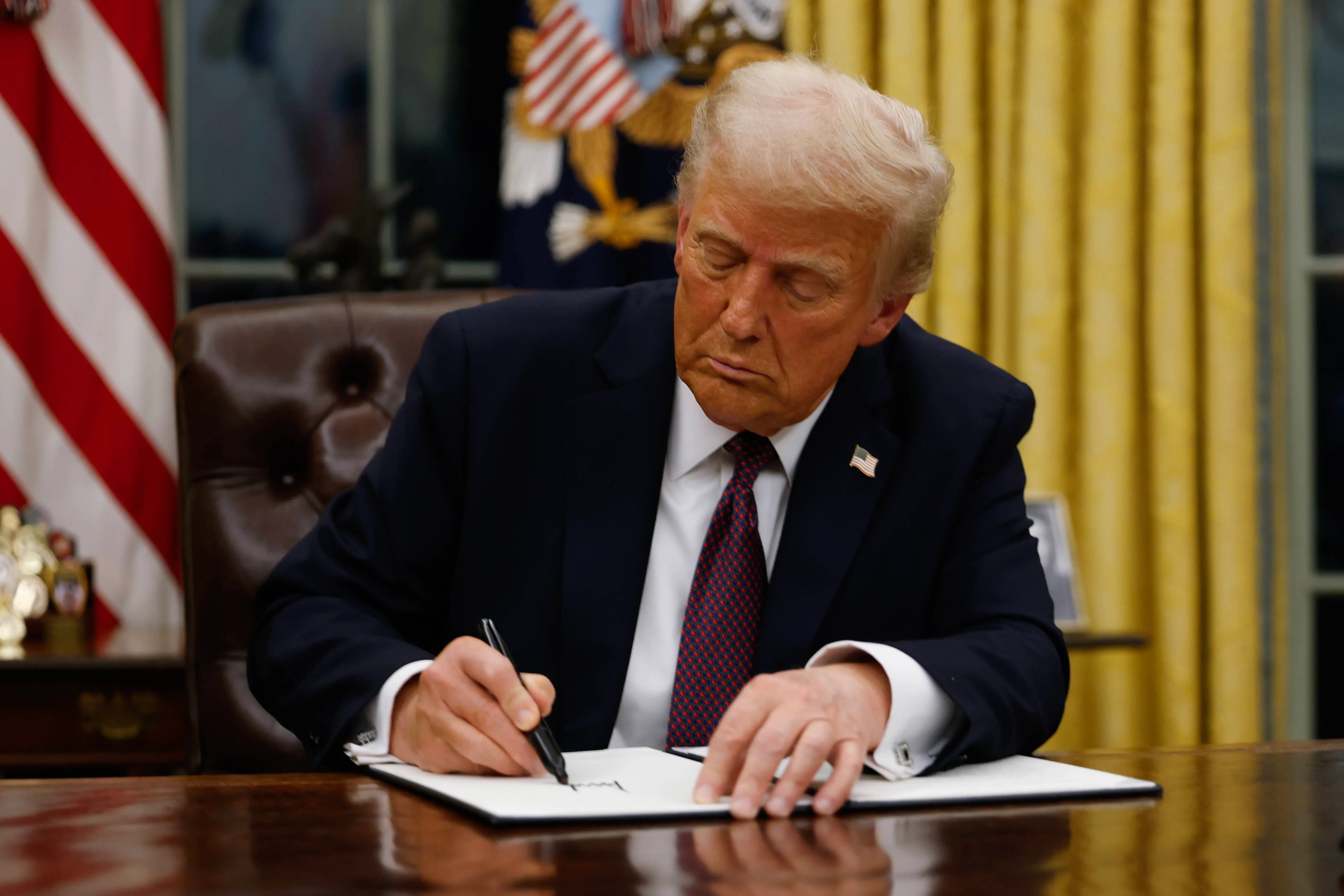 President Donald Trump (Image via Getty)
SpaceDaily reports that the White House has shifted its focus to sending astronauts back to the Moon, with plans for Mars further in the future.
An executive order signed on Thursday confirms that the United States aims to return humans to the lunar surface by 2028 under the Artemis program.
The order sets clear milestones for NASA and its private partners, outlining steps toward a longer-term presence on and around the Moon.
The policy change comes after months of mixed signals about US space goals. Earlier statements from President Donald Trump had pointed toward Mars as the main target during his current term.
The new order instead places the Moon at the center of near-term planning, with Mars framed as a later objective.
The document also highlights international competition, especially with China, which has announced its own crewed lunar goals for 2030.
At the same time, technical delays continue to affect schedules, including work on the lunar lander being developed by SpaceX.
The direction adds pressure on NASA and industry partners to meet revised deadlines while keeping longer-term exploration goals in view.
___________________________________________________________________Executive order sets timeline and goals for the Moon
The executive order signed by Donald Trump confirms that the United States will focus its human spaceflight program on returning to the Moon.
It states that a crewed landing should take place by 2028 through NASA’s Artemis program.
The document says the effort would “assert American leadership in space, lay the foundations for lunar economic development, prepare for the journey to Mars, and inspire the next generation of American explorers.”
The order also outlines plans beyond a single landing. According to the text, NASA plans to establish “initial elements of a permanent lunar outpost by 2030.”
This includes infrastructure on the surface and in lunar orbit. The policy further confirms earlier statements that nuclear power systems would be used, noting plans to deploy reactors “on the Moon and in orbit.”
Artemis 3, the mission expected to return astronauts to the lunar surface, is currently scheduled for mid-2027.
However, that date has shifted several times. Industry analysts point to ongoing development of the human landing system, including work by SpaceX, as a key factor in the delays.
The new order reinforces existing targets but does not change the technical challenges facing the program.
__________________________________________________________Mars plans delayed as competition and constraints shape policy
The renewed focus on the Moon marks a change from earlier comments made after Trump returned to office in January, when he spoke about placing the US flag on Mars within four years.
The executive order does not set a date for a Mars landing and instead frames Mars as a later step that follows lunar missions.
It states that work on the Moon will “prepare for the journey to Mars,” linking the two goals but placing them on different timelines.
The policy shift comes amid broader geopolitical and industrial factors. The United States is seeking to stay ahead of China, which has announced plans to send astronauts to the Moon by 2030 and begin building a lunar base.
The order reflects concern about maintaining a continuous US presence in deep space during that period.
Tensions in the private sector have somewhat highlighted the theme as well.
One of the main points of the on-stage argument between Trump and Elon Musk earlier this year was how they saw space exploration, particularly Mars, very differently.
Musk has always advocated for a fast move to Mars, while the resuscitated lunar missions and the newly minted NASA policy placed most of the focus on the Moon and not Mars.
Without singling out the spat, the executive order seems to indicate that American space policy will still be governed by the plans and timetables already laid out as NASA and its partners prepare for the next crewed missions.
______________________________________________________
Stay tuned for more updates.TOPICS: Astronomy, Donald Trump, Artemis Moon mission, Blue Origin Mars mission, NASA, space x
- NASA names international four-member crew for upcoming SpaceX space station mission
- Astronomers trace powerful blue cosmic flashes to stars being torn apart by black holes
- How the Army supports unified command in space operations
- How did Elon Musk’s Starlink come to dominate the world’s skies? Details explored