
The Vera C. Rubin Observatory could detect a large number of interstellar comets like 3I/ATLAS
-
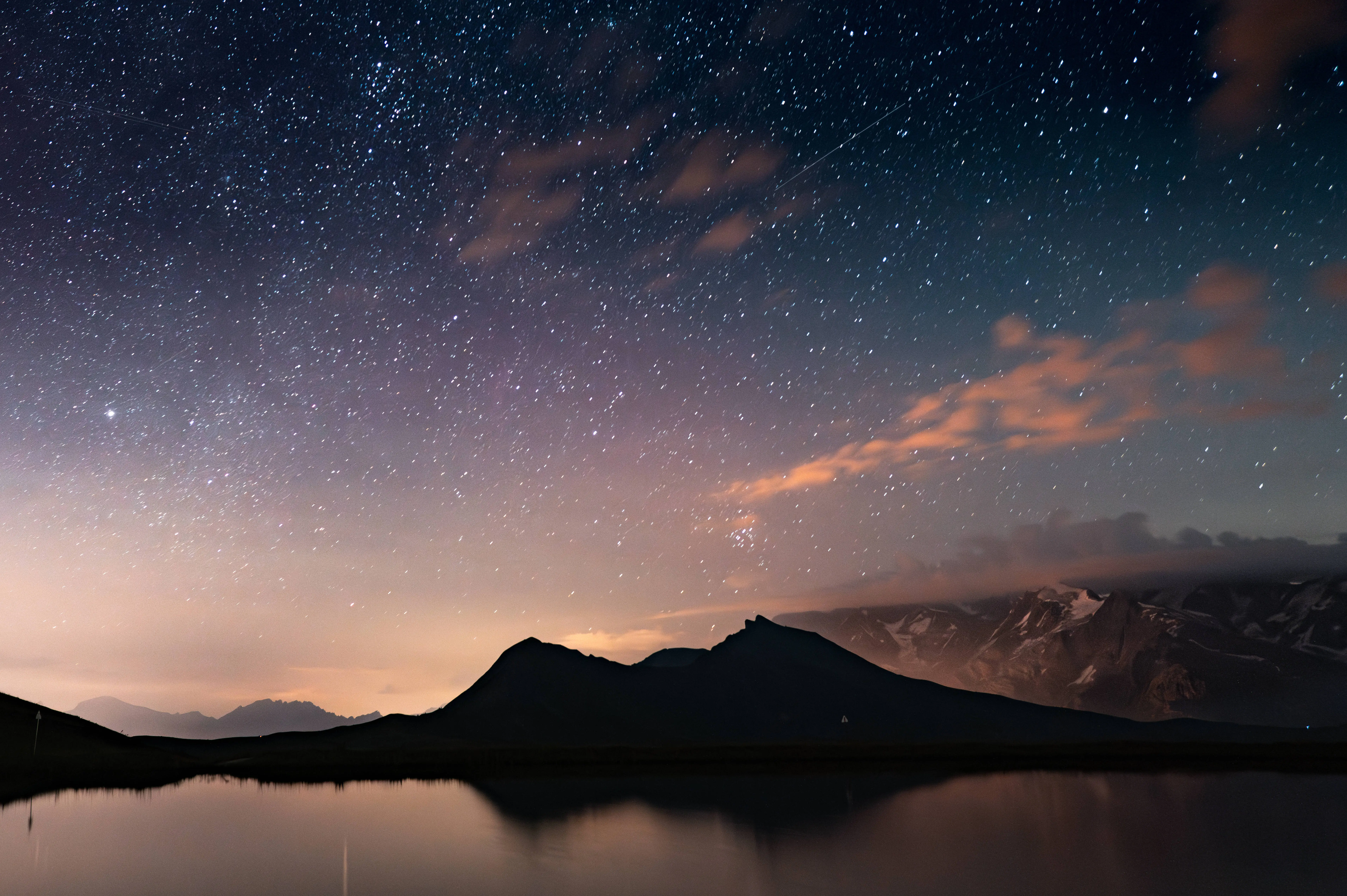 Perseid shower of shooting stars (Image via Getty)
Interstellar comet 3I/ATLAS, first discovered in July 2025, remained a popular topic of discussion throughout the year. It is now on its way toward the outskirts of the solar system, having made its closest approach to Earth on December 19, 2025.
It was only the third interstellar object spotted by humans after they discovered 1I/’Oumuamua and Comet 2I/Borisov in 2017 and 2019, respectively.
However, research suggests that there can be over 10,000 interstellar objects just in the orbit of Neptune alone, and the Vera C. Rubin Observatory claims it can detect up to 50 such interstellar objects in the coming years despite the distance.
With its advanced technology, which includes instruments like the world’s largest digital camera, the observatory has the capacity to capture unprecedented ultra-high-definition time-lapses.
According to the spokesperson of the Vera C. Rubin Observatory, who recently spoke with IFLScience, the observatory can “detect between 5 to 50 ISOs” like 3I/ATLAS within the next ten years.
More details on the Vera C. Rubin Observatory’s ability to spot interstellar objects like 3I/ATLAS
Although experts have only been able to spot three interstellar objects so far, they are hopeful they can detect more in the coming years, especially with the help of the Vera C. Rubin Observatory.
During the next 10-year Legacy Survey of Space & Time (LSST), the observatory’s advanced camera will be able to detect numerous ISOs.
According to the spokesperson of the observatory:
“The best estimates suggest Rubin should detect between 5 and 50 ISOs over its 10 year survey, stemming from the still-limited empirical constraints on the ISO population.”
They added that the detection rate depends on how common ISOs are.
“If ISOs are more common than the first three discoveries imply, that rate could be higher; If they are rarer, the rate scales accordingly,” the spokesperson explained.
Regardless, the observatory is expected to collect significant data in the years to come, helping experts study interstellar objects.
The observatory informed the experts of its capacity when it revealed its first images during the summer. At the time, it captured over 2,000 new asteroids, an extremely difficult accomplishment, especially when done within a few hours.
It is believed that it also spotted 3I/ATLAS, but the data was not taken into consideration until the researchers began to study the interstellar visitor actively.
The observatory’s spokesperson explained that searching for an interstellar object is nearly impossible due to the challenging conditions in which it remains.
They are not only small but also far away, so much so that to many it seems just like another star. This is where the Vera C. Rubin Observatory will assist the researchers.
“The reason Rubin will be great at finding them is because it can image the entire visible sky to great depth, and do so repeatedly – allowing it to identify the one thing that makes objects passing through our solar system stand out from the background: their motion,” the spokesperson explained.
They went so far as to label the observatory as an “ISO hunter” due to its capability to spot interstellar objects.
The implications of such findings would be significant for mankind. It would not only add another layer to space exploration but also open up a new avenue of research, as experts can detect potential threats to the planet.
The Vera C. Rubin Observatory is also expected to detect nearly three times as many asteroids as are currently known.
Stay tuned for more updates.
TOPICS: 3I/ATLAS, Interstellar Comet, Vera C. Rubin Observatory
- Avi Loeb reports new radio constraints and size estimates for interstellar object 3I/ATLAS
- Interstellar comet 3I/ATLAS shows rotating jets in a rare sun-facing tail
- What Europa Clipper and Parker Solar Probe discovered about interstellar comet 3I/ATLAS
- Research reviews the chances of 3I/ATLAS debris reaching Earth