
Features
Research reviews the chances of 3I/ATLAS debris reaching Earth
Research evaluates the likelihood of debris from interstellar object 3I/ATLAS reaching Earth, analyzing gas, dust and larger particles while referencing measurements and findings by Harvard Professor Avi Loeb.
-
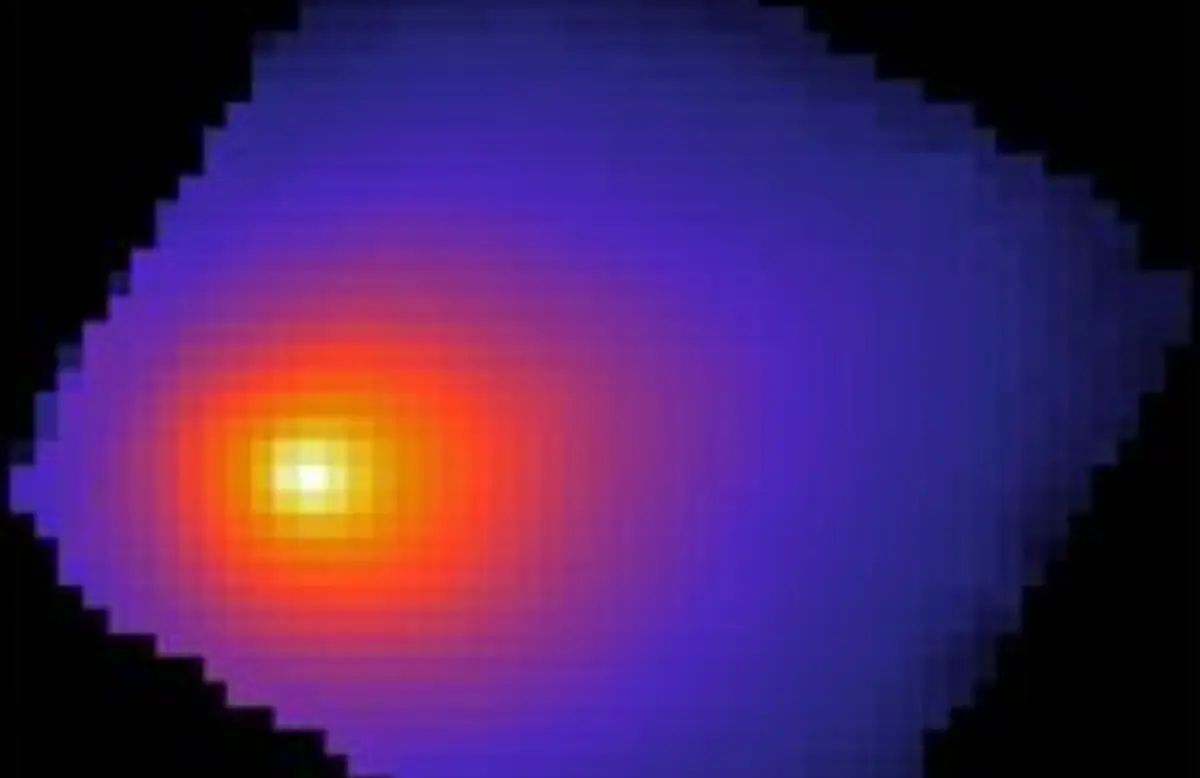 Comet 3I/ATLAS (Image via NASA)
The interstellar object 3I/ATLAS made its closest approach to Earth on December 19, 2025, at a distance of 269 million kilometers. Researchers have examined whether any material released from the object could reach Earth.
Based on measurements from the James Webb Space Telescope, gas and dust emitted by 3I/ATLAS are unlikely to reach the planet.
Solar wind and radiation pressure are expected to disperse smaller particles and gas before they can travel significant distances.
Larger solid objects remain sparse and distant enough that the probability of an impact is negligible, according to Harvard Professor Avi Loeb.
Gas and Dust Emissions from 3I/ATLAS
The gas surrounding 3I/ATLAS contains hydrogen cyanide and other compounds. Hydrogen cyanide is a toxic chemical previously used as a weapon, but its potential to reach Earth is limited by the effects of solar wind.
Observations indicate that gas emitted by 3I/ATLAS would be swept away at a distance of a few million kilometers from the object.
This distance is significantly smaller than the minimum separation of 55 million kilometers between 3I/ATLAS and the Earth’s orbital path.
Dust particles smaller than a micrometer are similarly affected by solar radiation pressure, which disperses them quickly and prevents them from traveling toward Earth.
The interaction of solar wind and radiation with these particles ensures that the majority of gas and fine dust will not reach the planet’s atmosphere.
Larger Solid Particles
Solid objects released from 3I/ATLAS that are larger than a millimeter experience negligible effects from solar radiation and wind due to their small cross-section relative to mass.
Despite this, particles smaller than a meter are expected to burn up in the Earth’s atmosphere before reaching the surface. Objects larger than a meter are extremely sparse.
Calculations based on the mass loss rate of 3I/ATLAS indicate that fewer than one million large objects have been released in recent months.
Given their release from distances exceeding twice the Earth-Sun separation, the closest of these objects would remain no nearer than ten times the Earth’s radius.
This assessment assumes that the objects cannot use technological propulsion to alter their trajectory.
Classification and Monitoring of 3I/ATLAS
The Loeb Classification Scale, developed by Avi Loeb, ranks interstellar objects from zero, for natural comets or asteroids, to 10, for potential alien technology posing a threat to humanity.
Shortly after its discovery in July 2025, 3I/ATLAS was ranked fourth on this scale. Loeb has maintained that the object is most likely natural but has identified anomalies that could be consistent with technological origin.
Updates to the classification depend on ongoing data collection and analysis, particularly around the closest approaches to Earth and Jupiter.
Observations include tracking the spectrum and speed of the anti-tail jet, which extends toward the Sun.
Measurements of CO2, CO, and H2O in the jet can indicate sublimation from natural ice, while any unusual exhaust patterns or unexpected motions could suggest a technological source.
Detection of smaller objects near Jupiter or artificial lights could also provide further information.
At present, based on observations and calculations, the likelihood of debris from 3I/ATLAS reaching Earth remains extremely low.
Solar wind and radiation pressure are expected to prevent smaller particles and gas from traveling the required distance, and larger objects are sparse and distant enough to make impact probability negligible.
Stay tuned for more updates.
TOPICS: 3I/ATLAS, 3I/ATLAS comet, 3I/ATLAS comet observation, 3I/ATLAS distance from Earth, 3I/ATLAS observation, 3i/ATLAS recent updates, Avi Loeb 3I/ATLAS
More 3I/ATLAS
on Primetimer:
- What Europa Clipper and Parker Solar Probe discovered about interstellar comet 3I/ATLAS
- ESA’s Juice spacecraft observes comet 3I/ATLAS ahead of delayed science data return in 2026
- Avi Loeb reiterates scientific caution in assessing the nature of 3I/ATLAS
- 3I/ATLAS as a cosmic messenger: Avi Loeb on the future of interstellar time capsules