
Avi Loeb says academia discourages big questions as 3I/ATLAS approaches Earth
-
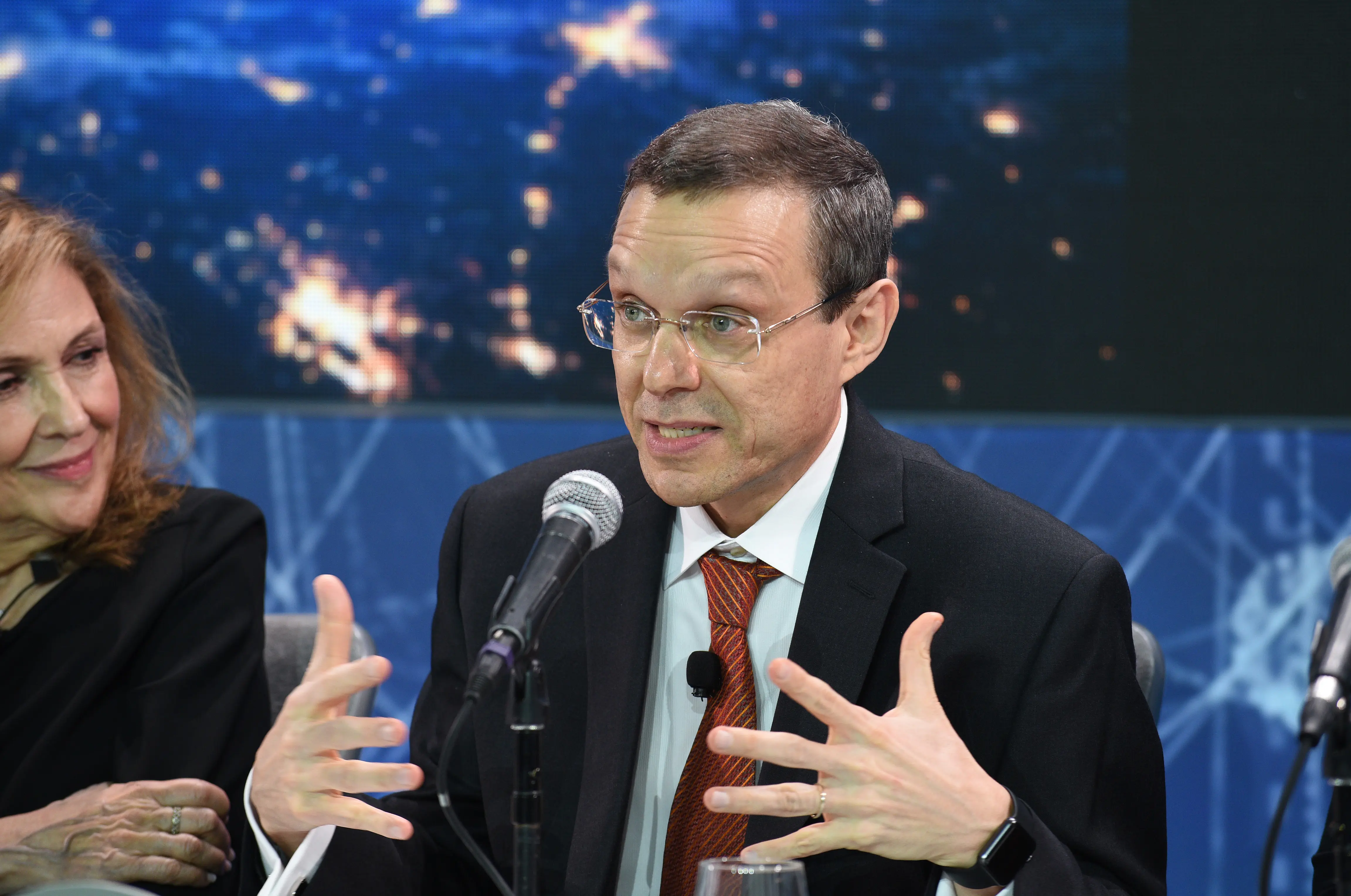 Avi Loeb (Image via Getty)
Harvard astrophysicist Avi Loeb is calling out academia for discouraging youth and other enthusiasts in the field from asking big, unusual questions, especially about space exploration, and more recently, about the interstellar object 3I/ATLAS, which will come closest to Earth on December 19, 2025.
In a December 8, 2025, interview with Danny Jones, Professor Loeb gave a glimpse into the rigid and orthodox structure of academia that prevented curiosity from flourishing and the unconventional idea from being presented to the world.
Loeb himself faced a similar hurdle from his peers when, after 3I/ATLAS’s discovery, he began pointing out its anomalies and suggesting that the interstellar object might have a technological origin.
Starting from the sunward anti-tail of 3I/ATLAS to its unusual trajectory and mass data, he has to date listed around 12 to 13 anomalies.
However, since his hypothesis contradicts NASA’s statement that 3I/ATLAS is a natural comet, he has since faced backlash for spreading misinformation among the general public.
Regardless, Loeb has maintained his ideology.
In an interview with Danny Jones, Loeb shed light on academia's resistance to exploring the unknown, saying it shows that “science is not efficient” because “prejudice suppresses innovation.”
Loeb went on to point out that academia prefers following a set pathway, where everyone is encouraged to follow the trend and repeat what has been taught, to secure their futures.
Harvard astrophysicist says academia has turned into an echo chamber where new ideas are not welcome
Loeb has been open and skeptical about the origin of the interstellar object 3I/ATLAS since its discovery, unwilling to dismiss the possibility that it might be alien technology.
However, his stance faced severe backlash, especially from his academic peers.
In one of his Medium blog posts, Loeb mentioned that astrophysicist Chris Lintott criticized his theory, calling it “nonsense on stilts” after he suggested that 3I/ATLAS might be related to alien technology.
On the other hand, physicist Brian Cox, in a recent interview with Neil deGrasse Tyson, criticized those who studied 3I/ATLAS as an alien technology and not a natural comet.
Another fellow astrophysicist, Adam Frank, called Loeb’s essays on 3I/ATLAS on Medium his “musings,” not scientific research.
Thus, Loeb has faced backlash, not only from his peers but also from other authorities, for suggesting that the origin of 3I/ATLAS could be artificial.
Loeb connects such resistance and backlash in the science community to the way academia has shaped people’s minds.
In the interview, he said that academia has become “conservative” like an echo chamber, where students repeat the “mantras” of their mentors.
“Basically, it's an echo chamber, and the students and postdocs realize that to get jobs, they have to repeat what was said already instead of encouraging them to break out,” he added.
Students and other enthusiasts who might want to explore the anomalies often remain on the set path in fear of losing financial support, their honors, or their jobs.
Consequently, rather than focusing on exploration, young minds were compelled to “dance by the tunes of selection committees” that stress past knowledge, not breakthrough conversations.
He continued that academia discouraged “new knowledge,” aligning it with the “reality” he faced while discussing 3I/ATLAS.
Reflecting on his experience with the backlash, Loeb expressed that people nowadays “will bring you down because you said something different.”
He criticized the academicians for calling themselves the “experts” and being arrogant.
While the world waits for new data after 3I/ATLAS’s closest approach to Earth on December 19, Loeb hopes the “experts” will show humility and learn to explore.
Stay tuned for more updates.
TOPICS: 3I/ATLAS, 3I/ATLAS alien contact, 3I/ATLAS observation, Avi Loeb 3I/ATLAS, Avi Loeb 3I/ATLAS theory
- "Dozen such coincidences" - Harvard Professor Avi Loeb says 3I/ATLAS and gamma-ray burst alignments are statistically expected
- Rare interstellar comet 3i/Atlas set to fly past Earth safely on December 19, scientists confirm
- New NASA and ESA images show 3i/Atlas glowing with activity as the interstellar comet prepares for its December close flyby
- Interstellar comet 3I/ATLAS shows a growing green glow as its chemistry evolves