
Starlink satellite narrowly avoids close encounter with spacecraft from Chinese launch
-
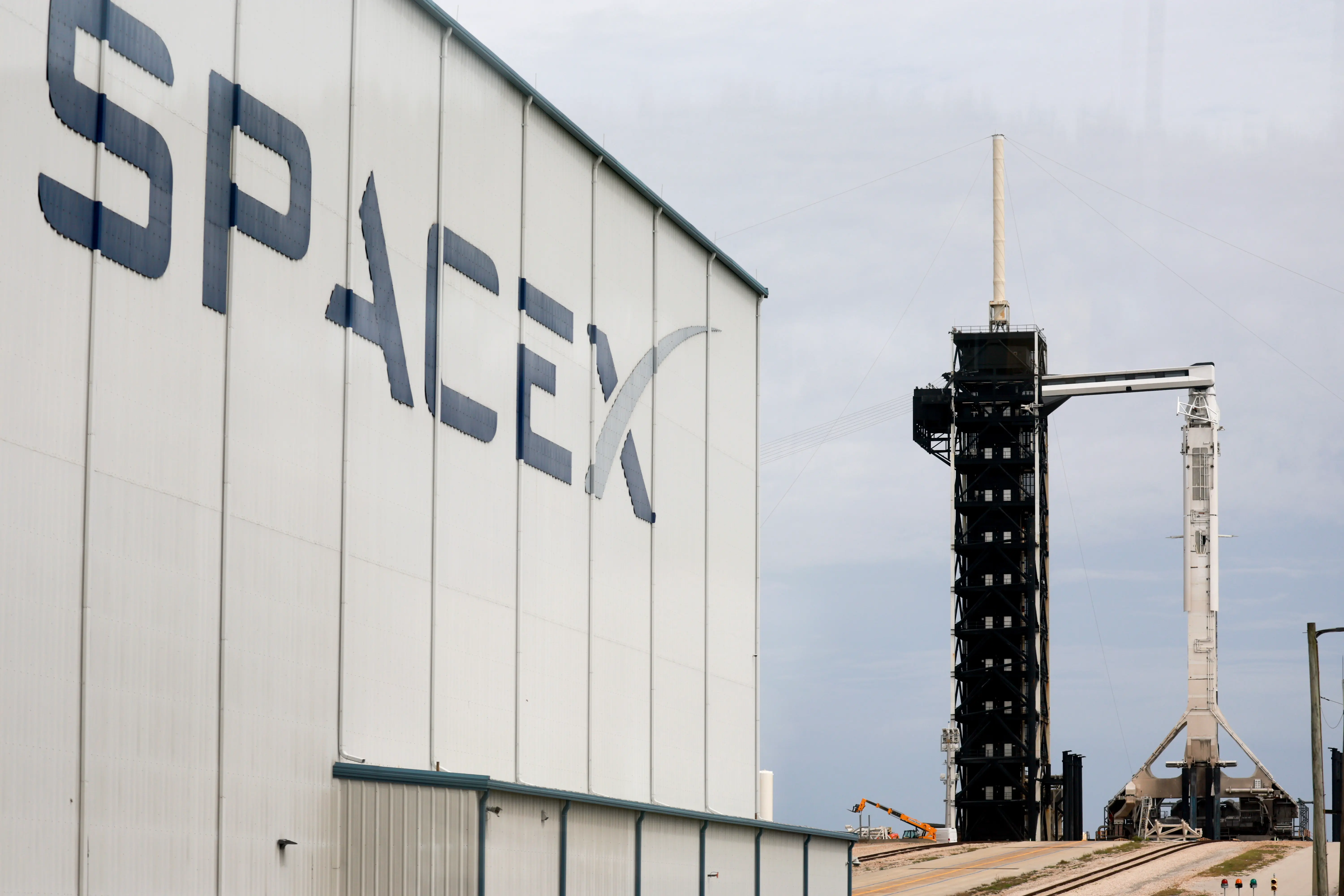 SpaceX (Image via Getty)
Space.com reported that a Starlink satellite operated by SpaceX narrowly avoided a close approach with a satellite launched from China in December.
The incident followed a Kinetica 1 rocket launch by CAS Space from the Jiuquan Satellite Launch Center in the Gobi Desert on Dec. 9. The rocket carried nine satellites into low Earth orbit for multiple countries.
According to SpaceX, one of the deployed satellites was the closest to Starlink-6079 and their relative distance was about 200 meters at an altitude of approximately 560 kilometers. SpaceX also mentioned that as far as they knew, no coordination or direct communication took place concerning the close approach.
The details were disclosed by Michael Nicolls, Starlink engineering vice president, in a post on X on Dec. 12. CAS Space replied later, saying they performed their launch as per the regulations and are investigating the situation.
There was no collision and both Elon Musk's and China Aerospace's teams have denied any damage to their spacecraft. The near miss occurred as Earth's orbit continued to get crowded with thousands of active satellites operating at similar altitudes.
Satellite operators depended on tracking data and automated systems to lower the risk of collisions but interaction among different operators was still limited. The situation has emphasized the difficulties of managing satellite traffic that comes with the increase in launch activities worldwide.
What did SpaceX report about the close approach
SpaceX said the close approach involved one of the nine satellites deployed during the Kinetica 1 launch and Starlink-6079. In his public statement, Michael Nicolls said that “as far as we know, no coordination or deconfliction with existing satellites operating in space was performed.”
He added that the situation resulted in “a 200-meter close approach” at an orbital altitude of about 560 kilometers. SpaceX did not identify which of the nine satellites passed near the Starlink spacecraft.
According to China Daily, the launch included six Chinese multifunctional satellites, an Earth-observation satellite for the United Arab Emirates, a scientific satellite for Egypt and an educational satellite for Nepal.
SpaceX said Starlink satellites were designed to maneuver autonomously to avoid potential collisions using available tracking data. The company did not confirm whether Starlink-6079 carried out an avoidance maneuver during this event. No service disruption or operational impact was reported.
SpaceX shared details of the incident to draw attention to the need for better communication between satellite operators. Nicolls stated that “most of the risk of operating in space comes from the lack of coordination between satellite operators.”
SpaceX emphasized that data sharing and advance notice were important as more satellites were launched into similar orbital paths.
Response from CAS Space and the wider orbital environment
CAS Space responded to SpaceX’s statement later the same day. The company said it had followed standard procedures as the launch services provider.
In a post on X, CAS Space said, “All CAS Space launches selected their launch windows using the ground-based space awareness system to avoid collisions with known satellites and debris.”
The company added that its team was “currently in contact for more details” and would assist in reviewing the incident. CAS Space did not provide further technical details about the satellite involved.
The near miss occurred during a period of rapid growth in the number of active satellites in Earth orbit. In 2020, fewer than 3,400 operational satellites orbited the planet. By 2025, that number had increased to around 13,000.
A large share of these belonged to commercial constellations. SpaceX operated nearly 9,300 Starlink satellites at the time with more than 3,000 launched during 2025 alone.
SpaceX said Starlink satellites carried out frequent avoidance maneuvers based on conjunction warnings. According to the company, about 145,000 such maneuvers were performed in the first half of 2025.
Many other satellites did not have the same autonomous capabilities. While the December incident did not result in a collision or debris, it added to ongoing discussions about satellite tracking, communication and shared responsibility in managing traffic in low Earth orbit.
Stay tuned for more updates.
TOPICS: Astronomy, Jiuquan Satellite Launch Center, space x, SpaceX Starlink, Starlink
- Astronomers detect radio waves from a rare helium-rich supernova for the first time
- Geostationary satellites pose limited risk to radio astronomy, study says
- Scientists observe a black hole dragging space and time as it consumes a star
- Expedition 74 completes first full week aboard the International Space Station