
Culinary Class Wars: The Hidden White Spoon twists turns Season 2 into a high-risk redemption test for returning champions
-
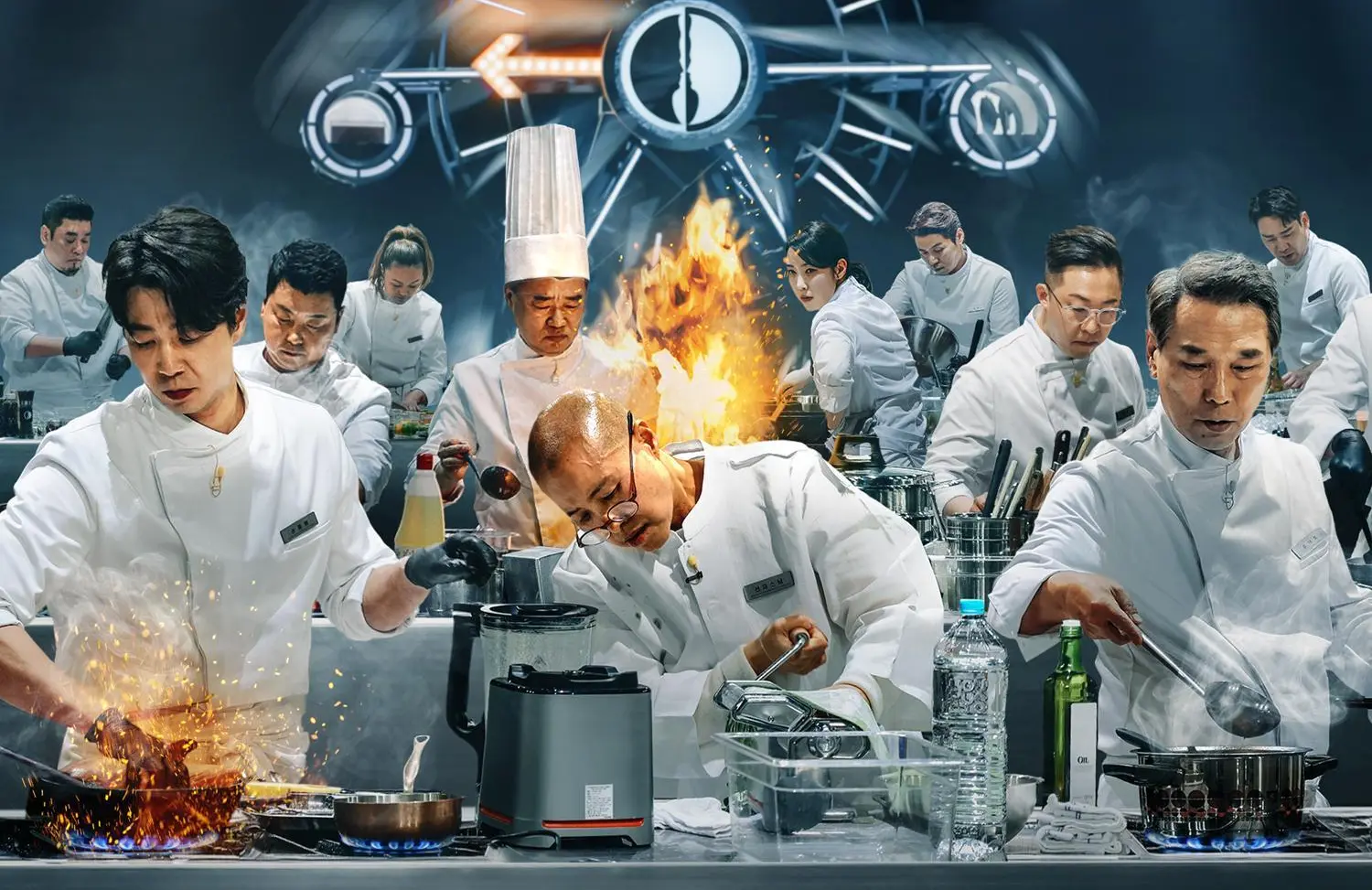 Culinary Class Wars 2 (Image via Netflix)
With the introduction of the Hidden White Spoon twist in Episode 1, Culinary Class Wars Season 2 fundamentally alters the meaning of return and redemption.
What initially appears to be a surprise casting gimmick quickly reveals itself as one of the season’s most punishing structural decisions.
By forcing returning champions to reenter the competition through the Black Spoon Elimination Round, the Hidden White Spoon twist turns Season 2 into a high-risk redemption test for returning champions, one where reputation offers no protection and failure carries public finality.
Episodes 1 and 2 carefully stage this reversal. After introducing 18 official White Spoon chefs—already fewer than Season 1’s 20—the show leaves two conspicuous vacancies.
Contestants notice immediately. “There’s 18, but there should be 20,” one chef observes.
The absence becomes a point of speculation until the reveal lands: two former White Spoon standouts from Season 1 have been concealed among the Black Spoons and will now be required to fight for their status.
The reveal reframes the entire elimination round. When the host announces, “The new challenge for the Black Spoon Elimination Round is… Hidden White Spoons,” the reaction is not excitement but shock.
These returning chefs are not granted immunity, prestige, or even symbolic separation. Instead, they are placed under harsher conditions than any Black Spoon contestant.
To survive, each Hidden White Spoon must receive approval from both judges—Paik Jong-won and Anh Sung-jae—while ordinary Black Spoons require only a single favourable decision.
Culinary Class Wars Season 2 makes redemption conditional
The two chefs selected for this trial carry vastly different reputations but share the same burden.
Choi Kang-rok, winner of MasterChef Korea Season 2, returns with an openly stated desire to correct his previous run. He says,
“They say if you do nothing, nothing ever happens to you. That’s why I decided to come back on the show.”
Kim Do-yun, chef-owner of Michelin one-star restaurant Yun Seoul, frames his return as unfinished business:
“In Season 1, I should have taken it more seriously. So this time, I’m gonna do things differently.”
Yet Culinary Class Wars Season 2 offers no narrative cushion for intention. From the moment they step onto the floor, the Hidden White Spoons become structural variables rather than honoured guests.
Their survival directly affects how many Black Spoons can advance. If neither survives, only 18 Black Spoons move forward.
If one survives, a nineteenth seat opens. If both survive, the number rises to 20. Redemption, in this design, becomes transactional.
Kim Do-yun’s elimination underscores the severity of this framework. His perilla oil noodles, made with Baekgang wheat and milled personally using a machine he brought into the kitchen, earn praise from Paik Jong-won. Paik says,
“It was different than any perilla oil I’ve tasted. I loved each bite.”
Despite this, Anh Sung-jae delivers a decisive rejection, citing texture and aftertaste. He says,
“There’s a chalky aftertaste that lingers. For my taste buds… I don’t think I would call this delicious.”
With that, Kim Do-yun is eliminated, marking his second consecutive failure on the series.
The impact is immediate and visible. Contestants react less with joy at others' pain and more with discomfort.
“It’s like being judged by a robot,” one chef mutters, reflecting the intensity of Anh Sung-jae’s standards.
Paik Jong-won himself appears conflicted, later stating that it was “a very difficult decision.” Still, the rules hold, which shows that Culinary Class Wars Season 2 does not bend for legacy.
Choi Kang-rok’s path unfolds differently but remains no less precarious. Known for his mastery of braising, he presents braised freshwater eel prepared whole, accompanied by seasoned tofu and vegetables.
Paik Jong-won approves immediately, stating,
“I have eaten a lot of braised dishes. Yours was perfect.”
Anh Sung-jae, however, scrutinises the separation of components and the risk of texture imbalance.
Only after sustained deliberation does he confirm survival, calling the braising “extremely well-refined.”
The contrast between the two outcomes clarifies the show’s intent. Redemption is not granted for past success, nor for narrative sympathy.
It must be executed precisely within the judges’ overlapping standards. As Choi Kang-rok reflects during deliberation,
“If I survive today, it proves that the intersection exists.”
His survival does not restore status automatically; it merely earns permission to continue.
By placing returning champions under stricter scrutiny than first-time contestants, Culinary Class Wars Season 2 reframes redemption as risk rather than reward.
The Hidden White Spoon twist removes the safety net typically afforded to legacy figures in competition television.
Instead of honouring past victories, the show weaponises them, raising expectations while stripping away margin for error.
Across Episodes 1 and 2, this design choice reshapes the season’s emotional stakes. Redemption is no longer inspirational by default; it is conditional, uncertain, and public.
In Culinary Class Wars Season 2, returning is not about reclaiming glory. It is about proving that past excellence can survive present judgment—and the cost of failing that test is absolute.
Stay tuned for more updates.
TOPICS: Culinary Class Wars season 2 , Culinary Class Wars season 2 Episode 1, Culinary Class Wars season 2 Episode 2
- Who is Jun Lee from Culinary Class Wars season 2? Everything to know about the chef explored
- Culinary Class Wars Season 2 Episode 2 shows that emotions can elevate a dish, but only if the technique holds
- Who is Hu Deok-juk from Culinary Class Wars season 2? Everything to know about the chef explored
- Culinary Class Wars Season 2 Episode 2 turns Korean comfort food into the most dangerous gamble