
Features
NASA's JPL launches new facility to advance surface exploration capabilities
NASA’s JPL launches the Rover Operations Center to advance Moon and Mars surface missions, integrating AI, rover autonomy, and partnerships with commercial and academic organizations for future exploration.
-
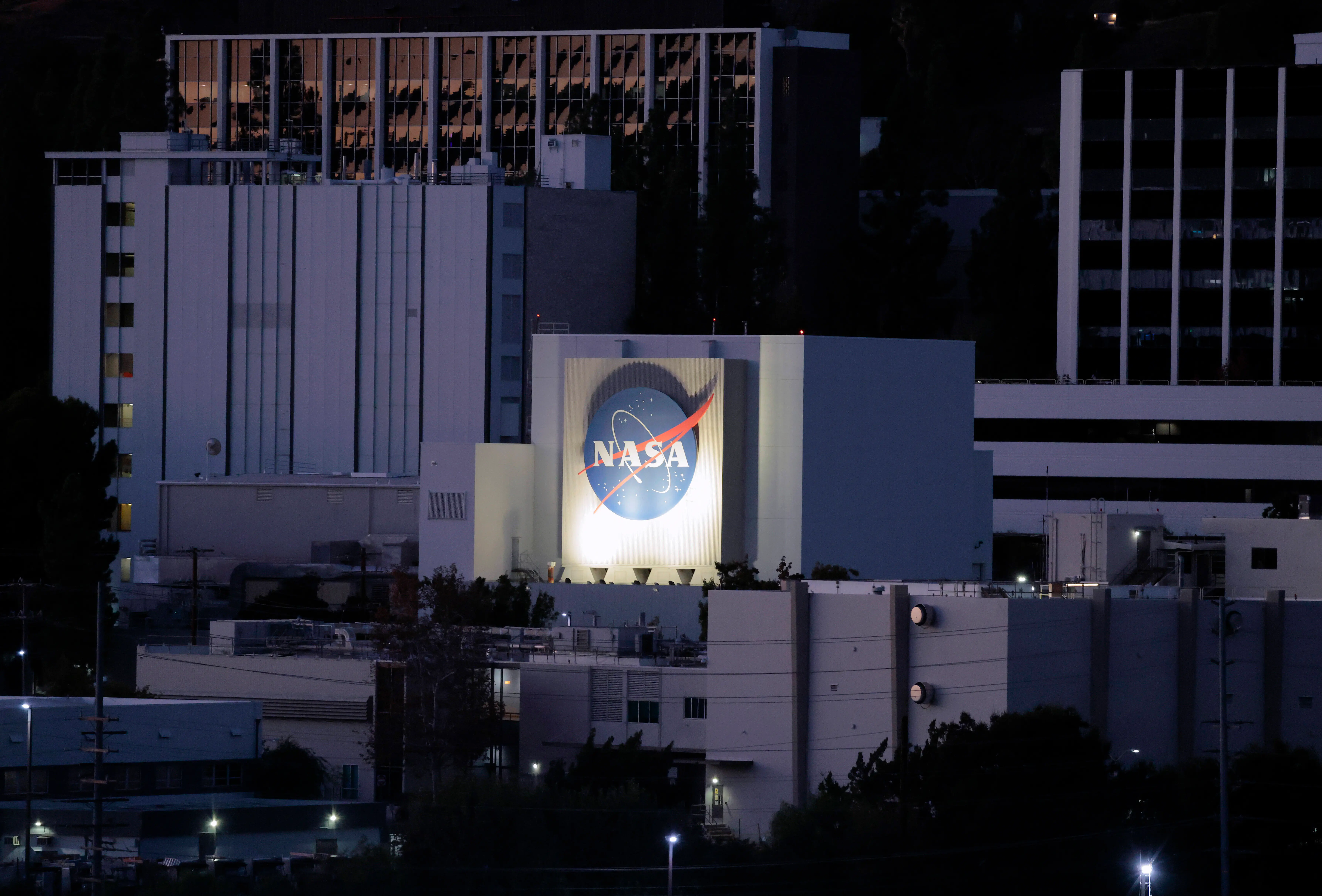 The NASA logo is displayed at NASA’s Jet Propulsion Laboratory on October 15, 2025 in La Cañada Flintridge, California. Around 550 people, or over ten percent of the famed lab’s workforce, are being laid off as part of an ongoing reorganization following two rounds of large layoffs last year. Layoffs at the laboratory, which is funded by NASA and managed by CalTech, are not related to the federal government shutdown (Image via Getty)
NASA’s Jet Propulsion Laboratory in Southern California has inaugurated the Rover Operations Center, a facility designed to enhance capabilities for surface missions on the Moon and Mars.
The center integrates advanced tools, infrastructure, and operations expertise to support both current and future planetary surface missions.
It also establishes partnerships with commercial and academic organizations to facilitate the development of autonomous and robotic systems.
The ROC incorporates artificial intelligence into planning and operations, as demonstrated by NASA’s Perseverance Mars rover team, which used generative AI to generate safe routes for the rover.
The center is intended to streamline and expand U.S. efforts in planetary surface exploration, according to NASA.
Purpose and establishment of the rover operations center
The Rover Operations Center was created to consolidate operations and technical knowledge for planetary surface missions while promoting collaboration with external partners.
It builds on over 30 years of experience in Mars surface missions, including the operation of Mars rovers and the Ingenuity Mars helicopter.
The facility provides a centralized structure for managing autonomous robotic systems and operational procedures developed from decades of planetary exploration.
JPL Director Dave Gallagher described the ROC as a platform that integrates specialized knowledge and advanced tools to support the next generation of Moon and Mars missions.
The center also offers guidance and operational support for commercial space partners.
Capabilities and focus areas
The ROC focuses on improving autonomy and operational efficiency for surface missions. JPL has developed autonomous capabilities for planetary rovers since the 1990s, starting with the Sojourner rover.
These capabilities have evolved to include autonomous driving, sample collection, and science-target selection.
The Perseverance rover demonstrates advanced autonomy by independently scheduling and executing energy-intensive tasks, such as maintaining temperature control, allowing it to allocate power to scientific activities or travel longer distances.
The ROC also explores the integration of generative AI into operations, as illustrated by the Perseverance team’s use of AI to create waypoints and paths in Jezero Crater to avoid hazards.
Jennifer Trosper, ROC program manager at JPL, noted that AI applications are being evaluated to increase operational efficiency and support future science and exploration missions.
Facilities and partnerships
The Mars Yard, a place that mimics Martian surface to test rover capabilities, and the 25-Foot Space Simulator, a device that has been used to test space probes, among them, Voyager 1 and 2 and Perseverance, were part of the tours of JPL operational facilities, which the inauguration event included.
The event also had panel discussions on how rovers and aerial systems have helped in exploring the surface and the potential of public-private partnerships in the network of operational missions.
Attendees got the chance to learn about interaction possibilities with JPL through autonomy integration, testing, operations support, and human-robotic interaction for future lunar and Martian missions.
Such collaborations are also open to scientific and human precursor robotic missions.
JPL, managed by the California Institute of Technology for NASA, is the place where the operations and development of the Rover Operations Center are carried out under the supervision of the Director.
The ROC’s functionalities are designed to be of assistance to the current and future surface missions, make it easy to collaborate with commercial and academic partners, and allow the use of advanced autonomous systems to be integrated into planetary exploration operations.
Stay tuned for more updates.
TOPICS: NASA JPL Rover Operations Center, 25-Foot Space Simulator, JPL space exploration facilities, Mars rover autonomy, Mars rover route planning, Moon and Mars surface missions, NASA, NASA robotic missions, planetary exploration AI