
Elon Musk says Ketanji Brown Jackson is "openly advocating for the destruction of democracy" after she claims Trump has no right to fire experts
-
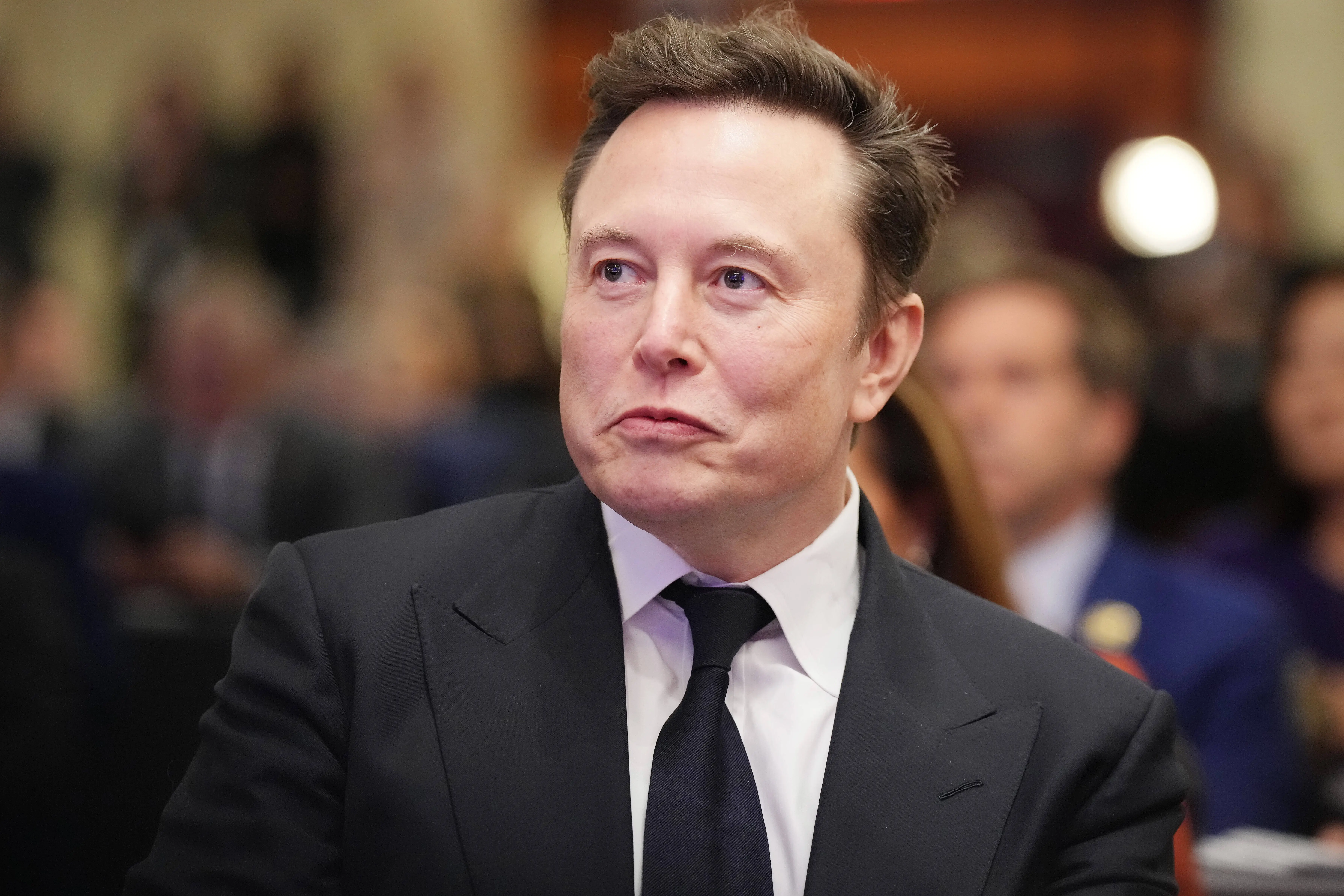 WASHINGTON, DC - NOVEMBER 13: Elon Musk listens as U.S. President-elect Donald Trump addresses a House Republicans Conference meeting at the Hyatt Regency on Capitol Hill on November 13, 2024 in Washington, DC. As is tradition with incoming presidents, Trump is traveling to Washington, DC to meet with U.S. President Joe Biden at the White House as well as meet with Republican congressmen on Capitol Hill. (Photo by Andrew Harnik/Getty Images)
On Monday, December 8, the trial of Trump V Slaughter began in the US Supreme Court with both parties presenting their opening arguments in front of chief justice John Roberts.
She is openly advocating for the destruction of democracy https://t.co/6sQawqnCXt
— Elon Musk (@elonmusk) December 9, 2025One of the associate justices present in the court hearing - Justice Ketanji Brown Jackson - argued that the president shouldn't be able to fire experts in government agencies. A clip of Brown's statement was uploaded on X, where she was heard saying:
"Having a president come in and fire all the scientists and doctors and the economists and the Ph.Ds and replacing them with loyalists and people who don't know anything is not in the best interest of the citizens of the United States.These issues should not be in presidential control... in these particular areas, we would like to have independence."
Apparently, Justice Jackson's perspective didn't sit well with Elon Musk, who retweeted the audio statement, accusing her of "openly advocating for the destruction of democracy" in the caption.
For the unversed, the Trump v Slaughter stems from March 2025, when President Trump fired Rebecca Slaughter - the commissioner of the US Federal Trade Commission (FTC) at the time.
Shortly after her firing, Slaughter filed a lawsuit against the president, alleging that it was "inconsistent with the Administration's priorities". On the other hand, Trump argued that as a president, he should have full control over all government agencies, including ones that the Congress has shielded from presidential interference so far.
According to BBC, the Congress had passed a law at the time of FTC's establishment in 1914, stating that for the president to fire a commissioner of the agency, he did not only need a valid cause but also approval of a five-member commission. It also states that the commission shouldn't be dominated by members of the same party.
The last time this Congress law was put to the test was in 1935, the media outlet reports, during the presidency of President Franklin Roosevelt. When Roosevelt tried to remove an FTC member, the Supreme Court ruled in favor of the agency's independence. Whether or not the same judgment will be upheld in court this time remains to be seen.
Elon Musk's X has banned the European Commission from making ads on the platform
𝕏 has terminated the European Commission's Ad Account. The EU was using a deceptive method to promote its own advertising.
— Real News (@DrNeculai) December 7, 2025
Elon Musk calls for the abolition of the EU so that all sovereign countries can present their citizens! The EU has become the 4th Reich, sub Führer" Ursula! pic.twitter.com/QmrhFWMCg5Besides his retweet related to yesterday's court hearing in the Trump v Slaughter case, Elon Musk is also making headlines after his social media platform, X, banned the European Commission from making ads.
The decision of the ban comes as a consequence of the EU levying a fine of €120m (£105m) over X's use of blue tick badges. Per BBC, the system was fined under EU's Digital Services Act, which calls it "deceptive" as X wasn't "meaningfully" verifying its users. A press release announcing the fine also read:
"This deception exposes users to scams, including impersonation frauds, as well as other forms of manipulation by malicious actors."
After the fine was allotted, Elon Musk condemned the EU by claiming they "should be abolished" in an X tweet. A senior employee at X, Nikita Bier, has since banned the EU from making adverts on their platform, accusing them of exploiting their advertising system to promote a tweet about the fine.
TOPICS: Elon Musk, Donald Trump
- Who is Ashlee Vance? Writer claims HBO scrapped a docuseries on SpaceX because they are "afraid to make something" about Elon Musk
- “Why are you posting fake pictures”: RFK jr mocked for sharing AI generated viral Trump-Musk Thanksgiving pic
- Is the Elon Musk anti gravity suit real? Viral video debunked
- Elon Musk calls for "radical action" claiming the system is "broken" after 2 National Guard members are shot near the White House