
Supermassive black hole unleashes ultra-fast winds moving at 20% the speed of light
-
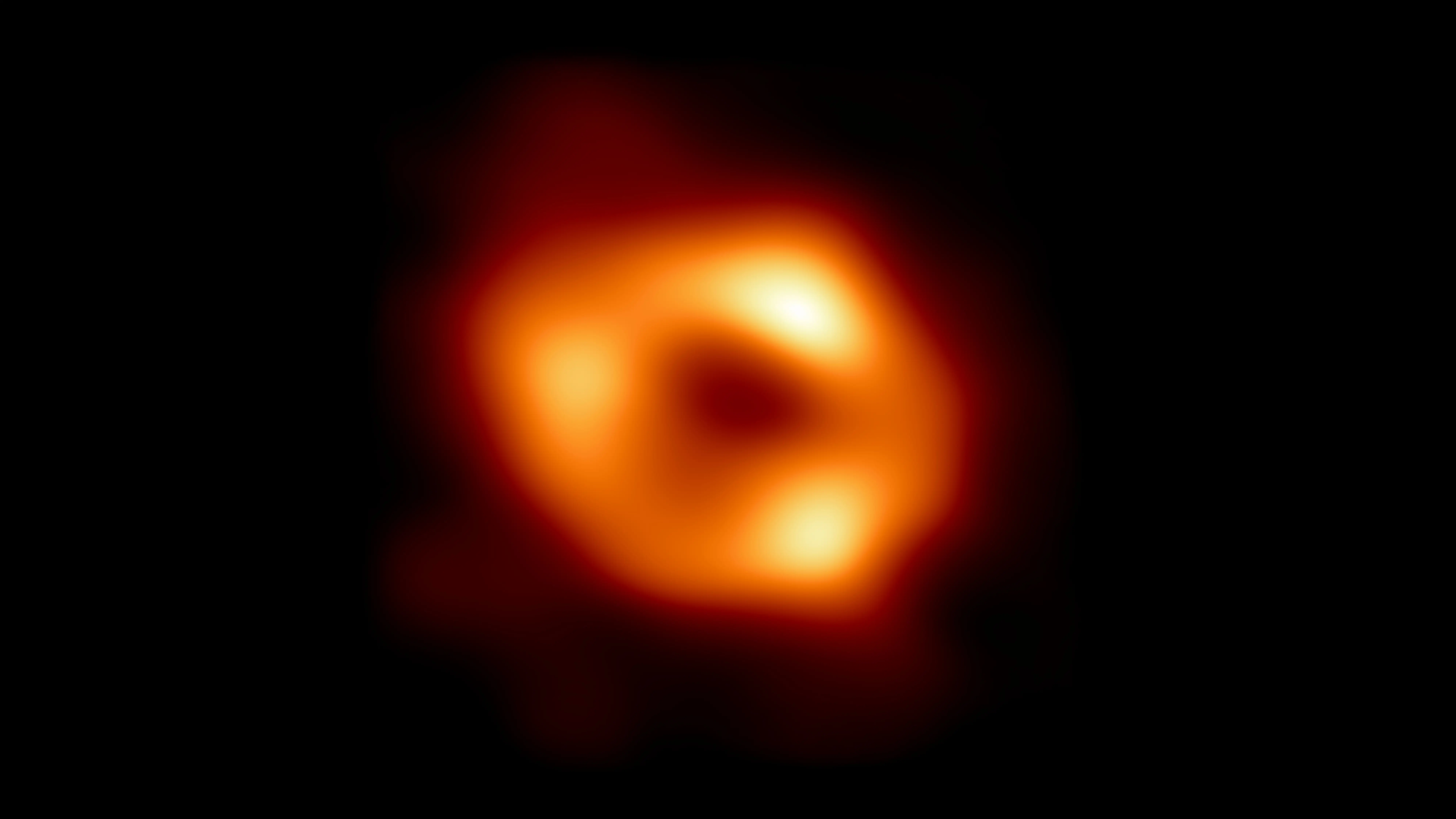 This is the first image of Sgr A*, the supermassive black hole at the centre of our galaxy (Image via Getty)
A report from Space.com goes into detail about the recent discoveries concerning a supermassive black hole in the NGC 3783 galaxy. One of the scientists observed the black hole ejecting a fast-moving matter stream at about 134 million miles per hour, which is roughly 20% of the speed of light.
This is the cause-and-effect sequence shortly after the XRISM telescope recorded an X-ray flare. The flare was followed by the detection of the strong wind emanating from the same region close to the black hole by the telescope a few hours later.
According to the researchers, the magnetic field around the black hole changing abruptly was probably the trigger for the whole thing. This situation, being compared to the breaking and rejoining of magnetic lines on the sun, which results in a flare, is a well-known analogy.
This time, the huge size and strong magnetism of the black hole made the resulting flare much more potent. Along with the XRISM, which helped in determining the speed and direction of the wind, another telescope, XMM-Newton, was used to find the area covered by the wind.
The research also provides the rationale behind the point of such occurrences. In case a black hole emits or absorbs too much material, it has the power to change the star-forming process in its galaxy.
The publication in Astronomy and Astrophysics serves as a stepping stone for scientists in understanding the mechanisms behind black holes in relation to gas movement and energy flow in their neighborhoods.
_________________________________________________________How did the wind form?
Scientists report that the X-ray flare came first, followed by a strong wind moving outward from the same region. One researcher said the event was “similar to the flares that erupt from the sun, but on a scale almost too big to imagine.”
The team explains that magnetic field lines near the black hole likely broke and reconnected, releasing energy and pushing material into space.
XRISM’s instruments measured the wind at 60,000 kilometers per second. A second researcher stated that the magnetic field “suddenly untwisted,” which triggered the outflow.
The process resembles solar activity, where charged particles are released after magnetic lines shift. In this case, the black hole’s mass and magnetic strength amplified the effect.
XMM-Newton’s observations helped confirm the distance the wind traveled. By comparing the timing of the flare and the wind, the team concluded that the two events were linked.
They also noted that the outflow qualifies as slightly relativistic, meaning its speed is close enough to light speed for relativity to matter. This speed allows the wind to move large amounts of material across the galaxy. The finding helps researchers understand how black holes influence their surroundings through sudden releases of energy.
___________________________________________________________Impact on galaxy evolution
Researchers say that winds and jets from active black holes affect how galaxies grow. One team member said these winds “play a big role in how their host galaxies evolve over time.”
When a black hole ejects material, it can either limit or support star formation. If too much gas is pushed out, the galaxy may slow down its rate of forming new stars. If gas is pushed inward or redistributed, new star-forming regions may appear.
The wind from NGC 3783 offers a chance to examine this cycle. The outflow gives scientists a direct example of how material moves around a black hole during active phases. Because winds travel in many directions and not just in narrow jets, they can spread energy across larger areas of the galaxy.
The study notes that magnetic activity in the accretion disk drives these events. Gas falling toward the black hole gains speed, and changes in magnetic fields can push some of this material back out.
By observing this single flare-and-wind sequence, scientists gain insight into how such processes repeat over long periods. This information helps build models of galaxy behavior and explains how black holes influence their environments across cosmic time.
________________________________________________
Stay tuned for more updates.TOPICS: Astronomy, Astroworld, Blackholes, NASA, XRISM telescope
- ‘Galactic Brain’ initiative seeks to move high-demand AI processing off Earth and into space
- Soyuz crew departs space station after completing eight-month mission
- Astronomers spot a brown dwarf and huge exoplanet in Subaru telescope’s first discoveries
- AI uncovers years-long security flaw exposing NASA spacecraft to potential hijacking