
Soyuz crew departs space station after completing eight-month mission
-
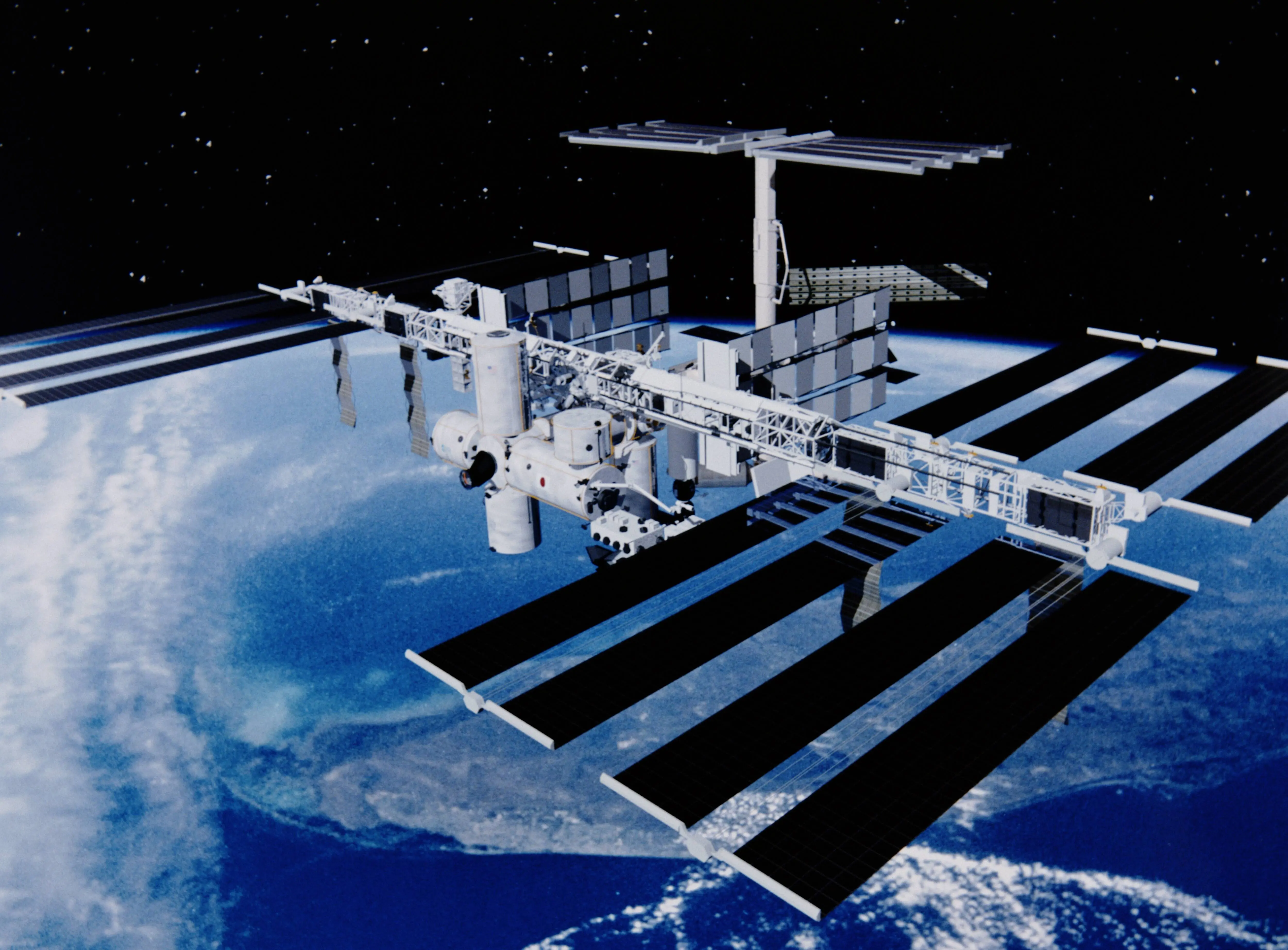 International Space Station (Image via Getty)
CBS News reported that a NASA astronaut and two Russian cosmonauts left the International Space Station after completing an eight-month mission.
The Soyuz MS-27/73S spacecraft undocked from the station at 8:41 p.m. ET with commander Sergey Ryzhikov, flight engineer Alexey Zubritsky, and NASA astronaut Jonny Kim on board.
A Russian flight controller said, “We wish you a soft landing and hope to see you on the ground very soon.”
The crew began its return path toward Kazakhstan, where teams were prepared to support landing and recovery. The descent plan included a braking burn to slow the spacecraft, atmospheric entry and a parachute landing.
After touchdown, the crew would travel to Dzhezkazgan and then continue to their home bases for checks and debriefings. During a change-of-command ceremony, Kim said that what he will remember most is “the bond that we shared together.”
He added,
“We always gave each other grace and had so much love for each other and everyone who supports us.”
The three completed 3,920 orbits and supported work across the U.S. and Russian segments. Their departure followed the arrival of the next Soyuz crew, who remained on board to continue station operations.
Mission timeline and return process
After undocking, the Soyuz moved to a planned point to prepare for the braking burn set for 11:09 p.m. ET. The burn slowed the spacecraft by about 286 mph, allowing it to enter the atmosphere.
The descent module was built to withstand the heat of reentry while guiding the crew to the landing zone in Kazakhstan. Russian and NASA teams waited near the site to assist with extraction and checks once the hatch opened.
Following landing, Kim was scheduled to return to Houston, while Ryzhikov and Zubritsky would continue to Star City for routine procedures and family reunions. Station operations moved forward with the Soyuz MS-28/74S team, who arrived on November 27.
The station also continued work with NASA astronauts Zena Cardman and Mike Fincke, Japanese astronaut Kimiya Yui and cosmonaut Oleg Platonov on board.
During the handover, Kim said he valued “the bond that we shared together,” a point he repeated when describing how the crew supported one another across the mission. The return marked the end of the team’s planned rotation while the new crew took over daily tasks.
Crew work, background and mission details
During the mission, Kim worked on research and maintenance in the U.S. segment of the station, while Ryzhikov and Zubritsky carried out two spacewalks that supported external tasks.
Over eight months, the crew traveled 104 million miles across 3,920 orbits as part of ongoing work on the station. Their efforts supported studies and upkeep that allow long-duration operations to continue.
During the farewell event, Kim said,
“I firmly believe that the greatest quality of an astronaut, and a human, is not technical competence, or loyalty, or any of the myriad other things we like to ascribe to astronauts. It’s love. We always gave each other grace and had so much love for each other and everyone who supports us.”
Kim’s background includes service as a Navy SEAL, where he experienced what he called “some terrible moments” in combat.
He said he became “just really burnt out” and looked for another way to serve, explaining,
“I needed a way to continue serving, and it seemed logical that medicine would be that vehicle.”
Kim later attended Harvard Medical School and said he kept his SEAL history private, noting,
“I wanted my colleagues to think of me as dependable and proficient and a good physician. Not because I used to be a SEAL, but because that’s who I was.”
Stay tuned for more updates.
TOPICS: Astronomy, NASA TV, ISS - International space station, NASA, Soyuz crew