
One of 2025’s best Sky shows begins tonight: Geminid shooting stars return ahead of their Dec. 13–14 peak
-
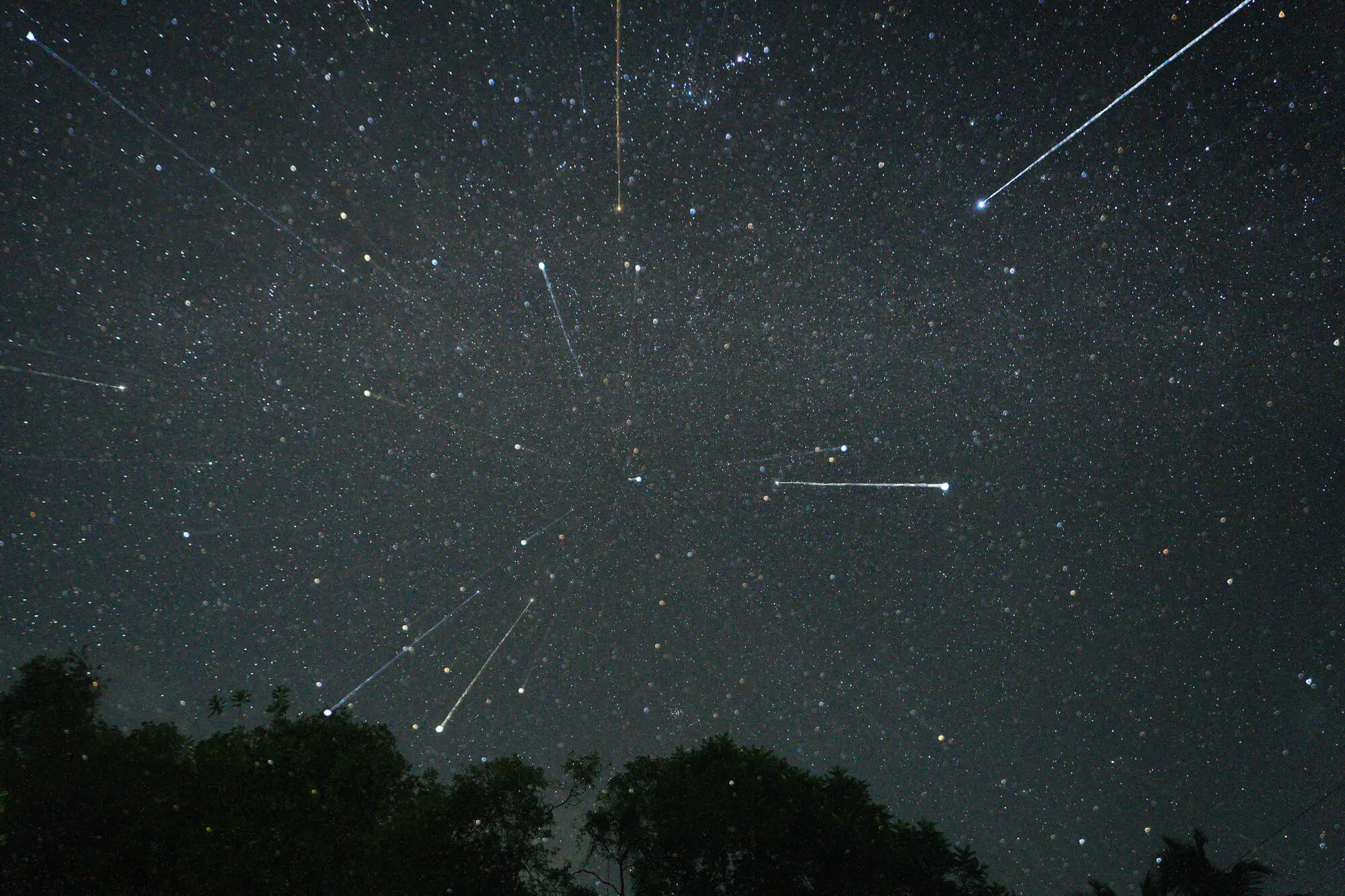 Stars are being seen in the sky during the Geminid meteor showers in Ratnapura, Sri Lanka, on December 14, 2023. The Geminids are a prolific meteor shower caused by the object 3200 Phaethon, which is thought to be a Palladian asteroid with a ''rock comet'' orbit. This makes the Geminids, together with the Quadrantids, the only major meteor showers not originating from a comet. (Photo by Thilina Kaluthotage/NurPhoto via Getty Images)
The Geminid meteor shower starts tonight, and many people are excited to watch the shooting stars return. This is one of the most popular sky events of the year because the meteors are bright, steady and appear in large numbers.
The shower began Thursday and continues until Dec. 20, giving everyone plenty of time to enjoy it.
The Geminids happen when Earth moves through tiny pieces of rock and dust left behind by a space object called 3200 Phaethon. When these small pieces hit Earth’s atmosphere at very high speed, they burn up and create bright streaks of light that we call shooting stars.
When the Geminids Will Peak
Even though the shower begins tonight, the peak nights will be Dec. 13–14. This is when you will see the most meteors. Under perfect dark skies, experts say you might see as many as 150 meteors per hour. NASA says that even in normal conditions, you can still expect around 40 to 50 meteors per hour, which is a very good show.
Meteor showers like the Geminids are easy to enjoy because you do not need a telescope or special equipment. You only need clear weather and a dark place to watch the sky.
Where to Look in the Sky
The shooting stars appear to come from the constellation Gemini, near a bright star called Castor. In December, Gemini rises in the eastern sky a few hours after sunset. Castor will appear to the upper right of the planet Jupiter, which is bright and easy to find.
Geminid meteors often look slightly yellow, and they can appear anywhere in the sky once the radiant is above the horizon. The best time to watch is after 10 p.m. on the peak night when the sky is darkest.
How to Watch the Shower Comfortably
To get the best view, try to move away from bright city lights. Give your eyes 20–30 minutes to adjust to the dark so the stars look clearer. Bring warm clothes, a blanket, a hot drink and a comfortable chair so you can sit back and relax.
If you use a flashlight, choose a red light, as it helps keep your night vision. Also, let someone know where you are going if you plan to watch from a quiet or remote place.
A small crescent moon will rise around 2 a.m. on Dec. 14, which may make the faintest meteors harder to see, but the brighter ones will still be visible.
The Geminid meteor shower is a lovely way to enjoy the December sky.
It begins tonight, but the real highlight will come on Dec. 13–14, when the shooting stars will be at their brightest. It is a calm and beautiful experience that anyone can enjoy just by looking up.
TOPICS: Geminid meteor shower, Geminid meteor shower 2025